1024Wh vs 2048Wh Generators: Which Should You Buy?
As an Amazon Associate we earn from qualifying purchases. Links on this page are affiliate links.
Choosing between a 1024Wh vs 2048Wh generator depends on your power needs. Both units use LiFePO4 batteries for long life. The Jackery offers 1024Wh capacity and 1500W output. The EcoFlow provides 2048Wh capacity and 1800W output. You need more energy for longer outages. You need more power for larger appliances. This guide compares their specs to help you decide.
Key differences
| Aspect | Jackery HomePower 1000 v2 Power Station | EcoFlow DELTA 3 with Extra Battery 2048Wh |
|---|---|---|
| Capacity | 1024Wh | 2048Wh |
| Running Wattage | 1500W | 1800W |
| Weight | 23.4 pounds | not listed |
| Battery Cycles | 6,000+ cycles | 4,000 cycles |
Which one should you choose?
Choose Jackery HomePower 1000 v2 Power Station if
- You need a lighter unit for easy transport.
- You want longer battery cycle life.
- You need UPS functionality for sensitive electronics.
Choose EcoFlow DELTA 3 with Extra Battery 2048Wh if
- You need double the energy storage.
- You want higher continuous power output.
- You plan to expand capacity later.
Verdict: The Jackery suits users who prioritize portability and long-term cycle durability. The EcoFlow is better for those needing higher capacity and wattage. Choose based on your specific power requirements.
Capacity and Output Comparison
Energy capacity
The EcoFlow DELTA 3 with Extra Battery offers 2048Wh of storage, while the Jackery HomePower 1000 v2 provides 1024Wh. This means the EcoFlow holds exactly double the energy. If you need to power multiple devices for an extended period, the larger capacity allows for more runtime. The Jackery is sufficient for shorter outages or essential loads like routers and lights. You should choose the unit that matches your expected duration of power loss. Double the capacity supports longer usage without needing to recharge.
Power output
The EcoFlow DELTA 3 delivers 1800W of continuous output, compared to the Jackery HomePower 1000 v2 at 1500W. This extra 300W allows the EcoFlow to handle slightly heavier loads. You can run more high-wattage appliances simultaneously with the EcoFlow. The Jackery is still capable of powering most standard home electronics. However, the higher wattage on the EcoFlow provides a bit more headroom for demanding devices. This difference matters if you plan to run several items at once.
Battery lifespan
Both units use LiFePO4 chemistry, but their cycle ratings differ. The Jackery HomePower 1000 v2 is rated for over 6,000 cycles while retaining more than 70% of its capacity. The EcoFlow DELTA 3 is rated for 4,000 cycles to 80% retention. The Jackery offers significantly more charge cycles. This suggests the Jackery may last longer in daily use scenarios. The EcoFlow still provides a solid 10-year lifespan for typical use. For maximum longevity, the Jackery has the advantage.
Recharge speed
The Jackery HomePower 1000 v2 charges from 0 to 100% in 50 minutes using emergency mode. The EcoFlow DELTA 3 takes 56 minutes for a full charge, though it reaches 80% in 30 minutes. The Jackery is faster for a complete refill. The EcoFlow is quicker for an 80% boost. Both units recharge very rapidly compared to standard options. You can get back to full power quickly with either choice. The Jackery has a slight edge in total time.
Surge protection
The Jackery HomePower 1000 v2 includes built-in 3,000V surge resistance and dedicated lightning protection. This shields both the station and connected devices from voltage spikes and storm damage. The product data for the EcoFlow DELTA 3 does not list specific surge voltage ratings or lightning protection features. While both use durable LiFePO4 cells, the Jackery explicitly offers enhanced protection against electrical disturbances. This is a key safety feature for storm-prone areas.
Which Power Station Fits Your Needs
Users needing fast backup for essential electronics
The Jackery HomePower 1000 v2 switches to battery power in just 10 milliseconds. This uninterrupted supply keeps routers and gaming rigs running without blinking. Its 1500W output handles standard loads efficiently. You get reliable protection with 3kV surge resistance and lightning shielding. This speed ensures your critical devices stay online immediately when the grid fails.
Those requiring extended runtime for heavy loads
The EcoFlow DELTA 3 with Extra Battery doubles your storage to 2048Wh. It also delivers 1800W of continuous power, handling more appliances simultaneously. You can recharge fully in just 56 minutes using AC or solar input. The system expands up to 5kWh if your needs grow later. This capacity supports longer outages and higher power demands.
Buyers prioritizing long-term durability and lifespan
Jackery rates its LiFePO4 battery for over 6,000 cycles while retaining 70% capacity. This rating supports roughly 16 years of daily use. The EcoFlow offers 4,000 cycles to 80% for a 10-year lifespan. The Jackery provides significantly more cycle life. You get a longer operational window before the battery health degrades to replacement levels.
Quick picks
| # | Product | Best for | Price |
|---|---|---|---|
| 1 | Jackery HomePower 1000 v2 Power Station | protecting sensitive electronics from surges | Check price of Jackery HomePower 1000 v2 Power Station on Amazon |
| 2 | EcoFlow DELTA 3 with Extra Battery 2048Wh | High-wattage needs with fast recharge | Check price of EcoFlow DELTA 3 with Extra Battery 2048Wh on Amazon |
The products compared
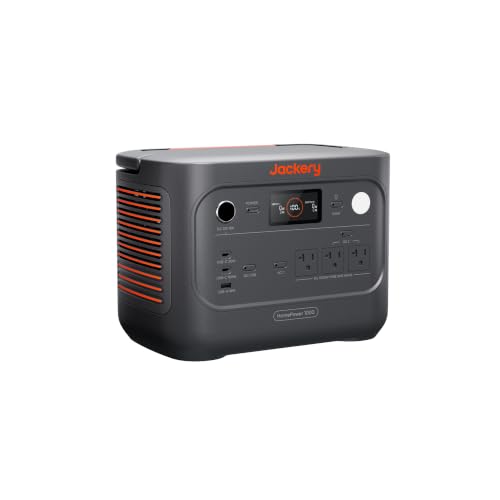
Jackery HomePower 1000 v2 Power Station
Best for: protecting sensitive electronics from surges
- Capacity
- 1024Wh (what this guide is about)
- Running Wattage
- 1,500W
- Battery Chemistry
- LiFePO4
- Output Ports
- 3 AC, 2 USB-C, 1 USB-A, 1 DC
- Dimensions
- 12.4 × 7.9 × 9.2 inches
- Weight
- 23.4 pounds
View on Amazon: Jackery HomePower 1000 v2 Power Station Affiliate link
The Jackery HomePower 1000 v2 offers 1024Wh of LiFePO4 capacity with 1500W of pure sine wave output. It features a 10ms UPS transfer time and 3kV surge protection. The unit weighs 23.4 lbs and recharges in 50 minutes. This model suits users needing reliable backup for sensitive electronics like routers and PCs during short outages.
Pros
- 1024Wh LiFePO4 battery with 6,000+ cycles
- 10ms UPS transfer for uninterrupted power
- 1500W pure sine wave AC output
- 3kV surge and lightning protection
- 50-minute full recharge via AC
Cons
- 1024Wh capacity is half the 2048Wh option
- No solar panel included in the box
- 23.4 lbs weight requires effort to move
Good fit if
- You need to protect sensitive electronics from power surges
- You require a fast 10ms UPS response time
- You want a compact 1024Wh backup solution
Skip if
- You need more than 1024Wh of capacity
- You require a higher 1500W output limit
- You prefer a lighter unit under 20 lbs
Verdict: Jackery HomePower 1000 v2 1024Wh provides essential surge protection and rapid UPS switching for users prioritizing electronics safety over raw capacity.

EcoFlow DELTA 3 with Extra Battery 2048Wh
Best for: High-wattage needs with fast recharge
- Capacity
- 1024Wh (what this guide is about)
- Running Wattage
- 1800W
- Battery Chemistry
- LiFePO4
- Application
- Camping, Home, Outdoor, Emergency
- Output Ports
- USB-C
- Dimensions
- 15.7 × 8 × 11.2 inches
View on Amazon: EcoFlow DELTA 3 with Extra Battery 2048Wh Affiliate link
The EF Ecoflow DELTA 3 offers 2048Wh of capacity and 1800W of running wattage. It uses durable LiFePO4 batteries rated for 4000 cycles. You can recharge it fully in just 56 minutes using AC or solar power. The unit expands up to 5kWh with extra batteries. This setup suits users needing high power output and fast refueling for extended outages or off-grid work.
Pros
- 2048Wh total capacity with LiFePO4 chemistry
- 1800W running wattage supports heavy loads
- Full charge in 56 minutes via AC or solar
- Expands up to 5kWh with extra packs
- IP65 rated battery pack for splash and dust protection
Cons
- Extra battery ships separately
- Larger footprint than 1024Wh models
- Requires app for smart battery monitoring
Good fit if
- You need 2048Wh capacity for longer runs
- You require 1800W output for appliances
- You want fast 56-minute recharge times
Skip if
- You only need 1024Wh capacity
- You prefer a single compact unit
- You cannot manage separate battery shipments
Verdict: EF Ecoflow DELTA 3 2048Wh fits users who need high wattage and rapid charging for demanding power tasks. It delivers reliable output but requires planning for the separate extra battery.
Specifications side by side
| Spec | Jackery HomePower 1000 v2 Power Station | EcoFlow DELTA 3 with Extra Battery 2048Wh |
|---|---|---|
| Running Wattage | 1,500W | 1800W |
| Capacity | 1,024Wh | 2048Wh |
| Battery Chemistry | LiFePO4 | LiFePO4 |
| Output Ports | 3 AC, 2 USB-C, 1 USB-A, 1 DC | not stated |
| Wattage | 100W | 1800W |
| Application | not stated | Camping, Home, Outdoor, Emergency |
| Dimensions | 12.4 × 7.9 × 9.2 inches | 15.7 × 8 × 11.2 inches |
| Weight | 23.4 pounds | not stated |
| Color | Black | not stated |
| Model | JHP-1000A | EF-DL-H10-3 |
Frequently asked questions
Is 1024Wh enough for a weekend camping trip?
Yes, 1024Wh is sufficient for short trips. The Jackery HomePower 1000 v2 weighs 23.4 pounds and measures 12.4 inches long. Its compact size fits easily in a car trunk. It provides 1500W of output, which handles most camping essentials like lights and small appliances without draining the battery too quickly.
Can a 2048Wh unit run a refrigerator?
Yes, the EcoFlow DELTA 3 with Extra Battery can run a refrigerator. It delivers 1800W of continuous output, which covers standard fridge wattage. With 2048Wh of storage, it keeps the compressor running for many hours. This makes it suitable for keeping food fresh during extended power outages or off-grid stays.
How much heavier is the 2048Wh model?
The data does not list the weight for the EcoFlow DELTA 3 with Extra Battery. The Jackery HomePower 1000 v2 weighs 23.4 pounds. You should check the manufacturer’s specifications for the exact weight of the larger EcoFlow unit. Generally, higher capacity batteries add significant mass to the overall package.
Which generator is better for sensitive electronics?
The Jackery HomePower 1000 v2 is designed for sensitive electronics. It provides essential surge protection and switches to battery power in 10 milliseconds. This rapid UPS switching prevents routers and gaming rigs from blinking or restarting. The 1024Wh capacity ensures stable power for these specific devices during brief outages.
What is the difference in physical size?
The Jackery measures 7.9 inches wide and 9.2 inches high. The EcoFlow is slightly wider at 8 inches and taller at 11.2 inches. The EcoFlow is also longer at 15.7 inches compared to the Jackery’s 12.4 inches. The larger unit requires more storage space but offers double the energy capacity for your needs.
Do I need extra batteries for the EcoFlow?
The EcoFlow DELTA 3 with Extra Battery includes a separate extra battery. The verdict notes that you need to plan for this separate component. It delivers reliable output for demanding tasks but requires you to manage the additional battery unit. This setup allows you to reach the full 2048Wh capacity when needed.