200W vs 400W Solar Panels: Which Should You Buy?
As an Amazon Associate we earn from qualifying purchases. Links on this page are affiliate links.
When you compare a 200W vs 400W solar panel, you are balancing power output against physical footprint. Both options provide reliable off-grid energy for RVs, boats, or cabins. The main difference lies in their wattage and cell technology. The lower-wattage unit offers a compact, lightweight design, while the higher-wattage model uses advanced N-type cells for better heat performance. Choose the size that fits your space and energy needs.
Key differences
| Aspect | Voltset 200W 12V Monocrystalline Solar Panel Pair | Renogy 400W N-Type Solar Panel 2-Pack |
|---|---|---|
| Wattage | 200W | 400W |
| Cell Type | Monocrystalline | N-Type |
| Busbar Count | 9BB | 16BB |
| System Voltage | 12V | 24V |
| Weight | 28 pounds | not listed |
| Conversion Efficiency | 23%-30% | 25% |
Which one should you choose?
Choose Voltset 200W 12V Monocrystalline Solar Panel Pair if
- You need a lightweight panel that weighs only 28 pounds for easy handling.
- You are running a 12V battery system and want direct compatibility.
- You have limited roof space and need a compact 38.58×21.25 inch footprint.
Choose Renogy 400W N-Type Solar Panel 2-Pack if
- You require double the power output at 400W for faster charging.
- You operate in hot climates and need low degradation and heat resistance.
- You have a 24V battery system or want flexible compatibility with 12V and 24V setups.
Verdict: The 200W Voltset is ideal for users prioritizing portability and 12V compatibility. The 400W Renogy suits those needing higher power output and better performance in high temperatures. Select the panel that matches your voltage system and space constraints.
Power Output and Efficiency Specs
Wattage Output
The Renogy 400W N-Type Solar Panel 2-Pack delivers double the power of the Voltset 200W 12V Monocrystalline Solar Panel Pair. You get 400W per unit from Renogy versus 200W per unit from Voltset. This means the Renogy setup generates significantly more energy in the same amount of time. If your power needs are high, the Renogy option provides a substantial capacity advantage. The Voltset unit is better suited for lower energy demands or smaller battery banks. You must consider your daily energy consumption to decide which wattage level fits your off-grid requirements.
Cell Efficiency
Conversion efficiency determines how much sunlight becomes usable electricity. The Voltset panel claims a conversion efficiency range of 23% to 30%. The Renogy panel specifies a fixed 25% efficiency. While Voltset’s upper range is higher, the Renogy 25% figure is consistent and reliable. Both use advanced cell technologies, with Voltset using 9BB monocrystalline cells and Renogy using 16BB N-Type cells. The 16BB technology in Renogy helps reduce microcrack risks and improves performance in high temperatures. You get a solid, standardized efficiency rating from Renogy, while Voltset offers a broader claimed range.
System Voltage
System voltage compatibility affects how you connect the panels to your battery bank. The Renogy 400W panel is designed for a 24V system, though it can work with 12V systems as well. The Voltset 200W panel is explicitly rated for a 12V system. If you have a 24V battery setup, the Renogy panel is the natural choice for optimal performance. For a 12V system, both units work, but the Voltset is purpose-built for that voltage. You should match the panel voltage to your battery chemistry and charge controller capabilities to ensure safe and efficient charging.
Physical Size
Space is often limited on RVs, boats, or van roofs. The Voltset 200W panel measures 38.58 by 21.25 inches. The Renogy 400W panel is larger, measuring 49.7 by 30.1 inches. The Voltset unit is more compact, making it easier to fit in tight spaces. However, the Renogy panel offers more power per square foot due to its higher wattage. You need to measure your available roof or deck space carefully. The Voltset fits where the Renogy might not, but the Renogy provides more energy in a single, larger footprint.
Weight and Portability
Weight matters when you need to move or carry your solar panels. The Voltset 200W panel weighs 28 pounds. The Renogy 400W panel is described as 11.7% lighter than its predecessor, but the exact weight is not listed in the data. The Voltset is noted as being 10-12% lighter and smaller than other traditional 200W panels. You can rely on the 28-pound figure for the Voltset. Without the exact weight of the Renogy unit, you cannot directly compare portability. The Voltset offers a clear, documented weight advantage for manual handling.
Which Solar Panel Fits Your Setup
RV owners with limited roof space
The Renogy 400W panel is 7.5% smaller and 11.7% lighter than its predecessor. This compact design fits tight Class B van roofs while delivering 400W of power. You gain high output without sacrificing valuable surface area for other gear or ventilation.
Users needing lightweight portable power
The Voltset 200W panel weighs only 28 pounds for the pair. Its compact layout makes it 10-12% lighter than traditional 200W panels. This reduced weight simplifies transport and mounting for camping, boats, or temporary off-grid setups where carrying capacity is limited.
Boaters in hot climates
Renogy uses N-Type cells with a low temperature coefficient. This ensures superior performance in high heat, minimizing power loss. The 24V system also boosts efficiency by reducing current loss, making it ideal for marine environments where temperatures frequently rise.
Budget-conscious cabin owners
The Voltset 200W panel offers 23%-30% conversion efficiency in a durable aluminum frame. It supports 12V battery types like LiFePO4 and AGM. This setup provides reliable daily energy for cabins or small homes without requiring the larger footprint of higher-wattage alternatives.
Quick picks
| # | Product | Best for | Price |
|---|---|---|---|
| 1 | Voltset 200W 12V Monocrystalline Solar Panel Pair | 12V off-grid power with weather resistance | Check price of Voltset 200W 12V Monocrystalline Solar Panel Pair on Amazon |
| 2 | Renogy 400W N-Type Solar Panel 2-Pack | High-efficiency power in compact spaces | Check price of Renogy 400W N-Type Solar Panel 2-Pack on Amazon |
The products compared
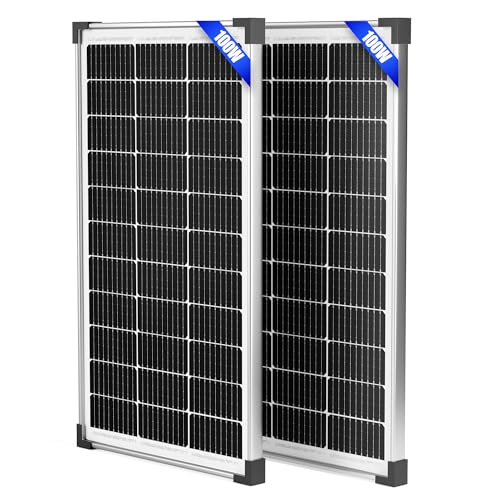
Voltset 200W 12V Monocrystalline Solar Panel Pair
Best for: 12V off-grid power with weather resistance
- Wattage
- 200W (what this guide is about)
- Rated Power
- 200W
- Conversion Efficiency
- 23%-30%
- Cell Type
- Monocrystalline
- System Voltage
- 12V
- Busbar Count
- 9BB
View on Amazon: Voltset 200W 12V Monocrystalline Solar Panel Pair Affiliate link
This Voltset panel delivers 200W of power at 12V using high-efficiency monocrystalline cells. It features a 9BB cell layout and a conversion efficiency rated between 23% and 30%. The unit weighs 28 pounds and measures 12.8 by 14.6 inches. It is designed for off-grid use in RVs, boats, and cabins. The IP67 rating ensures durability in harsh weather conditions.
Pros
- 200W rated power output for steady energy generation
- High 23%-30% conversion efficiency from Grade A+ cells
- IP67 weatherproof rating for extreme temperatures and loads
- Pre-drilled holes for quick mounting on various surfaces
Cons
- 200W output is lower than the 400W alternative
- 28-pound weight makes it heavier than compact 200W variants
- Single 12V system limits compatibility with 24V setups
Good fit if
- You need a reliable 200W input for 12V battery systems
- You require weather-resistant panels for outdoor or marine use
- You prefer monocrystalline cells for higher space efficiency
Skip if
- You need maximum power and can fit a 400W panel
- You are running a 24V electrical system
- You need a lightweight panel for frequent portable travel
Verdict: Voltset 200W 12V Monocrystalline Solar Panel is a durable, high-efficiency option for users who need reliable 200W input for 12V off-grid setups. It suits those prioritizing weather resistance over raw wattage.

Renogy 400W N-Type Solar Panel 2-Pack
Best for: High-efficiency power in compact spaces
- Wattage
- 400W (what this guide is about)
- Rated Power
- 400W
- Conversion Efficiency
- 25%
- Cell Type
- N-Type
- System Voltage
- 24V
- Busbar Count
- 16BB
View on Amazon: Renogy 400W N-Type Solar Panel 2-Pack Affiliate link
This Renogy 400W panel uses N-Type cells and 16BB technology to reach 25% conversion efficiency. It operates at 24V but works with 12V systems. The frame is compact and lightweight, saving space in tight areas like Class B vans. It handles high heat well and degrades slowly over time. You get reliable power in hot climates or cloudy conditions.
Pros
- 25% cell efficiency with 16BB technology
- Compact and lightweight design saves space
- Low temperature coefficient for hot climates
- Compatible with 12V and 24V systems
Cons
- 24V system voltage limits direct 12V use
- No mounting hardware included in specs
- Single panel size may not fit all roofs
Good fit if
- You need high efficiency in small spaces
- You live in a hot climate
- You have a 24V battery system
Skip if
- You only have 12V equipment
- You need included mounting brackets
- You want a smaller 200W panel
Verdict: Renogy 400W N-Type Solar Panel delivers top-tier efficiency for van dwellers and hot-climate users, but its 24V base requires careful system matching.
Specifications side by side
| Spec | Voltset 200W 12V Monocrystalline Solar Panel Pair | Renogy 400W N-Type Solar Panel 2-Pack |
|---|---|---|
| Rated Power | 200W | 400W |
| Conversion Efficiency | 23%-30% | 25% |
| Cell Type | Monocrystalline | N-Type |
| System Voltage | 12V | 24V |
| Busbar Count | 9BB | 16BB |
| IP Rating | IP67 | IP67 |
| Weight | 28 pounds | not stated |
| Wattage | 200W | 400W |
| Application | RV, Off-Grid, Marine | Home, RV, Off-Grid, Marine |
| Features | not stated | Solar Charging |
| Voltage | 12V | not stated |
| Water Resistance | Waterproof | not stated |
| Dimensions | 14.6 × 12.8 × 1.7 inches | 49.7 × 30.1 × 1.2 inches |
| Size | 200W 2-Pack | 200 W N-Type 2-Pack Solar Panel |
| Color | Black | Silver |
| Model | VS-YL-200W | N-Type 400 Watt Solar Panel 24 Volt |
Frequently asked questions
Do 400W solar panels charge faster than 200W panels?
Yes, higher wattage generally means faster charging. The Renogy 400W N-Type Solar Panel delivers double the power of the Voltset 200W unit. You get 400W per unit from Renogy versus 200W per unit from Voltset. This increased output allows your battery to reach full capacity more quickly under similar sunlight conditions.
Which panel is better for small RV roofs?
The Renogy 400W N-Type Solar Panel is better for tight spaces. It is 7.5% smaller and 11.7% lighter than its predecessor. This compact design fits tight Class B van roofs while delivering 400W of power. You gain high output without sacrificing valuable roof real estate compared to bulkier alternatives.
What voltage systems do these panels support?
The Voltset 200W 12V Monocrystalline Solar Panel is designed for 12V systems. The Renogy 400W N-Type Solar Panel has a base voltage of 24V. You must match your panel voltage to your charge controller and battery bank. Using a 24V panel on a 12V system without proper conversion can cause issues.
Are N-Type cells more efficient than Monocrystalline?
N-Type cells often offer higher efficiency, especially in heat. The Renogy panel uses N-Type technology for top-tier efficiency in hot climates. The Voltset panel uses standard Monocrystalline cells. If you live in a hot region, the N-Type cells in the Renogy unit may maintain performance better than traditional monocrystalline designs.
How much space does a 200W panel take up?
The Voltset 200W panel measures 14.6 inches in length and 12.8 inches in width. It weighs 28 pounds for a 2-pack. This size is manageable for smaller setups. You can easily mount it on boats or small cabins where space is limited but you still need reliable 12V off-grid power.
Can I mix 200W and 400W panels together?
It is not recommended to mix panels with different wattages or voltages. The Renogy 400W panel operates at 24V, while the Voltset 200W panel is 12V. Mixing them can lead to significant power loss or damage to your charge controller. Keep your solar array consistent with a single voltage and wattage rating for best results.