300W or 100W Generators? Compared by Specs
As an Amazon Associate we earn from qualifying purchases. Links on this page are affiliate links.
You are comparing a 300W vs 100W generator setup. Both units use LiFePO4 batteries for long life. The Jackery Explorer 300 offers 300W output and 292Wh capacity. The Explorer 1000 v2 provides 1500W output and 1070Wh capacity. The main difference is power scale. One fits day hikes. The other handles home essentials. You must choose based on your energy needs.
Key differences
| Aspect | Jackery Solar Generator 300 with 40W Panel | Jackery Explorer 1000 v2 with Two 100W Panels |
|---|---|---|
| Running Wattage | 300W | 1500W |
| Capacity | 292Wh | 1070Wh |
| Surge Wattage | 600W | 3000W |
| Weight | 12.9 lbs | 23.8 lbs |
| AC Ports | 2 | 3 |
Which one should you choose?
Choose Jackery Solar Generator 300 with 40W Panel if
- You need a lightweight unit for hiking or camping.
- You only need to charge small electronics and cameras.
- You prefer a smaller footprint for easy packing.
Choose Jackery Explorer 1000 v2 with Two 100W Panels if
- You need to run larger appliances like fridges or tools.
- You want faster charging via AC wall outlet.
- You need more energy storage for longer off-grid trips.
Verdict: Choose the Explorer 300 if you prioritize portability and light loads. Choose the Explorer 1000 v2 if you need higher power for larger devices and more runtime. The 1500W model offers significantly more capacity and output for serious power needs.
300W vs 100W Generator Specs
Output wattage
Jackery Explorer 300 provides 300W of running power with a 600W surge peak. This allows it to handle laptops, cameras, and small drones. Jackery Explorer 1000 v2 delivers 1500W of running power and 3000W surge. It powers home essentials like fridges and AC units. The 1000 v2 handles significantly higher loads. The Explorer 300 is limited to low-draw devices. You choose based on the appliances you need to run simultaneously.
Energy capacity
Jackery Explorer 300 stores 292Wh of energy. This supports smaller loads for shorter durations. Jackery Explorer 1000 v2 stores 1070Wh. It holds nearly four times more energy than the Explorer 300. This larger capacity allows you to run devices for much longer periods or power multiple high-draw items. The difference in storage is substantial. You get significantly more runtime with the 1000 v2. The Explorer 300 is better for short trips or light use.
Port variety
Jackery Explorer 300 features two AC outlets, one 100W USB-C PD port, two USB-A ports, and a car port. It supports up to six devices. Jackery Explorer 1000 v2 includes three AC outlets, two USB-C ports, one USB-A port, and a car port. It also has LED lights. The 1000 v2 offers more AC outlets and an extra USB-C port. Both provide versatile connectivity. The 1000 v2 edges ahead with slightly more output options for simultaneous charging.
Battery longevity
Jackery Explorer 300 uses LiFePO4 chemistry. It delivers over 4,000 charge cycles to 70% capacity. This ensures more than 11 years of service. Jackery Explorer 1000 v2 also uses LiFePO4 chemistry. It delivers 4,000 cycles to 70% capacity. Both units offer the same battery lifespan and chemistry. There is no difference in expected durability or cycle count. You get identical long-term reliability from both battery types. The choice depends on other factors like power needs.
Solar input
Jackery Explorer 300 pairs with a 40W solar panel. It reaches 80% capacity in 7.5 hours. Jackery Explorer 1000 v2 pairs with two 100W panels. The total solar input is 200W. This allows much faster solar recharging. The 1000 v2 accepts significantly more solar power. It can recharge faster when using compatible panels. The Explorer 300 has lower solar input capability. You should choose the 1000 v2 if you plan to rely heavily on solar energy.
Which generator fits your power needs
Hikers needing lightweight portable power
The Explorer 300 weighs only 12.9 pounds, making it easy to carry on long trips. Its 292Wh capacity and 300W output handle small electronics efficiently. The included 40W solar panel allows for slow recharging in the field. This compact size and manageable weight suit users prioritizing portability over raw capacity.
Campers requiring high power output
The Explorer 1000 v2 delivers 1500W running power and 3000W surge capacity. It features three AC outlets and two USB-C ports for multiple devices. The 1070Wh battery stores enough energy for extended use. Two 100W panels provide rapid solar input. This setup supports heavier loads like small appliances or power tools.
Users wanting fast wall charging
The Explorer 1000 v2 charges from zero to full in one hour via AC input. This speed is significantly faster than typical solar-only recharging methods. The unit also includes smart app controls for monitoring usage. For users who need quick top-ups between outings, this rapid charging capability offers substantial convenience and time savings.
Travelers minimizing gear weight
At 12.9 pounds, the Explorer 300 is much lighter than the 23.8-pound Explorer 1000 v2. Its smaller footprint and integrated handle improve portability. While it has less capacity, the trade-off favors mobility. The 40W solar panel adds minimal bulk. This choice is ideal for those carrying gear over long distances.
Quick picks
| # | Product | Best for | Price |
|---|---|---|---|
| 1 | Jackery Solar Generator 300 with 40W Panel | lightweight camping and small electronics | Check price of Jackery Solar Generator 300 with 40W Panel on Amazon |
| 2 | Jackery Explorer 1000 v2 with Two 100W Panels | High-power home backup and RV use | Check price of Jackery Explorer 1000 v2 with Two 100W Panels on Amazon |
The products compared

Jackery Solar Generator 300 with 40W Panel
Best for: lightweight camping and small electronics
- Wattage
- 300W (what this guide is about)
- Running Wattage
- 300 W
- Surge Wattage
- 600 W
- Capacity
- 292 Wh
- Battery Chemistry
- LiFePO4
- Output Ports
- 2 AC, 1 USB-C PD, 2 USB-A, 1 car port
View on Amazon: Jackery Solar Generator 300 with 40W Panel Affiliate link
The Jackery Explorer 300 delivers 300W of continuous power and a 600W surge capacity from its 292Wh LiFePO4 battery. It includes two AC outlets, a 100W USB-C port, and two USB-A ports. This unit weighs 12.9 lbs and supports over 4,000 charge cycles. It pairs with a 40W solar panel for off-grid charging. This model suits users needing reliable, lightweight power for small electronics and camping gear.
Pros
- LiFePO4 battery chemistry offers over 4,000 charge cycles
- Includes two AC outlets for standard devices
- 100W USB-C PD port for fast device charging
- Lightweight design at 12.9 lbs with integrated handle
Cons
- Small 292Wh capacity limits runtime for high-drain devices
- Included 40W solar panel charges slowly at 80% in 7.5 hours
- 300W running wattage restricts use with larger appliances
Good fit if
- You need to power small electronics like laptops and cameras
- You prioritize long battery lifespan over raw capacity
- You want a lightweight unit for easy transport
Skip if
- You need to run high-wattage appliances like microwaves
- You require fast solar recharging without waiting hours
- You need more than 292Wh of stored energy
Verdict: Jackery Explorer 300 300W Portable Generator is a durable, lightweight option for low-power needs. It fits campers and hikers who value longevity and portability over high output. It is not suitable for powering large household devices.
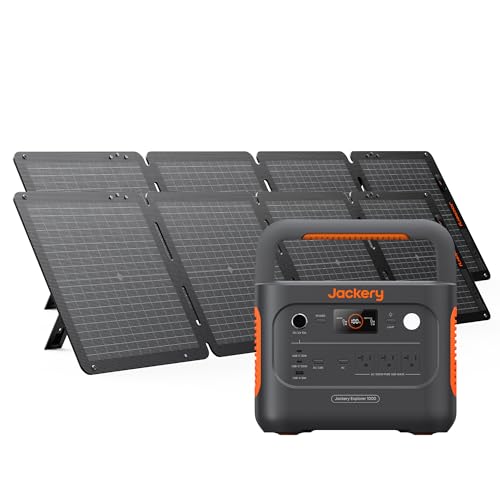
Jackery Explorer 1000 v2 with Two 100W Panels
Best for: High-power home backup and RV use
- Wattage
- 100W (what this guide is about)
- Running Wattage
- 1,500W
- Surge Wattage
- 3,000W
- Capacity
- 1,070Wh
- Battery Chemistry
- LiFePO4
- Output Ports
- 3 AC, 2 USB-C, 1 USB-A, 1 DC
View on Amazon: Jackery Explorer 1000 v2 with Two 100W Panels Affiliate link
The Jackery Explorer 1000 v2 delivers 1500W running power and 3000W surge capacity from a 1070Wh LiFePO4 battery. It includes two 100W solar panels for off-grid charging. The unit weighs 23.8 pounds and features fast 1-hour AC charging. You get three AC ports, two USB-C ports, and one USB-A port. This setup suits users needing reliable backup power for essential home appliances or RV trips.
Pros
- 1500W continuous AC output handles high-draw appliances
- 1070Wh LiFePO4 battery offers 4000-cycle lifespan
- Charges from 0 to 100% in just 1 hour via AC
- Includes two 100W solar panels for renewable input
- 100W USB-C port supports fast device charging
Cons
- Weighs 23.8 pounds, making it less portable than smaller units
- Solar panels are sold separately from the main unit
- Only 1070Wh capacity limits runtime for heavy loads
Good fit if
- You need to power refrigerators or AC units during outages
- You want a long-lasting LiFePO4 battery system
- You require fast 1-hour AC charging capability
Skip if
- You need a lightweight unit under 15 pounds
- You only require 100W to 300W output capacity
- You prefer a single integrated solar panel package
Verdict: Jackery Explorer 1000 v2 with 200W Solar is a robust power station for users who need high wattage and long battery life. It fits those who prioritize fast charging and durable chemistry over ultra-portability.
Specifications side by side
| Spec | Jackery Solar Generator 300 with 40W Panel | Jackery Explorer 1000 v2 with Two 100W Panels |
|---|---|---|
| Running Wattage | 300 W | 1,500W |
| Surge Wattage | 600 W | 3,000W |
| Capacity | 292 Wh | 1,070Wh |
| Battery Chemistry | LiFePO4 | LiFePO4 |
| Output Ports | 2 AC, 1 USB-C PD, 2 USB-A, 1 car port | 3 AC, 2 USB-C, 1 USB-A, 1 DC |
| Solar Panel Wattage | 40 W | 2 x 100W |
| Wattage | 300W | 100W |
| Application | Camping, RV, Travel, Power Outage | Outdoor, Emergency, RV, Off-Grid |
| Features | AC Outlet | not stated |
| Dimensions | 15.4 × 9.92 × 11.9 inches | 8.82 × 12.9 × 9.27 inches |
| Weight | 12.9 pounds | 23.8 pounds |
| Model | JE-300E | JE-1000D |
| Color | not stated | Orange |
Frequently asked questions
Can a 300W generator charge a laptop?
Yes, the Jackery Explorer 300 provides 300W of running power. This is sufficient for most laptops, cameras, and small electronics. Its 292Wh capacity supports moderate usage. The unit weighs 12.9 pounds, making it easy to carry for camping or hiking trips where power access is limited.
Is the 100W solar panel setup enough for home backup?
The Jackery Explorer 1000 v2 is designed for high-power home backup and RV use. It delivers 1500W of running power and 3000W surge. This capacity handles larger appliances. The included two 100W panels help recharge the 1070Wh battery, supporting off-grid needs during emergencies.
How do the weights compare between the two models?
Portability differs significantly. The Explorer 300 weighs 12.9 pounds, fitting hikers who value lightweight gear. The Explorer 1000 v2 weighs 23.8 pounds. It prioritizes durable chemistry and fast charging over ultra-portability. Choose the lighter option for hiking and the heavier one for stationary backup.
What battery chemistry do these units use?
Both units utilize LiFePO4 battery chemistry. This type offers long life and stability. The Explorer 300 suits low-power needs with its 292Wh capacity. The Explorer 1000 v2 supports higher demands with 1070Wh. LiFePO4 ensures durability for repeated charging cycles in outdoor or emergency scenarios.
Can the 300W unit power large household devices?
No, the Jackery Explorer 300 is not suitable for large household devices. It provides 300W of running power and 600W surge. This limits use to small electronics like laptops and fans. For larger appliances, the 1500W output of the Explorer 1000 v2 is required.
Do these generators include solar panels?
Yes, both setups include solar charging capabilities. The Explorer 300 comes with one 40W panel for slow recharging. The Explorer 1000 v2 includes two 100W panels. These allow you to replenish the battery using sunlight, which is useful for off-grid camping or extended emergency preparedness.