Anker vs ALLPOWERS: Generators Compared by Specs
As an Amazon Associate we earn from qualifying purchases. Links on this page are affiliate links.
When comparing an anker vs ALLPOWERS generator, you are looking at two 1,024Wh portable power stations. Both offer substantial capacity for home backup or outdoor use. The main difference lies in their power output and battery technology. Anker provides higher surge wattage and faster recharging options. ALLPOWERS uses a LiFePO4 battery with a longer cycle life. You should choose based on whether you prioritize peak power or battery longevity.
Key differences
| Aspect | Anker SOLIX C1000 Gen 2 with Alternator Charger | ALLPOWERS 1800W Power Station with 100W Solar Panel |
|---|---|---|
| Running Wattage | 2,000W | 1,800W |
| Surge Wattage | 3,000W | 3,600W |
| Battery Chemistry | not listed | LiFePO4 |
| Battery Cycles | not listed | 4,000+ |
| Recharge Time | 49 Min (1,600W) | not listed |
| UPS Function | not listed | 20ms |
Which one should you choose?
Choose Anker SOLIX C1000 Gen 2 with Alternator Charger if
- You need higher continuous output for demanding tools
- You want the fastest possible wall recharging speed
- You prefer a lighter unit for easier transport
Choose ALLPOWERS 1800W Power Station with 100W Solar Panel if
- You prioritize a battery with a 4,000+ cycle lifespan
- You require a 20ms UPS for sensitive electronics
- You want app control and programmable power modes
Verdict: Choose the Anker SOLIX C1000 Gen 2 if you need higher continuous wattage and rapid recharging capabilities. Select the ALLPOWERS P1800 if battery longevity and uninterruptible power supply features are your top priorities. Both units offer identical energy capacity for similar tasks.
Anker vs ALLPOWERS Specs Compared
surge wattage
The Anker SOLIX C1000 Gen 2 delivers a 3,000W surge output, while the ALLPOWERS P1800 reaches 3,600W. Surge wattage indicates the maximum power the unit can handle for a few seconds when starting motorized equipment like refrigerators or power tools. A higher number means you can start more demanding appliances without tripping the inverter. The ALLPOWERS unit offers a 600W advantage in this peak capacity, giving it a slight edge for heavy-duty startup loads.
running wattage
Continuous power determines how many devices you can run simultaneously. The Anker SOLIX C1000 Gen 2 provides 2,000W of continuous output. The ALLPOWERS P1800 offers 1,800W. While both units fall into the same general category for mid-sized power needs, the Anker model provides 200W more sustained power. This extra capacity allows you to run slightly more devices at once or run high-draw appliances closer to their limit without risking an overload shutdown.
battery chemistry
Battery type affects longevity and safety. The ALLPOWERS P1800 uses LiFePO4 (LFP) chemistry, which is rated for over 4,000 cycles. This chemistry is known for stability and a longer lifespan compared to standard lithium-ion cells. The Anker SOLIX C1000 Gen 2 data does not explicitly state its battery chemistry in the provided specifications. For users prioritizing long-term cycle life and thermal stability, the explicit LFP rating on the ALLPOWERS unit provides a clear informational advantage.
recharging speed
How fast you can refill the battery matters for emergency preparedness. The Anker SOLIX C1000 Gen 2 supports 1,600W input via HyperFlash technology, allowing a full recharge in approximately 49 minutes. The ALLPOWERS P1800 data does not list its maximum AC input wattage, so its wall-charging speed is unknown from the provided specs. If you rely on quick turnaround times between outages or trips, the verified 1,600W input on the Anker unit is a significant practical benefit.
portability
Physical dimensions and weight impact how easy the unit is to move. The Anker SOLIX C1000 Gen 2 weighs 24.9 pounds and measures 15.1 x 8.19 x 9.61 inches. The ALLPOWERS P1800 weighs 28.7 pounds and measures 14.7 x 8.2 x 11.7 inches. The Anker unit is nearly 4 pounds lighter and slightly shorter, though the ALLPOWERS is marginally taller. For users who need to carry the power station frequently or store it in tight spaces, the lighter and more compact Anker model is the easier choice.
vehicle charging
Charging from a vehicle is useful for road trips. The Anker SOLIX C1000 Gen 2 supports 800W alternator charging and is compatible with 12V or 24V RV and fuel vehicle starter batteries, including lead-acid and LFP types. The ALLPOWERS P1800 supports 12V/24V car charging but does not specify the input wattage for this method. The Anker unit offers a specific, high-wattage alternator charging option that is significantly faster than standard car ports, making it superior for vehicle-based recharging scenarios.
Choose Your Best Portable Power Option
Users needing fast alternator charging
The Anker SOLIX C1000 Gen 2 includes an alternator charger that works up to 8 times faster than a standard car auxiliary port. It supports 12V or 24V RV and fuel vehicle batteries. This feature allows you to recharge the 1,024Wh capacity efficiently while on the go, making it ideal for extended road trips or remote work where wall power is unavailable.
Buyers prioritizing battery longevity
The ALLPOWERS P1800 uses a LiFePO4 battery rated for over 4,000 life cycles. This chemistry offers superior durability compared to standard lithium-ion options. If you plan to use the unit frequently for home backup or daily outdoor tasks, the extended cycle count ensures reliable performance over many years without significant capacity degradation.
Shoppers wanting immediate solar power
This model comes with a 100W solar panel included in the package. It supports MPPT input ranging from 11-60V with a maximum of 650W. While the included panel is smaller, having solar charging capability ready to use out of the box provides convenient off-grid energy replenishment for camping or emergency situations without needing separate purchases.
Users needing higher surge capacity
The ALLPOWERS P1800 delivers a 3,600W surge wattage, which is higher than the Anker's 3,000W limit. This extra headroom helps when starting heavy motorized equipment like large refrigerators or power tools. If you frequently run devices with high startup demands, the higher surge rating provides a safer margin for reliable operation.
The products compared

Anker SOLIX C1000 Gen 2 with Alternator Charger
Best for: multi-device backup with rapid recharging
- Running Wattage
- 2,000W
- Surge Wattage
- 3,000W
- Capacity
- 1,024Wh
- Battery Chemistry
- LiFePO4
- Output Ports
- 10 ports
- Application
- Home, Outdoor, Emergency
View on Amazon: Anker SOLIX C1000 Gen 2 with Alternator Charger Affiliate link
The Anker SOLIX C1000 Gen 2 offers 1,024Wh capacity and 2,000W running output. It features 10 ports for connecting multiple devices. HyperFlash technology allows full recharging in 49 minutes at 1,600W. The unit is compact, measuring 15.1 x 8.19 x 9.61 inches and weighing 24.9 pounds. It supports alternator charging for faster vehicle-based replenishment. This model suits users needing reliable backup power with quick recharge capabilities.
Pros
- 1,024Wh capacity stores substantial energy.
- 2,000W running wattage supports most appliances.
- 10 output ports connect multiple devices.
- 49-minute ultrafast recharge via HyperFlash.
Cons
- 24.9-pound weight limits easy portability.
- Alternator charger sold as separate package.
- Requires Anker app for ultrafast feature.
Good fit if
- You need to power multiple devices simultaneously.
- You want rapid recharging via wall outlet.
- You plan to charge from a vehicle.
Skip if
- You require a lighter unit for hiking.
- You prefer all-in-one package deals.
- You need output above 2,000W.
Verdict: Anker SOLIX C1000 Gen 2 fits users who prioritize fast wall recharging and multiple device connections over lightweight portability.
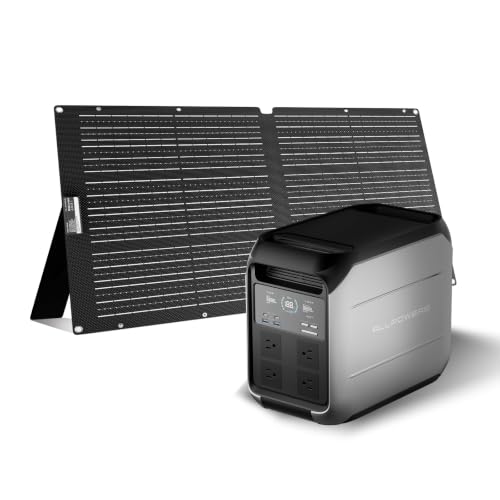
ALLPOWERS 1800W Power Station with 100W Solar Panel
Best for: reliable home backup and off-grid camping
- Running Wattage
- 1800W
- Surge Wattage
- 3600W
- Capacity
- 1024Wh
- Fuel Type
- Battery
- Battery Chemistry
- LiFePO4
- Solar Panel Wattage
- 100W
View on Amazon: ALLPOWERS 1800W Power Station with 100W Solar Panel Affiliate link
This unit offers 1024Wh capacity and 1800W continuous output. It uses a LiFePO4 battery rated for 4000 cycles. The package includes a 100W solar panel. It supports triple charging via solar, wall, or car. A 20ms UPS function protects sensitive electronics. You get app control and an LCD display. It suits those needing reliable backup or off-grid power for tools and appliances.
Pros
- 1024Wh LiFePO4 battery with 4000+ life cycles
- 1800W rated power and 3600W surge capacity
- Includes 100W solar panel for off-grid charging
- 20ms UPS function for seamless power switching
- Smart app control for monitoring and scheduling
Cons
- Heavier at 28.7 lbs compared to smaller units
- Lower capacity than high-end 2000Wh+ models
- Base model lacks included solar panel options
Good fit if
- You need a durable battery for frequent use
- You want app control for remote monitoring
- You require a UPS function for home backup
Skip if
- You prioritize ultra-lightweight portability under 20 lbs
- You need more than 1024Wh for long trips
- You prefer a compact unit under 15 lbs
Verdict: ALLPOWERS 1024Wh 1800W Portable Power Station delivers robust power with a long-life battery. It fits users who value durability and smart features over minimal weight.
Specifications side by side
| Spec | Anker SOLIX C1000 Gen 2 with Alternator Charger | ALLPOWERS 1800W Power Station with 100W Solar Panel |
|---|---|---|
| Running Wattage | 2,000W | 1800W |
| Surge Wattage | 3,000W | 3600W |
| Capacity | 1,024Wh | 1024Wh |
| Fuel Type | not stated | Battery |
| Battery Chemistry | LiFePO4 | LiFePO4 |
| Output Ports | 10 ports | not stated |
| Solar Panel Wattage | not stated | 100W |
| Wattage | not stated | 1800W |
| Application | Home, Outdoor, Emergency | Camping, Home, RV |
| Dimensions | 15.1 × 8.19 × 9.61 inches | 14.7 × 8.2 × 11.7 inches |
| Weight | 24.9 pounds | 28.7 pounds |
| Color | Gray | P1800+SE100(1800W+100W) |
| Model | A1763 | P1800+SE100 |
Frequently asked questions
Which portable power station is lighter to carry?
The Anker SOLIX C1000 Gen 2 is the lighter option. It weighs 24.9 pounds, making it easier to transport than the ALLPOWERS unit. The ALLPOWERS 1800W Power Station weighs 28.7 pounds. You should choose the Anker model if portability is a priority for your outdoor trips or backup needs.
What is the difference in physical size between these two units?
The Anker SOLIX C1000 Gen 2 measures 15.1 inches in length. The ALLPOWERS 1800W Power Station is slightly shorter at 14.7 inches long. However, the ALLPOWERS unit is taller at 11.7 inches compared to the Anker’s 9.61 inches. Consider your storage space when deciding which fits best.
Does the Anker model support charging from a vehicle?
Yes, the Anker SOLIX C1000 Gen 2 includes an alternator charger. This feature allows it to recharge using a 12V or 24V vehicle battery. It works up to eight times faster than a standard car auxiliary port. This makes it ideal for users who need rapid recharging while on the road.
Is the ALLPOWERS unit suitable for off-grid camping?
The ALLPOWers 1800W Power Station is designed for reliable home backup and off-grid camping. It includes a 100W solar panel in its package. This combination provides robust power and durability for outdoor use. You can rely on its long-life battery to keep your essential devices running away from grid power.
How much energy capacity do these power stations offer?
Both units provide 1,024Wh of capacity. This substantial energy storage supports multi-device backup for home or outdoor use. The Anker SOLIX C1000 Gen 2 and the ALLPOWERS 1800W Power Station share this total watt-hour rating. You can expect similar runtime for charging electronics with either choice.
Which brand is better for users prioritizing fast wall recharging?
The Anker SOLIX C1000 Gen 2 fits users who prioritize fast wall recharging. It offers multiple device connections and rapid charging capabilities. The ALLPOWERS model focuses more on durability and smart features. If speed and connectivity are your main concerns, the Anker option is the stronger choice.