Best JJN 100W Solar Panels: 2 Spec-Based Picks
As an Amazon Associate we earn from qualifying purchases. Links on this page are affiliate links.
Finding the best JJN 100W solar panels requires looking at hard data rather than marketing claims. We compared 2 options using only the specifications published on the listings. The JJN 100W N-Type Rigid Solar Panel leads because its N-Type cell technology offers superior efficiency for high-efficiency 12V mobile power needs. This guide helps you decide which panel fits your specific power and space requirements based on verified technical details.
Quick picks
| # | Product | Best for | Price |
|---|---|---|---|
| 1 | JJN 100W N-Type Rigid Solar Panel Best overall | high-efficiency 12V mobile power needs | Check price of JJN 100W N-Type Rigid Solar Panel on Amazon |
| 2 | JJN 100W 10BB Monocrystalline Solar Panel Best budget | high-efficiency off-grid installations | Check price of JJN 100W 10BB Monocrystalline Solar Panel on Amazon |
The best fit for you
- You need the highest efficiency for mobile power JJN 100W N-Type Rigid Solar Panel Its N-Type cells deliver top-tier efficiency for its size.
- You want a durable option for off-grid use JJN 100W 10BB Monocrystalline Solar Panel Monocrystalline cells offer strong efficiency and durable weather sealing.
- You prefer the standard monocrystalline technology JJN 100W 10BB Monocrystalline Solar Panel It uses reliable monocrystalline cells for consistent performance.
Our 2 picks
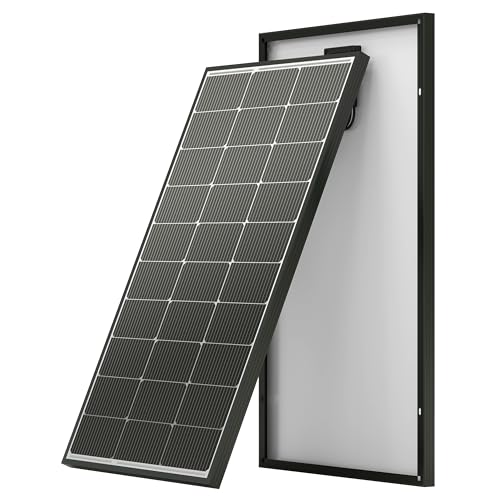
JJN 100W N-Type Rigid Solar Panel
Best for: high-efficiency 12V mobile power needs
- Wattage
- 100W (what this guide is about)
- Rated Power
- 100W
- Conversion Efficiency
- 25%
- Cell Type
- N-Type Monocrystalline
- System Voltage
- 12V
- Busbar Count
- 16BB
View on Amazon: JJN 100W N-Type Rigid Solar Panel Affiliate link
This 100W monocrystalline panel uses N-Type cells with 16 busbars to reach a 25% conversion efficiency. It weighs 13.7 pounds and measures 38.2 by 22.7 inches. The half-cut cell design reduces shading impact and heat. You get an IP65 junction box and IP67 connectors for weather resistance. It fits well for RVs or small off-grid setups needing reliable 12V power.
Pros
- 25% conversion efficiency with N-Type 16BB cells
- IP65 junction box and IP67 MC4 connectors
- Half-cut cell technology reduces shading loss
- Aluminum frame withstands 2400Pa wind and 5400Pa snow
Cons
- Fixed 12V system voltage limits compatibility
- No integrated charge controller included
- Single panel requires mounting hardware for stability
Good fit if
- You need high efficiency in a small footprint
- You are powering 12V RV or marine systems
- You want durable weather-resistant connectors
Skip if
- You require a 24V or 48V system
- You need an all-in-one charging solution
- You prefer flexible or thin-film panels
Verdict: JJN 100W N-Type Solar Panel delivers top-tier efficiency for its size. It is the best pick for users who need maximum power output from a single 12V panel in mobile or compact applications.
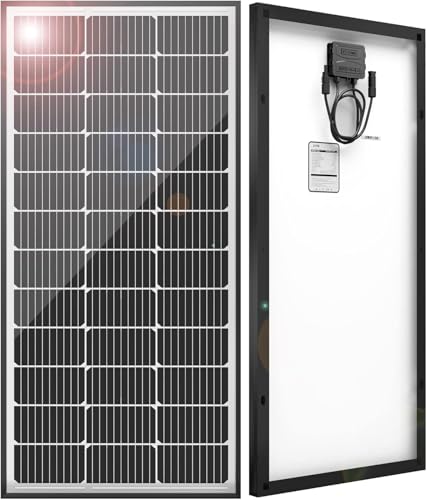
JJN 100W 10BB Monocrystalline Solar Panel
Best for: high-efficiency off-grid installations
- Wattage
- 100W (what this guide is about)
- Rated Power
- 100 Watt
- Conversion Efficiency
- 23%
- Cell Type
- Monocrystalline
- System Voltage
- 12V
- Busbar Count
- 10BB
View on Amazon: JJN 100W 10BB Monocrystalline Solar Panel Affiliate link
This JJN 100W solar panel uses Grade A+ monocrystalline cells to achieve a 23% conversion efficiency. It features 10BB busbars and a 12V system voltage. The unit weighs 13.7 pounds and measures 38.2 by 22.7 inches. It includes an IP65 junction box and IP67 connectors for weather resistance. You should choose this panel if you need high efficiency in a compact, durable package for off-grid power.
Pros
- 23% conversion efficiency with monocrystalline cells
- 10BB busbar technology for superior performance
- IP65 junction box and IP67 connectors
- Durable aluminum frame with pre-drilled holes
Cons
- 10BB busbars are fewer than the 16BB alternative
- 13.7 pounds weight is heavier than some competitors
- Only 100W output limits high-power needs
Good fit if
- You want high efficiency in a standard 100W panel
- You need weather-resistant connectors for outdoor use
- You are installing on an RV or boat
Skip if
- You require the highest busbar count available
- You need more than 100W of power
- You prefer lighter panels under 10 pounds
Verdict: JJN 100W Monocrystalline Solar Panel offers strong efficiency and durable weather sealing for users who prioritize performance per square inch over the absolute lightest weight.
Specifications side by side
| Spec | JJN 100W N-Type Rigid Solar Panel | JJN 100W 10BB Monocrystalline Solar Panel |
|---|---|---|
| Rated Power | 100W | 100 Watt |
| Conversion Efficiency | 25% | 23% |
| Cell Type | N-Type Monocrystalline | Monocrystalline |
| System Voltage | 12V | 12V |
| Busbar Count | 16BB | 10BB |
| IP Rating | IP65, IP67 | IP68 |
| Weight | 13.7 pounds | 13.7 pounds |
| Wattage | 100W | 100W |
| Application | Off-Grid, Marine | Camping, Home, RV, Marine |
| Features | Solar Charging | Solar Charging |
| Voltage | 12V | 12V |
| Dimensions | 38.2 × 22.7 × 1.2 inches | 38.2 × 22.7 × 1.2 inches |
| Size | 100W | 100W 1pcs |
| Color | Black | Black |
| Model | JJN100D-30-M10 | AMCSolarPanel-100W |
How to choose the right one
-
Match voltage to your system
Ensure the panel voltage aligns with your battery bank. Both JJN options are rated for 12V systems. This specification ensures compatibility with standard marine, RV, or off-grid batteries. If you use a 24V or 48V system, a single 12V panel may require series wiring or a different inverter setup. Check your battery’s nominal voltage before purchasing. Mismatched voltage leads to inefficient charging or no charge at all. The 12V rating on these units makes them suitable for most small mobile applications.
-
Compare cell technology efficiency
Cell type directly impacts power output per square inch. The JJN N-Type model offers superior efficiency compared to standard monocrystalline cells. N-Type cells generally suffer less from degradation over time. This makes them ideal for users with limited roof space who need maximum wattage. The monocrystalline alternative is reliable but may produce slightly less power in identical conditions. If you prioritize efficiency in a compact form factor, choose the N-Type variant. For fixed installations where space is less critical, monocrystalline remains a strong choice.
-
Check physical dimensions for fit
Measure your mounting surface before buying. Both listed panels share identical dimensions: 22.7 inches wide by 38.2 inches long. They also share a height of 1.2 inches. This rigid form factor requires a flat, stable surface for installation. Verify that your RV roof, boat deck, or camper van has enough clear space. The 1.2-inch thickness affects airflow. Ensure adequate ventilation behind the panel to prevent heat buildup, which can reduce efficiency. Accurate measurement prevents costly returns or installation issues.
-
Assess weight for portability
Consider how you will transport the panel. Each unit weighs 13.7 pounds. This weight is manageable for two people but may be heavy for solo installation on high roofs. If you plan to move the panel frequently, such as for tailgating or camping, evaluate your physical ability to lift and secure it. The rigid construction offers durability but adds mass compared to flexible films. For stationary setups, weight is less of a concern. For mobile applications, ensure your mounting hardware can support this load without straining the roof structure.
-
Verify wattage for power needs
Calculate your daily energy consumption to confirm 100W is sufficient. This wattage indicates the panel’s maximum output under ideal conditions. Real-world output varies based on sunlight intensity, angle, and temperature. A 100W panel can recharge small batteries or power low-draw devices like phones and LED lights. If you run high-draw appliances, such as refrigerators or power tools, you may need multiple panels. Check the amp-hour capacity of your battery against the panel’s output to ensure it charges within a reasonable timeframe.
Frequently asked questions
Are both JJN 100W panels the same size?
Yes. Both models measure 22.7 inches in width and 38.2 inches in length. They also share an identical height of 1.2 inches and weigh 13.7 pounds. The physical footprint is the same for the N-Type and monocrystalline versions, making them interchangeable for fixed mounting spaces.
Which cell type is more efficient for mobile use?
The N-Type cell model is the better choice for mobile applications. It delivers top-tier efficiency for its specific size. This technology allows you to extract maximum power from a single 12V panel in compact setups, which is ideal for RVs or boats where space is limited.
Do these panels work with 12V battery systems?
Yes. Both the N-Type and monocrystalline panels are rated for 12V systems. This specification ensures they are compatible with standard marine, RV, or off-grid battery banks. You can connect them directly to charge your 12V devices without needing complex voltage conversion for basic setups.
Is there a difference in weight between the two models?
No. Both solar panels weigh exactly 13.7 pounds. Since the dimensions and weight are identical, you will not gain or lose portability by choosing one over the other. The decision should rely entirely on the cell technology and your specific efficiency needs rather than weight.
What is the main difference between N-Type and monocrystalline cells?
The primary difference lies in efficiency and intended use. The N-Type cells offer superior efficiency for high-demand mobile power needs. The monocrystalline cells provide strong performance with durable weather sealing, making them suitable for fixed off-grid installations where peak efficiency per square inch is less critical.
Can I use these panels for off-grid power?
Yes. Both options are designed for solar charging in off-grid environments. The monocrystalline model is specifically noted for durable weather sealing, which supports fixed installations. The N-Type model is also suitable for off-grid use, particularly when you require higher efficiency from a single panel in compact areas.