What Is Cell Type? A Guide for Solar Panels Buyers (2026)
As an Amazon Associate we earn from qualifying purchases. Links on this page are affiliate links.
Understanding Solar Panel Cell Types
When you browse portable power stations, you will see two main solar panel options: N-Type and Monocrystalline. These labels describe the silicon structure inside the panel. This distinction matters for your daily power needs. The term cell type explained helps you choose the right hardware for your gear.
Monocrystalline panels use a single crystal structure. This design offers high efficiency in small spaces. You get more power from a smaller surface area. This is ideal for portable units where weight and size are critical. The dark, uniform look is a visual cue for this technology. It performs well in direct sunlight.
N-Type cells are a newer evolution. They use n-type silicon wafers. This material resists degradation better over time. You will see higher efficiency ratings on many modern listings. The panels maintain their output longer than older types. This means consistent power for your devices during extended trips.
How is this measured? Manufacturers list the efficiency percentage. Look for numbers above twenty percent for high performance. The cell type also affects temperature tolerance. N-Type cells often handle heat better. This keeps your portable station running cooler. Cooler panels lose less power. This is vital in hot outdoor conditions.
Why does this matter to you? If you need maximum power in a compact package, look for high-efficiency monocrystalline options. If you want longevity and stable output, consider N-Type. Both types work well with portable power stations. The choice depends on your specific use case. Check the specs before buying. Ensure the panel matches your station input requirements. This simple step ensures compatibility. It saves you from buying mismatched gear. Focus on the numbers. Let the specs guide your decision. Your power setup depends on these details.
N-Type vs Monocrystalline Cells
N-Type
N-Type cells use a specific silicon structure that reduces degradation over time. You get higher efficiency, meaning more power from the same surface area. This type also handles heat better than older designs. It suits users who need maximum output in sunny or hot conditions. For example, the Callsun 400W Bifacial Solar Panel 2-Pack uses N-Type cells for high efficiency. The Renogy ShadowFlux 120W N-Type Solar Panel offers strong performance in tight spaces. The trade-off is often a higher cost. You pay for the advanced silicon and better long-term stability. If you want panels that last longer with less power loss, this is the practical choice.
Monocrystalline
Monocrystalline cells are made from single-crystal silicon. They offer good efficiency and a uniform black appearance. This type is widely available and reliable for most standard setups. It suits buyers who prioritize durability and proven technology over cutting-edge efficiency. For instance, the Renogy 50W Monocrystalline Solar Panel fits small power needs. The Voltset 200W 12V Monocrystalline Solar Panel Pair offers solid weather resistance. The ZOUPW 100W Foldable Solar Panel uses this cell type for portable camping use. The trade-off is slightly lower efficiency compared to N-Type in extreme heat. You get a balanced option that works well for general off-grid or RV use without premium pricing.
Is N-Type Worth The Upgrade
Who needs it
You should prioritize N-Type monocrystalline panels if you rely on your solar setup for daily critical loads. These cells offer superior efficiency, allowing you to generate more power from a limited surface area. This matters significantly if you have restricted roof space or need to pack your gear for camping. The reduced degradation rate ensures your investment maintains output longer, which is vital for off-grid living or emergency preparedness. Additionally, better heat handling means consistent performance during hot summer days when other panels might struggle. If you need maximum output in compact sizes, this technology delivers. You get more watts per square foot, reducing the number of panels you must carry or install. This efficiency translates to faster battery charging and longer runtime for your devices. It is the practical choice for serious users who cannot afford downtime.
Who can skip it
You can skip N-Type technology if you only use solar panels occasionally for low-power needs. If you are charging phones and tablets once a week, standard panels suffice. The efficiency gains matter less when you have ample space for larger arrays. Budget-conscious buyers might prefer older monocrystalline options to save resources for other gear. Prioritize weight and portability over raw efficiency if you hike long distances. Simpler setups with fewer components are easier to maintain and repair in the field. You do not need advanced heat management for casual weekend trips. Focus on durability and ease of use instead. Basic panels handle moderate tasks well enough. Save the premium technology for professional applications or high-demand scenarios. Your current needs may not justify the complexity or cost of advanced cell structures. Stick to what works for your specific, limited use case.
Solar Panel Glossary
Wattage
The maximum power output in watts. This number tells you how much energy the panel produces under ideal conditions. Higher wattage means faster charging for your station.
Capacity
The total energy stored in the power station, measured in watt-hours. This determines how long you can run devices. Larger capacity supports longer usage away from outlets.
Battery Chemistry
The type of battery cells used, such as Lithium Iron Phosphate. This affects safety, lifespan, and weight. Different chemistries offer varying performance in heat and cold conditions.
Fuel Type
The energy source for generators, like gasoline or propane. This dictates availability and storage needs. Choose based on your typical camping or backup location and access to fuel.
Application
The intended use case, such as camping or emergency backup. This helps you select the right size and features. Match the spec to your specific power requirements.
Start Type
How the generator initiates operation, like recoil or electric start. Electric start is easier for frequent use. Recoil requires physical effort but may be lighter and simpler.
Voltage
The electrical pressure pushing current through your devices. Most stations output 120V AC. Ensure the voltage matches your appliance requirements for safe and proper operation.
Features
Additional capabilities like USB ports or wireless charging. These add convenience but may increase cost. List the ports you need before buying to avoid paying for unused extras.
Quick picks
| # | Product | Best for | Price |
|---|---|---|---|
| 1 | Callsun 400W Bifacial Solar Panel 2-Pack | RVs with space for two panels | Check price of Callsun 400W Bifacial Solar Panel 2-Pack on Amazon |
| 2 | Renogy 50W Monocrystalline Solar Panel | Small power needs and portable setups | Check price of Renogy 50W Monocrystalline Solar Panel on Amazon |
| 3 | Voltset 200W 12V Monocrystalline Solar Panel Pair | Durable 12V off-grid setups | Check price of Voltset 200W 12V Monocrystalline Solar Panel Pair on Amazon |
| 4 | Renogy ShadowFlux 120W N-Type Solar Panel | Space-limited setups needing shade tolerance | Check price of Renogy ShadowFlux 120W N-Type Solar Panel on Amazon |
| 5 | Renogy 400W Foldable Solar Panel Pair | campers needing high-wattage portable power | Check price of Renogy 400W Foldable Solar Panel Pair on Amazon |
| 6 | ZOUPW 100W Foldable Solar Panel | campers needing portable, waterproof power with direct USB charging | Check price of ZOUPW 100W Foldable Solar Panel on Amazon |
Our 6 picks

Callsun 400W Bifacial Solar Panel 2-Pack
Best for: RVs with space for two panels
- Cell Type
- N-Type (what this guide is about)
- Rated Power
- 400W
- Conversion Efficiency
- 25.6%
- Panel Type
- Bifacial
- System Voltage
- 12V/24V
- Busbar Count
- 16BB
View on Amazon: Callsun 400W Bifacial Solar Panel 2-Pack Affiliate link
The Callsun 200W panel uses N-type monocrystalline cells with 16BB technology for 25.6% conversion efficiency. Its bifacial design captures light from both sides, while the TwinCell structure reduces shading losses. Weighing 23.8 lbs, it fits RVs and vans. Pair two for 400W series input, supporting 12V/24V systems. The IP68 junction box and low temperature coefficient ensure stable performance in heat.
Pros
- 25.6% conversion efficiency with N-type monocrystalline cells
- Bifacial design captures rear-side reflected light
- IP68-rated junction box for weather resistance
- TwinCell parallel design mitigates partial shading
Cons
- Single panel weighs 23.8 lbs, requiring two hands
- Fixed 51.3-inch length limits tight storage spaces
- Requires pairing two units for 400W series output
Good fit if
- You need high efficiency in hot climates
- You have space for a 400W series setup
- You want bifacial gain from reflective surfaces
Skip if
- You need a single lightweight portable unit
- You require flexible or rollable panel designs
- You lack space for a 51.3-inch footprint
Verdict: Callsun 200W N-Type Bifacial Solar Panel suits RV owners who can manage two heavy panels and want high efficiency in sunny, hot conditions. It is not for users seeking a single lightweight unit.

Renogy 50W Monocrystalline Solar Panel
Best for: Small power needs and portable setups
- Cell Type
- N-Type, Monocrystalline (what this guide is about)
- Rated Power
- 50W
- Conversion Efficiency
- 25%
- System Voltage
- 12V
- IP Rating
- IP65
- Weight
- 5.07 pounds
View on Amazon: Renogy 50W Monocrystalline Solar Panel Affiliate link
This Renogy panel delivers 50 watts of power using N-Type monocrystalline cells with 25% conversion efficiency. Its compact 20 by 22.9-inch footprint and 5.07-pound weight make it easy to carry or mount. The IP65 junction box protects against dust and water jets. You get reliable output in low-light conditions thanks to bypass diodes. It is a solid option for small power needs or as a supplementary source for larger setups.
Pros
- N-Type monocrystalline cells provide 25% high efficiency
- IP65 rated junction box resists dust and water
- Lightweight 5.07-pound design for easy transport
- Bypass diodes minimize power loss in shade
Cons
- 50-watt output is low compared to other panels on the list
- No integrated battery or charge controller included
- Requires separate mounting hardware for installation
Good fit if
- You need a lightweight panel for backpacking or camping
- You want to supplement a larger solar array
- You require a small, dedicated power source for devices
Skip if
- You need high wattage for off-grid living
- You want an all-in-one charging solution
- You prefer bifacial technology for maximum yield
Verdict: Renogy 50W N-Type Monocrystalline Solar Panel fits users who prioritize portability and efficiency over raw power output. It is ideal for small-scale applications or as a backup source rather than a primary power generator.
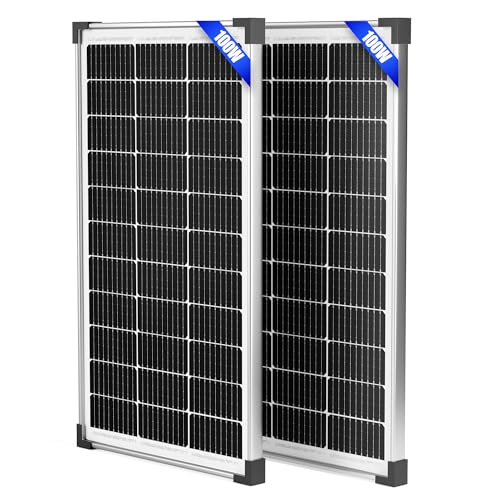
Voltset 200W 12V Monocrystalline Solar Panel Pair
Best for: Durable 12V off-grid setups
- Cell Type
- Monocrystalline (what this guide is about)
- Rated Power
- 200W
- Conversion Efficiency
- 23%-30%
- System Voltage
- 12V
- Busbar Count
- 9BB
- IP Rating
- IP67
View on Amazon: Voltset 200W 12V Monocrystalline Solar Panel Pair Affiliate link
This is a 200W monocrystalline solar panel with a 25% high-efficiency rating and 9BB cell construction. It delivers a conversion efficiency between 23% and 30%. The unit weighs 28 pounds and features an IP67 rating for weather resistance. It operates at 12V and includes pre-drilled holes for mounting. This panel suits you if you need a durable, high-output option for off-grid power systems.
Pros
- 25% high-efficiency monocrystalline cells
- IP67 weatherproof rating
- 28-pound weight for portability
- Pre-drilled mounting holes included
Cons
- 9BB cell count is lower than the 16BB standard in other list items
- Monocrystalline type is less efficient than the N-Type cells in other list items
- No mention of bifacial capabilities found in data
Good fit if
- You need a 12V system compatible with various battery types
- You prefer a standard monocrystalline panel over N-Type
- You require an IP67 weatherproof rating for harsh environments
Skip if
- You want the highest efficiency N-Type cells available
- You require 16BB cell technology for better low-light performance
- You need a bifacial panel to capture light from both sides
Verdict: Voltset 200W 12V Monocrystalline Solar Panel offers solid weather resistance and mounting ease. It fits buyers who prioritize IP67 durability and 12V compatibility over the higher efficiency of N-Type or bifacial designs.
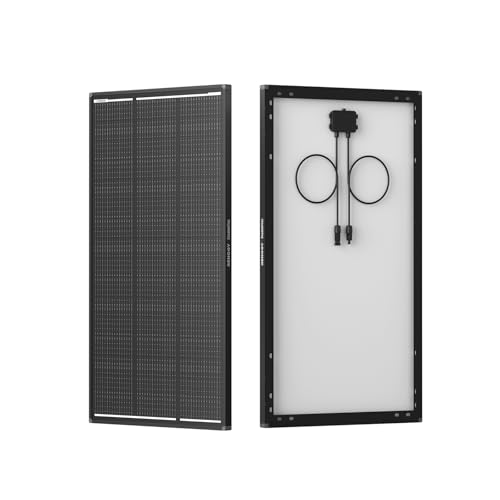
Renogy ShadowFlux 120W N-Type Solar Panel
Best for: Space-limited setups needing shade tolerance
- Cell Type
- N-Type (what this guide is about)
- Rated Power
- 120 W
- Conversion Efficiency
- 25%
- Busbar Count
- 16BB
- IP Rating
- ≥ IP67
- Weight
- 15.9 lbs
View on Amazon: Renogy ShadowFlux 120W N-Type Solar Panel Affiliate link
This 120W panel uses N-Type cells with 16BB technology to reach 25% conversion efficiency. Its ShadowFlux anti-shading design reduces hot-spot risks, maintaining power output in partial shade. The unit measures 41.4 by 22.8 inches and weighs 19.1 pounds. It carries an IP67 rating for weather resistance. You should choose this if you need a compact, high-efficiency panel that handles uneven lighting well.
Pros
- 25% conversion efficiency with N-Type cells
- ShadowFlux anti-shading technology reduces hot spots
- IP67 rating for extreme weather endurance
- Compact size is 10% smaller than PERC panels
Cons
- 120W rated power is lower than the 200W and 400W options on this list
- 19.1 pounds weight is heavier than lighter portable alternatives
- No mention of a carrying case or mounting hardware in the data
Good fit if
- You need high efficiency in a small footprint
- You often face partial shading from trees or structures
- You want durable weather resistance for outdoor use
Skip if
- You require maximum wattage in a single unit
- You need a lightweight panel for frequent backpacking
- You want a panel with included mounting rails
Verdict: Renogy ShadowFlux 120W N-Type Solar Panel delivers strong efficiency and shading tolerance for space-constrained setups. It fits buyers who prioritize performance per square inch over raw wattage.

Renogy 400W Foldable Solar Panel Pair
Best for: campers needing high-wattage portable power
- Cell Type
- N-Type (what this guide is about)
- Rated Power
- 400W
- Conversion Efficiency
- 25%
- Panel Type
- Foldable
- Busbar Count
- 16BB
- IP Rating
- IP65
View on Amazon: Renogy 400W Foldable Solar Panel Pair Affiliate link
This Renogy 400W portable solar panel uses 25% efficient N-Type cells with 16BB technology. It folds into a backpack size and weighs 27.78 lbs. The unit includes USB-C and USB-A ports for direct device charging. It features adjustable kickstands for optimal sun angle. This setup suits users needing high power density in a lightweight, foldable form factor for off-grid adventures.
Pros
- 25% conversion efficiency with N-Type 16BB cells
- Lightweight 27.78 lbs total weight for portability
- Integrated USB-C PD 45W and dual USB-A ports
- IP65 rated for dust and water splash resistance
Cons
- MC4 output cables require a separate adapter cable for many power stations
- Solar charge controller is not included for 12V/24V battery systems
- Foldable design offers less durability than rigid panels
Good fit if
- You need high wattage in a lightweight, foldable package
- You want to charge small devices directly via USB ports
- You have limited storage space for solar gear
Skip if
- You prefer rigid panels for maximum durability
- You want direct plug-and-play compatibility without extra cables
- You need a built-in charge controller for battery systems
Verdict: Renogy 400W N-Type Foldable Solar Panel delivers high efficiency in a portable package, making it ideal for campers and RVers who value weight savings and direct USB charging over rigid durability.

ZOUPW 100W Foldable Solar Panel
Best for: campers needing portable, waterproof power with direct USB charging
- Cell Type
- Monocrystalline (what this guide is about)
- Rated Power
- 100W
- Conversion Efficiency
- 23.5%
- Panel Type
- Foldable
- IP Rating
- IP67
- Weight
- 9.48 pounds
View on Amazon: ZOUPW 100W Foldable Solar Panel Affiliate link
This ZOUPW panel uses 23.5% efficient monocrystalline cells to deliver 100W of power. It features an IP67 waterproof rating and ETFE coating for outdoor durability. The foldable design weighs 9.48 lbs and includes two adjustable kickstands. It connects to most power stations via a 5-in-1 cable and offers direct USB charging for devices.
Pros
- 23.5% conversion efficiency with monocrystalline cells
- IP67 waterproof rating with ETFE lamination
- 5-in-1 universal connector cable for power stations
- Built-in USB-C and USB-A ports for direct device charging
- Foldable design with adjustable kickstands for optimal sun angle
Cons
- Lower efficiency (23.5%) compared to 25% panels in this guide
- Lower wattage (100W) than the 120W and 200W options available
- Monocrystalline cell type rather than the N-Type cells featured elsewhere
Good fit if
- You need a lightweight, foldable panel for camping or RV trips
- You want direct USB charging for phones and tablets without a generator
- You require a waterproof panel with a universal connector for your power station
Skip if
- You prefer the higher efficiency of N-Type solar cells
- You need more than 100W of power output
- You want a panel with a higher efficiency rating than 23.5%
Verdict: ZOUPW 100W Foldable Solar Panel is a practical, portable option for campers who need direct device charging and universal connectivity, though it offers lower efficiency and wattage than other choices. It suits users prioritizing compactness and waterproofing over maximum power generation.
Specifications side by side
| Spec | Callsun 400W Bifacial Solar Panel 2-Pack | Renogy 50W Monocrystalline Solar Panel | Voltset 200W 12V Monocrystalline Solar Panel Pair | Renogy ShadowFlux 120W N-Type Solar Panel | Renogy 400W Foldable Solar Panel Pair | ZOUPW 100W Foldable Solar Panel |
|---|---|---|---|---|---|---|
| Rated Power | 400W | 50W | 200W | 120 W | 400W | 100W |
| Conversion Efficiency | 25.6% | 25% | 23%-30% | 25% | 25% | 23.5% |
| Panel Type | Bifacial | not stated | not stated | not stated | Foldable | Foldable |
| Cell Type | N-type monocrystalline | N-Type Monocrystalline | Monocrystalline | N-Type | N-Type | Monocrystalline |
| System Voltage | 12V/24V | 12V | 12V | not stated | not stated | not stated |
| Busbar Count | 16BB | not stated | 9BB | 16BB | 16BB | not stated |
| IP Rating | IP68 | IP65 | IP67 | ≥ IP67 | IP65 | IP67 |
| Weight | 23.8 pounds | 5.07 pounds | 28 pounds | 15.9 lbs | 27.78 lbs | 9.48 pounds |
| Wattage | 200W | 50W | 200W | 120W | 200W | 100W |
| Application | Home, RV, Off-Grid, Marine | Home, RV, Off-Grid, Marine | RV, Off-Grid, Marine | Home, RV, Marine | Camping, Outdoor, RV, Off-Grid | Camping, Emergency, RV, Off-Grid |
| Features | not stated | Solar Charging | not stated | not stated | Solar Charging | not stated |
| Voltage | 12V, 24V | 12V | 12V | not stated | not stated | not stated |
| Output Ports | not stated | not stated | not stated | not stated | USB-C, USB-A | not stated |
| Water Resistance | not stated | not stated | Waterproof | not stated | not stated | Waterproof |
| Dimensions | 51.3 × 30.3 × 1.38 inches | 22.9 × 20 × 1.18 inches | 14.6 × 12.8 × 1.7 inches | 41.4 × 22.8 × 1.18 inches | 46 × 3.94 × 47.4 inches | 48.4 × 21.1 × 0.98 inches |
| Size | 200W 2-Pack Black | 50 W Monocrystalline Solar Panel | 200W 2-Pack | 120W | not stated | 100W-1PCS |
| Color | Black | 50W Solar Panel | Black | Black | Black | Orange |
| Model | CN200W | Solar Panel 50 Watt | VS-YL-200W | 120W ShadowFlux N-Type Panel | RPP200EF-SEx2 | ZOUPW-F100W |
Frequently asked questions
Is N-Type better than monocrystalline for RVs?
N-Type cells generally offer higher efficiency and better heat tolerance. This allows you to generate more power from the same surface area. For example, the Callsun 200W N-Type bifacial panel suits RV owners who can manage heavy units. It provides superior output in sunny, hot conditions compared to standard designs.
Do N-Type solar panels work better in the shade?
Yes, certain N-Type models are designed for shading tolerance. The Renogy ShadowFlux 120W N-Type panel delivers strong performance in space-constrained setups. It prioritizes performance per square inch, making it ideal when partial shade is a concern. This feature helps maintain output when panels are not fully exposed to direct sunlight.
Can I use monocrystalline panels for off-grid camping?
Monocrystalline panels are excellent for portable off-grid setups. The ZOUPW 100W Monocrystalline panel offers waterproofing and direct USB charging. It suits users who prioritize compactness and durability over maximum power generation. Its IP67 rating ensures reliable performance in various outdoor environments during your camping trips.
What is the weight difference between N-Type and monocrystalline panels?
Weight varies by model rather than cell type alone. The Renogy 50W N-Type monocrystalline panel weighs only 5.07 pounds, making it highly portable. In contrast, the Callsun 200W N-Type bifacial panel weighs 23.8 pounds. You should check the specific weight in the specs to ensure it fits your transport needs.
Are bifacial panels considered N-Type?
Not necessarily, but many high-efficiency bifacial panels use N-Type cells. The Callsun 400W Bifacial Solar Panel 2-Pack uses N-Type cells to maximize efficiency. This combination allows the panel to capture light from both sides. It is ideal for users who can manage two heavy panels and want high output.
Do I need a 12V system for monocrystalline panels?
No, 12V is not required, but it is common for smaller setups. The Voltset 200W Monocrystalline panel is designed for 12V compatibility. It offers solid weather resistance and mounting ease for off-grid use. You can choose based on your power station’s input requirements rather than the cell type alone.
Which panel type is best for limited space?
N-Type panels often provide higher efficiency per square inch. The Renogy 400W N-Type Foldable Solar Panel delivers high efficiency in a portable package. It is ideal for campers who value weight savings and direct USB charging. This type helps you maximize power generation in confined areas.