EF Ecoflow or ALLPOWERS? Generators Compared in 2026
As an Amazon Associate we earn from qualifying purchases. Links on this page are affiliate links.
You are comparing the EF Ecoflow vs ALLPOWERS generator options for portable power. Both units offer 1024Wh capacity and LiFePO4 batteries for long life. The main difference lies in power output and charging speed. EcoFlow provides faster AC input and UPS protection. ALLPOWERS offers higher continuous wattage and includes a solar panel. You choose based on your peak load needs and recharge priorities.
Key differences
| Aspect | EcoFlow DELTA 3 Plus with Extra Battery | ALLPOWERS 1800W Power Station with 100W Solar Panel |
|---|---|---|
| Running Wattage | 2200W (via X-Boost) | 1800W |
| Surge Wattage | Not listed | 3600W |
| AC Input Charging | 1500W (80% in 40 mins) | Not listed |
| UPS Switch-Over Time | 10 ms | 20 ms |
| Included Solar Panel | Not listed | 100W |
| Warranty | Not listed | 5 years |
Which one should you choose?
Choose EcoFlow DELTA 3 Plus with Extra Battery if
- You need the fastest possible recharge time from a wall outlet.
- You require a 10 ms switch-over time for sensitive electronics like NAS drives.
- You want to expand capacity up to 5kWh with additional battery packs.
Choose ALLPOWERS 1800W Power Station with 100W Solar Panel if
- You need a higher surge capacity of 3600W for starting motors.
- You want a solar panel included in the box for immediate off-grid use.
- You prefer a longer stated warranty period of 5 years.
Verdict: Choose the EcoFlow DELTA 3 Plus if your priority is rapid recharging and critical backup protection for sensitive devices. Select the ALLPOWERS P1800 if you need higher surge wattage for heavy tools or want a solar panel included for immediate outdoor use.
EcoFlow vs ALLPOWERS Power Station
power output
ALLPOWERS leads in raw output with 1800W rated power and a 3600W surge capability. This allows it to handle heavier loads like power tools or large refrigerators more comfortably. EcoFlow offers X-Boost for resistive appliances over 2200W, but its specific continuous rated wattage is not listed in the provided data. For users who need to run high-draw devices simultaneously, the explicit 1800W rating on the ALLPOWERS unit provides a clear advantage in guaranteed performance for demanding equipment.
charging speed
EcoFlow demonstrates superior charging flexibility with five distinct methods. It reaches 80% charge in just 40 minutes via AC input and fully in 56 minutes using its smart generator. Solar charging also hits 80% in one hour. ALLPOWERS supports triple charging via solar, wall, and car, but does not list specific time-to-charge metrics. For users who need rapid power restoration during emergencies or short breaks, the documented speed of the EcoFlow unit is significantly faster and more versatile.
ups protection
EcoFlow functions as a true UPS with a 10 ms switch-over time. This rapid response protects sensitive electronics like NAS drives, servers, and POS systems from data loss during outages. ALLPOWERS offers a 20ms UPS function. While both provide backup power continuity, the 10 ms interval on the EcoFlow is twice as fast. For critical hardware that cannot tolerate even brief interruptions, the faster switching time of the EcoFlow unit is the safer choice.
capacity and chemistry
Both units share identical core energy specifications. They each provide 1024Wh of capacity and use LiFePO4 battery chemistry. This chemistry is rated for 4000 cycles to 80% capacity, ensuring long-term durability for daily use. Since the energy storage and battery type are exactly the same, there is no technical difference in how long each unit can power your devices or how long the battery itself will last under normal conditions.
expandability
EcoFlow offers extensive expansion options, allowing you to integrate additional battery packs to reach up to 5kWh of total capacity. You can add DELTA 3, DELTA Pro 3, or DELTA 2 Max packs to the system. ALLPOWERS does not list any external battery expansion capabilities in its specifications. If you anticipate needing more power than 1024Wh can provide, the EcoFlow ecosystem allows for significant growth, whereas the ALLPOWERS unit remains a standalone solution.
connectivity
ALLPOWERS provides robust connectivity options including four AC outlets, two USB-C ports (140W each), two USB-A ports, and a 120W car outlet. It also features an LCD screen for monitoring power levels. EcoFlow supports 13 appliances simultaneously with abundant interfaces and includes smart energy management via an app. While both offer ample ports, ALLPOWERS gives you higher individual USB-C wattage and a physical display, whereas EcoFlow focuses on app-based management and higher total appliance count.
Choose your portable power station
Users needing fast UPS protection
The EcoFlow DELTA 3 Plus offers a 10 ms switch-over time. This true UPS function prevents data loss for critical devices like NAS or servers. It also charges to 80% in just 40 minutes via AC input, ensuring rapid recovery during outages.
Heavy load power users
The ALLPOWERS P1800 provides 1800W rated power and a 3600W surge capability. This higher output handles demanding appliances like large refrigerators or power tools more effectively than standard units, making it ideal for remote work or off-grid cabin use with heavy electrical demands.
Expandable storage seekers
You can expand the EcoFlow capacity up to 5kWh by adding DELTA 3 or DELTA Pro 3 battery packs. This seamless integration with the EcoFlow ecosystem allows you to scale your power storage significantly, providing long-term flexibility for growing energy needs over its 10-year lifespan.
The products compared

EcoFlow DELTA 3 Plus with Extra Battery
Best for: rapid charging and expandable backup power
- Running Wattage
- 1800W
- Capacity
- 1024Wh
- Battery Chemistry
- LiFePO4
- Application
- Camping, Home, Emergency
- Output Ports
- USB-C
- Dimensions
- 16 × 8 × 11 inches
View on Amazon: EcoFlow DELTA 3 Plus with Extra Battery Affiliate link
The EF Ecoflow DELTA 3 Plus offers 1024Wh of LiFePO4 capacity. It charges to 80% in 40 minutes via AC or solar. The unit weighs 27.6 pounds and measures 16 by 11 by 8 inches. It includes UPS protection with a 10 ms switch-over time. This model suits users needing fast replenishment and reliable backup for sensitive electronics.
Pros
- 1024Wh LiFePO4 battery capacity
- Charges to 80% in 40 minutes
- 10 ms UPS switch-over time
- Expands up to 5kWh with extra packs
Cons
- Heavier than smaller portable units at 27.6 pounds
- Requires app for smart energy management features
- No solar panel included in base configuration
Good fit if
- You need rapid charging during short outages
- You want to expand capacity up to 5kWh
- You require UPS protection for NAS or servers
Skip if
- You need a built-in solar panel
- You require a lighter unit under 20 pounds
- You do not want to use a mobile app
Verdict: The EF Ecoflow DELTA 3 Plus 1024Wh fits users who prioritize fast charging speeds and expandable capacity for critical backup needs.
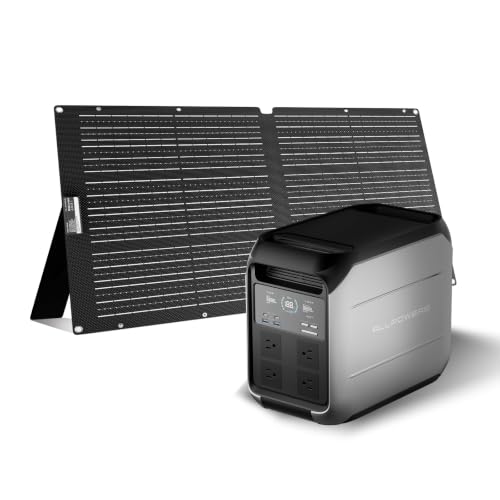
ALLPOWERS 1800W Power Station with 100W Solar Panel
Best for: home backup and off-grid tasks
- Running Wattage
- 1800W
- Surge Wattage
- 3600W
- Capacity
- 1024Wh
- Fuel Type
- Battery
- Battery Chemistry
- LiFePO4
- Solar Panel Wattage
- 100W
View on Amazon: ALLPOWERS 1800W Power Station with 100W Solar Panel Affiliate link
The ALLPOWERS P1800 delivers 1800W of continuous power from a 1024Wh LiFePO4 battery. It includes a 100W solar panel and offers a 20ms UPS function for seamless backup. The unit weighs 28.7 pounds and features four AC outlets plus USB-C ports. This setup suits users needing reliable off-grid energy or home backup with straightforward charging options via wall, car, or solar input.
Pros
- 1024Wh LiFePO4 battery rated for 4000+ cycles
- 1800W continuous output with 3600W surge capacity
- 20ms UPS function for uninterrupted power
- Includes 100W solar panel for triple charging
Cons
- 28.7-pound weight makes it less portable than smaller units
- Included solar panel is limited to 100W input
- LCD screen only shows basic status data
Good fit if
- You need a 20ms UPS for sensitive electronics
- You want LiFePO4 battery longevity for long-term use
- You require 1800W output for power tools or appliances
Skip if
- You prioritize lightweight portability under 20 pounds
- You need more than 100W of solar input
- You require a display with detailed energy analytics
Verdict: The ALLPOWERS P1800 1024Wh Portable Power Station is a solid choice for users who need reliable backup power with a long-lasting battery and don't mind carrying a heavier unit.
Specifications side by side
| Spec | EcoFlow DELTA 3 Plus with Extra Battery | ALLPOWERS 1800W Power Station with 100W Solar Panel |
|---|---|---|
| Running Wattage | 1800W | 1800W |
| Surge Wattage | not stated | 3600W |
| Capacity | 1024Wh | 1024Wh |
| Fuel Type | not stated | Battery |
| Battery Chemistry | LiFePO4 | LiFePO4 |
| Solar Panel Wattage | not stated | 100W |
| Wattage | 1800W | 1800W |
| Application | Camping, Home, Emergency | Camping, Home, RV |
| Output Ports | USB-C | USB-C |
| Dimensions | 16 × 8 × 11 inches | 14.7 × 8.2 × 11.7 inches |
| Weight | 27.6 pounds | 28.7 pounds |
| Color | Black | P1800+SE100(1800W+100W) |
| Model | EF-DL-H10-4 | P1800+SE100 |
Frequently asked questions
Which portable power station is lighter to carry?
The EcoFlow DELTA 3 Plus is lighter. It weighs 27.6 pounds. The ALLPOWERS P1800 weighs 28.7 pounds. The difference is just 1.1 pounds. Both units are roughly the same size. You will notice the weight difference when moving them. The EcoFlow is slightly easier to lift.
Does the EcoFlow model include a UPS feature?
Yes, the EcoFlow DELTA 3 Plus includes UPS protection. It switches over in 10 milliseconds. This keeps your critical devices running during power outages. The ALLPOWERS P1800 does not list this feature in its specifications. You should choose the EcoFlow if you need uninterrupted power for sensitive electronics.
Which unit has higher raw power output?
The ALLPOWERS P1800 has higher raw power. It offers 1800W of rated power. It also has a 3600W surge capability. The EcoFlow DELTA 3 Plus does not list a specific wattage rating in the provided data. If you need to run high-wattage tools, the ALLPOWERS unit provides more immediate output capacity.
How do the physical dimensions compare between the two?
The EcoFlow is slightly taller and wider. It measures 11 inches high and 8 inches wide. The ALLPOWERS is 11.7 inches high and 8.2 inches wide. The EcoFlow is also longer at 16 inches compared to 14.7 inches. The ALLPOWERS is more compact in length. Choose based on your storage space constraints.
Which power station is better for solar charging?
The ALLPOWERS P1800 comes with a 100W solar panel included. This is part of its model name. The EcoFlow DELTA 3 Plus is sold with an extra battery. It does not include a solar panel in the provided data. If you want immediate solar capability, the ALLPOWERS bundle is the practical choice.
Are both units suitable for home backup power?
Yes, both are suitable for home backup. Both have 1024Wh capacity. This energy storage level supports essential appliances. The EcoFlow is noted for rapid charging and expandable backup power. The ALLPOWERS is described as solid for home backup tasks. Your choice depends on whether you prioritize speed or raw output.