EF Ecoflow or EBL? Generators Compared in 2026
As an Amazon Associate we earn from qualifying purchases. Links on this page are affiliate links.
You are looking at the EF Ecoflow vs EBL generator options for portable power. Both units provide clean, silent energy without fuel. They share lithium battery technology and multiple output ports. The main difference lies in scale. The EcoFlow offers significantly higher capacity and wattage for whole-home backup. The EBL focuses on compact, lightweight power for camping or short outages.
Key differences
| Aspect | EcoFlow DELTA 3 Plus with Extra Battery | EBL 500W 519Wh Portable Power Station |
|---|---|---|
| Capacity | 1024Wh | 519.48Wh |
| Running Wattage | 1500W | 500W |
| Surge Wattage | not listed | 1000W |
| Battery Chemistry | LiFePO4 | Lithium |
| Weight | 27.6 pounds | 18 pounds |
Which one should you choose?
Choose EcoFlow DELTA 3 Plus with Extra Battery if
- You need to power high-wattage appliances like microwaves or power tools.
- You require a battery with a longer lifespan and higher cycle count.
- You want fast charging capabilities under 40 minutes.
Choose EBL 500W 519Wh Portable Power Station if
- You prioritize a lighter unit for easy transport to campsites.
- You only need to charge small devices like phones and laptops.
- You prefer a more compact footprint for limited storage space.
Verdict: Choose the EcoFlow if you need substantial power for home backup or heavy-duty tools. Select the EBL if you need a lightweight, simple solution for weekend trips or basic device charging.
EcoFlow vs EBL Power Comparison
Capacity and Power
The EcoFlow DELTA 3 Plus offers 1024Wh of capacity and 1500W of AC input power. It can also handle resistive loads over 2200W with X-Boost technology. This allows you to run high-draw appliances like microwaves or power tools. The EBL unit provides 519.48Wh of capacity with 500W of running wattage and 1000W of surge wattage. Its output is limited to devices under 500W. If you need to power larger tools or multiple high-wattage devices simultaneously, the EcoFlow provides significantly more power headroom. The EBL is suitable only for smaller electronics and low-power essentials.
Battery Chemistry and Life
The EcoFlow uses LiFePO4 (LFP) battery chemistry. This type of lithium battery is rated for 4000 cycles to 80% capacity. The manufacturer states this offers a 10-year lifespan for daily use. It also provides 25% more durability than industry standards. The EBL uses generic lithium battery technology. The data does not specify the exact cycle count or lifespan for the EBL unit. LiFePO4 chemistry is generally known for longer life and better thermal stability. For users who plan to use the power station frequently over many years, the EcoFlow’s specified longevity and chemistry offer a clear advantage in long-term reliability.
Charging Speed
The EcoFlow charges much faster than the EBL. With 1500W AC input, the EcoFlow reaches 80% charge in just 40 minutes. Full charge takes 70 minutes using solar input. It also supports alternator charging and hybrid charging methods. The EBL takes 6 to 7 hours to charge from a wall outlet. Solar charging takes 6 to 9 hours. The car charging method takes 7 to 8 hours. If you need to restore power quickly during an outage or before a trip, the EcoFlow’s rapid charging capability is a major practical benefit. The EBL requires overnight or all-day charging times.
Portability and Weight
The EBL is lighter and more compact. It weighs 18 pounds and measures 11.5 inches in length. The EcoFlow DELTA 3 Plus weighs 27.6 pounds and measures 16 inches in length. The EBL’s lighter weight makes it easier to carry for camping or hiking. The EcoFlow is heavier due to its larger battery and robust build. If you prioritize carrying the unit over long distances or need a lightweight option for backpacking, the EBL is the better choice. For stationary use or vehicle-based power where weight is less critical, the EcoFlow’s extra size is acceptable for the power it delivers.
UPS and Critical Backup
The EcoFlow includes a 10 ms switch-over UPS protection feature. This allows it to function as a true uninterruptible power supply. It is suitable for NAS, servers, and POS systems where data loss must be avoided during sudden outages. The EBL data does not mention UPS functionality or switch-over time. It focuses on general power provision for devices. If you need to keep critical electronics running without interruption during a power cut, the EcoFlow provides this specific capability. The EBL is designed for general power needs rather than seamless critical backup for sensitive data equipment.
Choose the right portable power station
Users needing high capacity and fast charging
The EcoFlow DELTA 3 Plus provides 1024Wh capacity and charges to 80% in just 40 minutes via AC input. It supports expansion up to 5kWh and features a 10 ms UPS switch-over time. This makes it ideal for running critical systems like NAS or servers without data loss during outages.
Campers seeking lightweight and compact gear
The EBL unit weighs only 18 pounds and measures 11.5 by 7.9 inches. It offers 519.48Wh of capacity with a 500W running wattage. This smaller form factor fits easily into vehicles or backpacks, making it a practical choice for outdoor trips where portability is a priority.
People powering sensitive medical or office devices
The EcoFlow includes 10 ms switch-over UPS protection, ensuring continuous power for sensitive electronics like CPAP machines or computers. Its LiFePO4 battery chemistry offers 4000 cycles to 80% capacity. This durability ensures reliable performance over a 10-year lifespan for daily or emergency use.
Budget-conscious buyers needing basic backup power
The EBL provides 519.48Wh capacity with multiple output options, including USB-C PD and wireless charging. It charges via solar, car, or wall outlet. The pure sine wave inverter protects devices safely. This model suits users who need essential power for phones, laptops, and small appliances without high capacity.
The products compared

EcoFlow DELTA 3 Plus with Extra Battery
Best for: Fast charging and expandable backup power
- Running Wattage
- 1800W
- Capacity
- 1024Wh
- Battery Chemistry
- LiFePO4
- Application
- Camping, Home, Emergency
- Output Ports
- USB-C
- Dimensions
- 16 × 8 × 11 inches
View on Amazon: EcoFlow DELTA 3 Plus with Extra Battery Affiliate link
The EF EcoFlow DELTA 3 Plus offers 1024Wh of LiFePO4 capacity. It charges to 80% in 40 minutes via AC input. The unit includes an extra battery pack for expansion. It features a 10 ms UPS switch-over time. This model suits users needing fast recharge rates and high cycle durability for daily or emergency power needs.
Pros
- 1024Wh LiFePO4 battery capacity
- Charges to 80% in 40 minutes via AC
- 10 ms switch-over UPS protection
- 4000 cycles to 80% lifespan
Cons
- Heavier at 27.6 pounds
- Larger footprint than 500Wh models
- No built-in solar panel included
Good fit if
- You need rapid charging for frequent use
- You require UPS functionality for sensitive electronics
- You want expandable capacity up to 5kWh
Skip if
- You prioritize ultra-lightweight portability
- You only need small capacity for short trips
- You require a compact form factor under 10 pounds
Verdict: EF EcoFlow DELTA 3 Plus 1024Wh delivers fast charging and robust durability for users needing reliable backup power with expandable capacity.
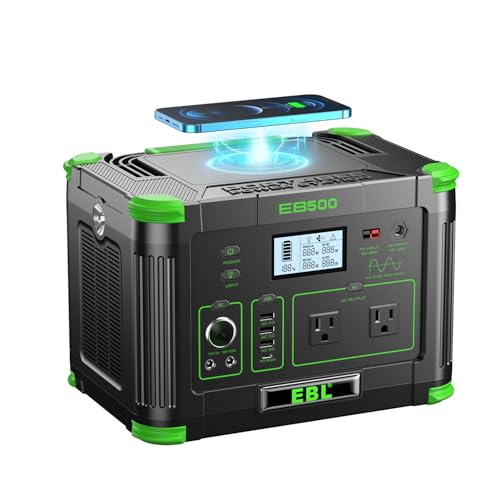
EBL 500W 519Wh Portable Power Station
Best for: small electronics and CPAP use
- Running Wattage
- 500 W
- Surge Wattage
- 1000 W
- Capacity
- 519.48 Wh
- Battery Chemistry
- Lithium
- Voltage
- 120V
- Application
- Camping, Outdoor, Emergency
View on Amazon: EBL 500W 519Wh Portable Power Station Affiliate link
The EBL 500W offers 519.48Wh of lithium capacity in a 18-pound unit. It delivers 500W running power with a 1000W surge, suitable for small appliances. You get multiple output options, including AC, USB-C PD, and wireless charging. Recharging takes 6 to 9 hours via wall, car, or solar. It includes a Battery Management System for safety. This model suits users needing basic backup power for camping or short outages.
Pros
- 519.48Wh lithium battery capacity
- 500W continuous and 1000W surge output
- USB-C 60W PD and wireless charging pad
- Pure sine wave AC outlets for sensitive devices
- Three recharge methods: wall, car, or solar
Cons
- 18-pound weight limits easy portability
- 500W running wattage restricts high-draw appliances
- No display or app control mentioned in data
Good fit if
- You need to power small electronics and CPAP machines
- You want a compact unit for weekend camping trips
- You prefer silent, fume-free power sources
Skip if
- You require more than 500W of continuous power
- You need to charge multiple high-wattage devices simultaneously
- You prioritize lightweight gear under 15 pounds
Verdict: The EBL 500W Portable Power Station fits users who need reliable, silent backup for small devices and camping gear, provided they can manage its 18-pound weight and 500W limit.
Specifications side by side
| Spec | EcoFlow DELTA 3 Plus with Extra Battery | EBL 500W 519Wh Portable Power Station |
|---|---|---|
| Running Wattage | 1800W | 500 W |
| Surge Wattage | not stated | 1000 W |
| Capacity | 1024Wh | 519.48 Wh |
| Battery Chemistry | LiFePO4 | Lithium |
| Voltage | not stated | 120V |
| Wattage | 1800W | 1000W |
| Application | Camping, Home, Emergency | Camping, Outdoor, Emergency |
| Output Ports | USB-C | not stated |
| Dimensions | 16 × 8 × 11 inches | 11.5 × 7.9 × 7.9 inches |
| Weight | 27.6 pounds | 18 pounds |
| Color | Black | Dark Green |
| Model | EF-DL-H10-4 | EB500 |
| Size | not stated | 500W |
Frequently asked questions
Which portable power station is lighter and easier to carry?
The EBL 500W model is the lighter option. It weighs 18 pounds, making it more manageable for hiking or quick camping trips. In contrast, the EcoFlow DELTA 3 Plus weighs 27.6 pounds. Its heavier build supports a larger internal battery and higher power output, but it is less ideal for frequent transport.
How do the physical dimensions compare between the two units?
The EBL unit is more compact in height and width. It measures 7.9 inches by 7.9 inches with a length of 11.5 inches. The EcoFlow DELTA 3 Plus is larger, measuring 8 inches wide, 11 inches high, and 16 inches long. You should check your storage space before choosing the EcoFlow model.
Can these generators run high-wattage appliances like microwaves?
The EcoFlow DELTA 3 Plus is better suited for high-wattage appliances. It features X-Boost technology to handle resistive loads over 2200W. The EBL 500W unit has a 500W limit. It is designed for small electronics and CPAP machines, so it cannot power larger kitchen appliances or heavy-duty tools.
What is the difference in battery capacity between the brands?
The EcoFlow DELTA 3 Plus offers 1024Wh of capacity. This is roughly double the 519.48Wh capacity of the EBL 500W unit. If you need to power devices for longer periods or run multiple items simultaneously, the EcoFlow provides significantly more energy storage for your backup power needs.
Are these units suitable for camping and outdoor use?
Both units are suitable for outdoor activities. The EBL 500W is explicitly listed for camping and outdoor applications. It is silent and portable. The EcoFlow DELTA 3 Plus also serves as a reliable backup for outdoor setups. Its larger capacity allows you to charge devices for several days without needing to recharge the station itself.
Which model is better for running a CPAP machine?
The EBL 500W is ideal for CPAP use. Its 519.48Wh capacity and 500W limit are well-matched to the low power draw of most CPAP devices. It provides reliable, silent power for medical equipment. The EcoFlow DELTA 3 Plus can also run a CPAP machine but offers more capacity than typically required for this specific use case.
What colors are available for these portable power stations?
The EcoFlow DELTA 3 Plus is available in black. The EBL 500W Portable Power Station comes in dark green. Color does not affect performance, but it may influence how each unit fits into your outdoor gear or home backup setup aesthetics.