Gas or Tri-Fuel Generators? Compared by Specs
As an Amazon Associate we earn from qualifying purchases. Links on this page are affiliate links.
When you compare a gas vs tri fuel generator, you are looking at two distinct approaches to emergency power. Both units from Generac include COsense technology for safety and never-flat wheels for mobility. The main difference lies in fuel flexibility and power output. One model runs strictly on gasoline with moderate wattage. The other switches between gasoline, propane, and natural gas while delivering significantly higher capacity. This choice affects how you store fuel and what appliances you can run.
Key differences
| Aspect | Generac 4500W Portable Gas Generator | Generac 12,500W Tri-Fuel Generator with EFI |
|---|---|---|
| Fuel Type | Gas | Tri-Fuel (Gas, Propane, Natural Gas) |
| Running Wattage | 3,600W | 8,550W (Propane) / 7,000W (Natural Gas) |
| Surge Wattage | 4,500W | 12,500W |
| Start Type | Not listed | Electric Start with Recoil Backup |
| Weight | 105 pounds | 227 pounds |
Which one should you choose?
Choose Generac 4500W Portable Gas Generator if
- You need a lighter unit that is easier to move around a job site or backyard.
- You want a simpler setup that relies solely on standard gasoline without managing propane tanks.
- Your power needs are limited to essential circuits like lights and a refrigerator.
Choose Generac 12,500W Tri-Fuel Generator with EFI if
- You require higher wattage to run larger loads like an HVAC blower or power tools.
- You want the flexibility to switch to propane or natural gas if gasoline supplies are scarce.
- You prefer electric start convenience with a recoil backup for reliability.
Verdict: The gas model suits those who prioritize portability and simplicity for basic backup needs. The tri-fuel model is better for whole-home power or job sites where high wattage and fuel availability are critical. Choose based on your specific power requirements and fuel storage preferences.
Gas vs Tri-Fuel Generator Specs
Fuel Flexibility
Product A runs on gasoline only, requiring you to store and manage fuel supplies for emergencies. Product B switches between gasoline, liquid propane, and natural gas using a single dial without shutting down. This tri-fuel capability means you can use propane tanks or connect directly to a home’s natural gas line when gasoline is scarce or unavailable. If you need backup power during long outages where fuel distribution might be disrupted, Product B offers significantly more options. Product A is simpler but limits you to one fuel source.
Power Output
Product A delivers 3,600 running watts and 4,500 starting watts, suitable for smaller loads. Product B provides higher output, with 8,550 running watts on propane and 7,000 running watts on natural gas, alongside a 12,500 starting watt capacity. This means Product B can power larger appliances like central air conditioning units or multiple high-draw tools simultaneously. Product A is adequate for essential circuits but lacks the headroom for heavy-duty simultaneous usage. You should choose Product B if you need to run more devices at once.
Start Type
Product A relies on manual recoil starting, requiring physical effort to pull the cord for each startup. Product B includes an electric start rocker switch, eliminating pull-cord effort for routine use. It also features a recoil backup and includes a 12V 9Ah battery in the box. This electric ignition is useful if you prefer convenience or have mobility issues. Product A does not list an electric start option. For ease of operation, Product B is the clear choice.
Portability
Product A weighs 105 pounds and measures 24 by 22.5 by 21 inches, making it lighter and more compact. Product B weighs 227 pounds and measures 27.2 by 26.9 by 27 inches, making it more than twice as heavy. Both units include never-flat wheels and a handle kit for transport. However, moving Product B requires more strength or two people. If you need to move the generator frequently or store it in a small space, Product A is easier to handle.
Runtime
Product A includes a large-capacity steel fuel tank with a gauge, but specific runtime hours are not listed in the data. Product B provides detailed runtime figures: up to 14 hours at 25% load on gasoline and up to 6 hours on a standard 20-pound propane tank. This data helps you plan for extended outages. Without specific runtime numbers for Product A, you cannot directly compare endurance. Product B gives you clear metrics to estimate how long it will run on a full tank.
Choose the right generator for your needs
Users needing simple, lightweight backup power
This 105-pound unit offers 3600 running watts for essential loads. Its compact 22.5-inch width and 21-inch height make it easier to store and move than heavier alternatives. The steel tube frame and never-flat wheels support portability. You get reliable gas power without the bulk of a larger system.
Users requiring high power and fuel flexibility
This tri-fuel model delivers up to 12,500 starting watts and runs on propane or natural gas when gasoline is unavailable. It features electric start, a 120/240V 50A outlet, and up to 14 hours of runtime on gas. The larger 227-pound frame supports heavier loads and more complex power needs.
Users prioritizing fuel availability and runtime
Switching fuel sources without shutting down provides peace of mind during extended outages. You can use propane for up to 6 hours on a 20-pound tank or natural gas for continuous power. This flexibility ensures you can keep running critical appliances like refrigerators and sump pumps even if gasoline supplies run low.
Quick picks
| # | Product | Best for | Price |
|---|---|---|---|
| 1 | Generac 4500W Portable Gas Generator | Gas-only emergency power with safety shutdowns | Check price of Generac 4500W Portable Gas Generator on Amazon |
| 2 | Generac 12,500W Tri-Fuel Generator with EFI | Whole-home backup with flexible fuel options | Check price of Generac 12,500W Tri-Fuel Generator with EFI on Amazon |
The products compared

Generac 4500W Portable Gas Generator
Best for: Gas-only emergency power with safety shutdowns
- Fuel Type
- Gas (what this guide is about)
- Running Wattage
- 3600W
- Surge Wattage
- 4500W
- Application
- Home, Outdoor
- Features
- CO Sensor
- Dimensions
- 24 × 22.5 × 21 inches
View on Amazon: Generac 4500W Portable Gas Generator Affiliate link
This Generac portable generator delivers 3600 running watts and 4500 starting watts on gas. It features PowerRush technology for enhanced starting capacity and COsense safety shutdown. The unit weighs 105 pounds and includes wheels for mobility. It suits users needing reliable emergency power for essential appliances and tools without the complexity of multi-fuel systems.
Pros
- 4500 starting watts for heavy loads
- COsense automatic shutdown safety feature
- PowerRush technology for 40% more starting capacity
- Built-in wheels and fold-down handle
Cons
- Single fuel type limits versatility
- 105 pounds requires effort to move
- No tri-fuel capability for propane or natural gas
Good fit if
- You need reliable gas-only power for emergencies
- You prioritize automatic carbon monoxide safety shutdowns
- You want a portable unit with wheels for easy transport
Skip if
- You require tri-fuel flexibility for propane or natural gas
- You need high wattage above 4500 starting watts
- You prefer a lighter unit under 100 pounds
Verdict: Generac 4500W Portable Gas Generator offers solid starting capacity and critical safety features for users who prefer the simplicity of gas-only operation. It fits those who value automatic CO protection and easy mobility over multi-fuel versatility.
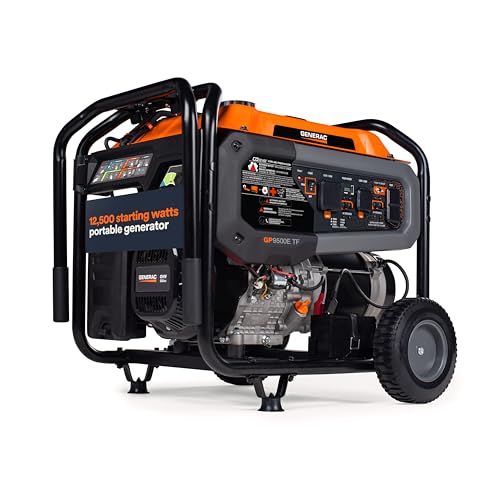
Generac 12,500W Tri-Fuel Generator with EFI
Best for: Whole-home backup with flexible fuel options
- Fuel Type
- Tri-Fuel (what this guide is about)
- Running Wattage
- 8550 W (Propane), 7000 W (Natural Gas)
- Output Ports
- 1 GFCI duplex, 1 L14-30R, 1 NEMA 14-50R
- Voltage
- 120V, 120V/240V
- Application
- Home, RV
- Start Type
- Electric Start
View on Amazon: Generac 12,500W Tri-Fuel Generator with EFI Affiliate link
This Generac unit runs on gasoline, propane, or natural gas. It delivers 12,500 starting watts. Propane provides 8,550 running watts. Natural gas provides 7,000 running watts. Electric start includes a recoil backup. CO Sense technology shuts it down if carbon monoxide is detected. The steel-tube frame and never-flat wheels aid mobility. It suits homeowners needing versatile fuel options and high power for whole-home backup.
Pros
- Tri-fuel capability with a single dial for switching sources
- CO Sense technology automatically shuts down the unit if dangerous carbon monoxide levels are detected
- Electric start with recoil backup and included 12V battery
- 120/240V 50A outlet for large loads or transfer switches
- Up to 14 hours of runtime on gasoline at 25% load
Cons
- Heavy at 227 pounds, requiring two people for easy movement
- Lower running wattage on propane (8,550W) and natural gas (7,000W) compared to gasoline
- No remote start feature mentioned in specifications
Good fit if
- You need a single generator that can switch between gasoline, propane, and natural gas
- You require high starting watts to handle large loads like HVAC systems
- You want automatic carbon monoxide shutdown safety features
Skip if
- You prefer a lighter unit that one person can move easily
- You need the maximum running wattage available on propane or natural gas
- You require remote start operation without being near the unit
Verdict: Generac 12,500W Tri-Fuel Generator is a robust choice for homeowners who need high power output and flexible fuel options. It fits users who prioritize safety features like CO detection and electric start convenience over lightweight portability.
Specifications side by side
| Spec | Generac 4500W Portable Gas Generator | Generac 12,500W Tri-Fuel Generator with EFI |
|---|---|---|
| Running Wattage | 3600W | 8550 W (Propane), 7000 W (Natural Gas) |
| Surge Wattage | 4500W | not stated |
| Fuel Type | Gas | Tri Fuel (Gas, Propane, Natural Gas) |
| Output Ports | not stated | 1 GFCI duplex, 1 L14-30R, 1 NEMA 14-50R |
| Voltage | not stated | 120V, 120V/240V |
| Application | Home, Outdoor | Home, RV |
| Start Type | not stated | Electric Start |
| Features | CO Sensor | not stated |
| Dimensions | 24 × 22.5 × 21 inches | 27.2 × 26.9 × 27 inches |
| Weight | 105 pounds | 227 pounds |
| Color | Orange and Black | Orange |
| Model | G0077212 | 8061 |
Frequently asked questions
Is a tri-fuel generator better than a gas-only model?
Tri-fuel models offer greater flexibility by running on gasoline, liquid propane, or natural gas. This allows you to switch fuels without shutting down the unit. Gas-only models are often lighter and simpler to operate. Choose tri-fuel if fuel availability varies. Choose gas-only for straightforward, lightweight emergency power needs.
Can I switch fuels while the generator is running?
Yes, tri-fuel generators allow you to switch between fuel sources without stopping the engine. This feature ensures continuous power during refueling or fuel changes. Gas-only models do not have this capability. You must shut them down to change fuel types. This makes tri-fuel units more convenient for long-duration outages.
How heavy is a portable gas generator compared to tri-fuel?
Gas-only generators are typically lighter and more compact. The Generac 4500W gas model weighs 105 pounds and measures 22.5 inches wide. Tri-fuel units are heavier due to additional fuel systems. The 12,500W tri-fuel model weighs 227 pounds. Heavier units require more effort to move, even with never-flat wheels.
Do these generators have carbon monoxide protection?
Yes, both the gas and tri-fuel models include COsense technology. This safety feature detects dangerous carbon monoxide levels and shuts the unit down automatically. This protects you and your family from poisoning risks. Safety is a priority in both designs, regardless of fuel type or power output.
Which generator is easier to start?
The tri-fuel generator features an electric start system for convenient ignition. This is helpful for larger, heavier units that are harder to pull-start. The gas-only model relies on manual recoil starting. Both units include never-flat wheels for mobility. Electric start adds convenience, especially for whole-home backup applications.
What is the difference in power output between the two?
The gas-only model provides 3600 running watts, suitable for essential loads. The tri-fuel generator delivers 12,500 watts, supporting whole-home backup needs. Higher wattage allows you to run more appliances simultaneously. Choose based on your power requirements. Essential loads need less capacity than full home backup.