Jackery Explorer 300 Power Station vs Jackery Explorer 240D DC Power (2026): Key Differences
As an Amazon Associate we earn from qualifying purchases. Links on this page are affiliate links.
When comparing the jackery portable power station explorer vs explorer 240d power bank, you see two distinct approaches to portable energy. Both units offer compact designs for outdoor use and emergency backup. The Explorer 300 provides traditional AC outlets for home appliances, while the Explorer 240D focuses on DC output for direct device charging. You must decide between versatile AC power and a lighter, longer-lasting battery system based on your specific gear.
Key differences
| Aspect | Jackery Explorer 300 Power Station | Jackery Explorer 240D DC Power Bank |
|---|---|---|
| Capacity | 293Wh | 256Wh |
| Running Wattage | 300W | 200W |
| Battery Chemistry | Lithium-ion | LiFePO4 |
| Output Ports | 2 AC, 1 USB-C, 1 QC 3.0, 1 USB-A, 1 DC | 3 USB-C, 1 USB-A |
| Weight | 7.1 pounds | 4.85 pounds |
Which one should you choose?
Choose Jackery Explorer 300 Power Station if
- You need to power standard household appliances via AC outlets.
- You require higher continuous wattage for small electronics.
- You want a built-in DC car port for vehicle charging.
Choose Jackery Explorer 240D DC Power Bank if
- You prioritize a lighter unit for hiking or backpacking.
- You want a battery chemistry that lasts up to 10 years.
- You primarily charge USB-C devices like laptops or phones.
Verdict: Choose the Explorer 300 if you need versatile AC outlets to run small appliances. The Explorer 240D is the better choice if you value extreme portability and a battery with a longer lifespan. Your decision depends on whether you prioritize outlet type or weight and longevity.
Explorer 300 vs 240D Comparison
Battery Chemistry
The Explorer 240D uses LiFePO4 battery chemistry, which offers a significantly longer lifespan than the lithium-ion pack in the Explorer 300. LiFePO4 cells can endure up to 6,000 charge cycles while retaining at least 70% of their original capacity. This durability supports a ten-year operational life, making the 240D a more sustainable choice for long-term use. The Explorer 300 relies on standard lithium-ion technology, which typically degrades faster over time. If you plan to keep your power station for many years or use it frequently, the advanced chemistry in the 240D provides greater reliability and reduced need for replacement.
Capacity
The Explorer 300 holds 293Wh of energy, providing more total power than the 256Wh capacity of the Explorer 240D. This extra 37Wh allows you to run devices for slightly longer periods before needing a recharge. For example, charging a smartphone multiple times or powering a small fan for an extended duration benefits from the larger reserve. The 240D’s smaller capacity is offset by its lighter weight, but if your priority is maximizing the runtime of your electronics during a camping trip or power outage, the Explorer 300’s higher watt-hour rating gives you more buffer and peace of mind when away from charging sources.
Output Ports
The Explorer 300 features a diverse array of six output ports, including two AC outlets, one USB-C, one QC 3.0, one USB-A, and one DC car port. This variety allows you to charge laptops, cameras, drones, and traditional appliances simultaneously. In contrast, the Explorer 240D offers four ports, specifically three USB-C and one USB-A, focusing entirely on DC output. While the 240D supports high-speed charging up to 140W per USB-C port, it lacks AC outlets entirely. If you need to power standard household devices or require a DC car port for in-vehicle use, the Explorer 300 provides the necessary versatility.
Weight
Portability is a key factor for outdoor enthusiasts, and the Explorer 240D excels here with a weight of just 4.85 pounds. This makes it nearly 32% lighter than the Explorer 300, which weighs 7.1 pounds. The 240D’s compact and light design is ideal for hiking, backpacking, or quick travel where every ounce matters. The Explorer 300 is still manageable at under eight pounds, but the significant weight difference favors the 240D for activities where you carry the unit on your back or need to move it frequently. If your primary use case involves carrying the power station over long distances, the 240D is the superior choice.
Running Wattage
The Explorer 300 delivers a running wattage of 300W, allowing it to handle higher-power devices such as small refrigerators, CPAP machines, or power tools. The Explorer 240D provides a maximum output of 200W, which is sufficient for most USB-powered devices, laptops, and small fans, but may struggle with higher-draw appliances. If you need to run a device that requires more than 200W, the Explorer 300’s higher continuous output is essential. However, for typical consumer electronics and low-power camping gear, both units perform adequately. The 300W rating gives the Explorer 300 an edge in versatility for slightly more demanding equipment.
Which portable power station fits your needs
Users needing AC outlets for home appliances
The Explorer 300 includes two pure sine wave AC outlets. This allows you to run standard household devices like laptops, small fans, or medical equipment directly. The 300W running wattage handles moderate loads. You also get a USB-C PD port for fast device charging. This versatility makes it ideal for camping or backup power where traditional plug-in devices are necessary.
Hikers prioritizing weight and battery longevity
The Explorer 240D weighs just 4.85 pounds, making it significantly lighter than the Explorer 300. It uses LiFePO4 chemistry, which lasts up to 6,000 cycles and maintains 70% capacity after a decade. This battery type operates safely in temperatures from -4°F to 113°F. You get a durable, lightweight unit designed for long-term outdoor adventures where every ounce counts.
Travelers seeking rapid recharging capabilities
You can recharge the Explorer 240D from 0% to 80% in just one hour using the AC-DC dual input with a 100W charger. It also supports up to 100W solar charging. The unit features four USB ports, including three USB-C outputs, allowing you to power multiple devices simultaneously. This fast charging speed and versatile port selection suit busy travelers on the go.
The products compared
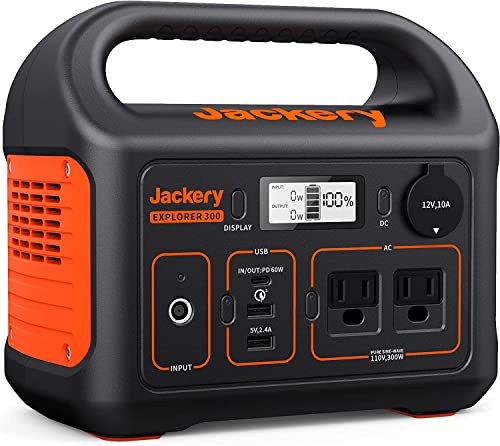
Jackery Explorer 300 Power Station
Best for: lightweight camping and small device charging
- Running Wattage
- 300W
- Capacity
- 293Wh
- Fuel Type
- Battery
- Battery Chemistry
- Lithium-ion
- Output Ports
- 2 AC, 1 USB-C, 1 QC 3.0, 1 USB-A, 1 DC
- Application
- Camping, RV, Power Outage
View on Amazon: Jackery Explorer 300 Power Station Affiliate link
The Jackery Explorer 300 offers 293Wh of lithium-ion battery capacity and 300W of pure sine wave AC output. It weighs 7.1 pounds and measures 9.1 by 5.2 by 7.8 inches. You can recharge it in 2 hours using both the AC adapter and a 60W USB-C port simultaneously. This unit includes two AC outlets, one USB-C, one USB-A, one QC 3.0, and one DC port. It suits camping, RV trips, and power outage backup.
Pros
- 293Wh lithium-ion battery capacity
- 300W pure sine wave AC output
- 2-hour fast recharge via AC and USB-C
- 5 output ports including PD 60W USB-C
- Compatible with solar panels via MPPT controller
Cons
- 300W running wattage limits high-draw appliances
- 293Wh capacity restricts extended off-grid use
- No dedicated display for real-time monitoring
Good fit if
- You need a lightweight 7.1-pound unit for car camping
- You want to charge small electronics like laptops and drones
- You require fast 2-hour recharging at home or in a car
Skip if
- You need to run heavy appliances like microwaves or fridges
- You require more than 293Wh of battery capacity
- You need to power multiple devices for several days off-grid
Verdict: Jackery Explorer 300 Power Station fits campers needing a lightweight, fast-charging source for small electronics. It is not suitable for high-wattage appliances or long-term off-grid power needs.
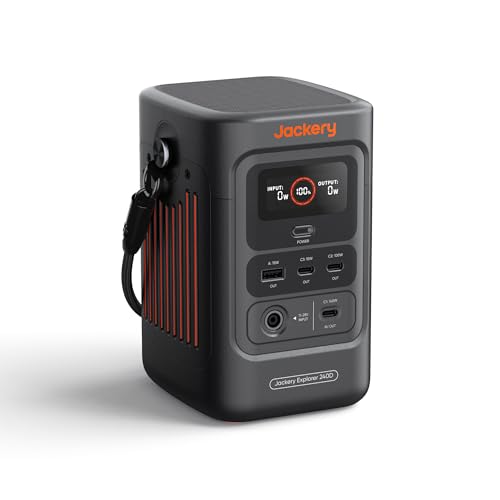
Jackery Explorer 240D DC Power Bank
Best for: Outdoor DC device charging
- Running Wattage
- 200W
- Capacity
- 256Wh
- Battery Chemistry
- LiFePO4
- Output Ports
- 3 USB-C, 1 USB-A
- Application
- Camping, Outdoor, Emergency, Travel
- Dimensions
- 4.73 × 4.19 × 6.69 inches
View on Amazon: Jackery Explorer 240D DC Power Bank Affiliate link
The Jackery Explorer 240D is a compact 256Wh power bank with 200W DC output. It features three USB-C ports and one USB-A port for charging up to four devices. The unit weighs 4.85 lbs and uses LiFePO4 battery chemistry for a 10-year lifespan. It supports solar, AC, and car charging. This model suits travelers needing lightweight, portable energy without AC outlets.
Pros
- 256Wh LiFePO4 battery capacity for long-term use
- 200W total DC output across four ports
- Weighs only 4.85 lbs for easy portability
- Includes 2-in-1 USB-C strap and cable
Cons
- No AC outlets, limiting device compatibility
- Smaller 256Wh capacity compared to 293Wh competitors
- Heavier than typical power banks of similar size
Good fit if
- You need reliable DC power for camping gear
- You prioritize battery longevity and safety
- You want a compact unit for travel
Skip if
- You require AC outlets for standard appliances
- You need higher than 200W output
- You prefer lighter power banks under 4 lbs
Verdict: Jackery Explorer 240D 256Wh DC Power Bank fits users who need durable, lightweight DC power for outdoor adventures. It is ideal for those who value long battery life over AC versatility.
Specifications side by side
| Spec | Jackery Explorer 300 Power Station | Jackery Explorer 240D DC Power Bank |
|---|---|---|
| Running Wattage | 300W | 200W |
| Capacity | 293Wh | 256Wh |
| Fuel Type | Battery | not stated |
| Battery Chemistry | Lithium-ion | LiFePO4 |
| Output Ports | 2 AC, 1 USB-C, 1 QC 3.0, 1 USB-A, 1 DC | 3 USB-C, 1 USB-A |
| Wattage | not stated | 200W |
| Application | Camping, RV, Power Outage | Camping, Outdoor, Emergency, Travel |
| Dimensions | 9.1 × 5.2 × 7.8 inches | 4.73 × 4.19 × 6.69 inches |
| Weight | 7.1 pounds | 4.85 pounds |
| Color | Black, Orange | Black |
| Model | SolarSaga 100 | JE-240B |
Frequently asked questions
Which power bank is lighter for backpacking?
The Jackery Explorer 240D DC Power Bank is the lighter option. It weighs 4.85 pounds, making it easier to carry in a pack. The Explorer 300 Power Station is heavier at 7.1 pounds. You should choose the 240D if minimizing weight is your top priority for hiking trips.
Does the Explorer 240D have AC outlets?
No, the Explorer 240D does not have AC outlets. It features DC output ports for direct device charging. The Explorer 300 includes standard AC outlets. If you need to plug in a laptop or small fan, the Explorer 300 is the necessary choice for your setup.
What are the dimensions of the Explorer 300?
The Explorer 300 measures 9.1 inches in length, 5.2 inches in width, and 7.8 inches in height. These dimensions make it slightly larger than the 240D. You can fit it into most vehicle storage compartments. The compact size supports its use in camping or RV scenarios.
Can the Explorer 240D run high-wattage appliances?
The Explorer 240D is rated for 200W output via DC ports. It is not designed for high-wattage AC appliances. The Explorer 300 offers 300W of AC power. You should use the Explorer 300 if you need to power devices that require standard household voltage and higher wattage.
Is the Explorer 300 suitable for medical equipment?
Yes, the Explorer 300 is suitable for medical equipment. It provides pure sine wave AC power, which is safe for sensitive devices. The Explorer 240D only offers DC output. You should verify your medical device accepts DC input before considering the 240D, as the 300 is the safer default.
What color options are available for the Explorer 300?
The Explorer 300 is available in Black and Orange color options. The Explorer 240D comes in Black. Color choice does not affect performance. You can select the Explorer 300 in Orange if you prefer high-visibility gear for outdoor activities or camping trips.
Which unit is better for RV power outages?
The Explorer 300 is better for RV power outages. It provides AC outlets to run essential appliances during a blackout. The Explorer 240D lacks AC ports. You can use the 300 to keep lights, fans, or electronics running. The 240D is better suited for charging devices directly via DC.