Jackery or Powkey? Generators Compared in 2026
As an Amazon Associate we earn from qualifying purchases. Links on this page are affiliate links.
The jackery vs powkey generator debate often comes down to portability versus power. Both units use lithium-ion batteries for clean, quiet energy. They share pure sine wave output to protect sensitive electronics. The main difference lies in their scale. The Jackery Explorer 300 is a lightweight, compact option for small devices. The Powkey R1000 offers significantly higher capacity and wattage for larger appliances. You need to weigh weight against runtime.
Key differences
| Aspect | Jackery Explorer 300 Power Station | Powkey 800W 740Wh Portable Power Station |
|---|---|---|
| Capacity | 293Wh | 740Wh |
| Running Wattage | 300W | 800W |
| Weight | 7.1 pounds | 18.3 pounds |
| AC Outlets | 2 | 3 |
| Wireless Charging | not listed | Yes, 2 ports |
Which one should you choose?
Choose Jackery Explorer 300 Power Station if
- You need a power station under 10 pounds for hiking or car camping.
- You only need to charge phones, cameras, and small drones.
- You prioritize fast recharging via USB-C and wall outlets.
Choose Powkey 800W 740Wh Portable Power Station if
- You plan to run a mini-fridge or projector during a blackout.
- You need to power multiple devices simultaneously at higher wattage.
- You want built-in wireless charging pads for mobile phones.
Verdict: The Jackery Explorer 300 is the better choice for lightweight travel and small electronics. The Powkey R1000 is the superior option for home backup and powering larger appliances. Your decision depends on whether you value portability or raw power capacity.
Jackery vs Powkey Generator Comparison
Capacity and Power
The Powkey R1000 offers significantly more energy storage and output power than the Jackery Explorer 300. The Powkey unit contains a 740Wh lithium-ion battery pack, which is nearly 2.5 times the capacity of the Jackery’s 293Wh battery. This larger capacity allows the Powkey to run devices for longer periods before needing a recharge. In terms of output, the Powkey provides 800W of running wattage across its three AC outlets. The Jackery is limited to 300W across its two AC outlets. If you need to power high-draw appliances like a mini fridge or a small air conditioner, the Powkey’s higher wattage and capacity make it the more capable choice for extended off-grid use.
Portability and Weight
Portability is a clear advantage for the Jackery Explorer 300. It weighs only 7.1 pounds and measures 9.1 inches in length, 5.2 inches in width, and 7.8 inches in height. This compact size and light weight make it easy to carry in a backpack or toss into a car trunk without effort. In contrast, the Powkey R1000 weighs 18.3 pounds and is much larger, measuring 12.6 inches in length, 9 inches in width, and 7.7 inches in height. While the Powkey includes a flexible handle for carrying, its substantial size and weight make it less convenient for hiking or tight spaces. For light camping trips where you do not need heavy power, the Jackery is far easier to transport.
Output Ports and Connectivity
The Powkey R1000 provides a wider variety of output options compared to the Jackery Explorer 300. The Powkey includes three AC outlets, two USB-A ports, two USB-C ports, two 12V DC ports, two wireless charging pads, and two additional charging ports. This allows you to charge up to eight devices simultaneously, including phones via wireless charging. The Jackery Explorer 300 offers two AC outlets, one PD 60W USB-C port, one QC 3.0 USB-A port, one standard USB-A port, and one DC car port. While the Jackery supports fast charging via its 60W USB-C port, the Powkey’s sheer number of ports and inclusion of wireless charging make it more versatile for groups or multiple device users.
Recharging Speed
The Jackery Explorer 300 recharges faster from a wall outlet than the Powkey R1000 typically does for its larger battery. The Jackery can reach 80% charge in just two hours using a wall outlet or a 60W PD USB-C port simultaneously. This rapid recharge capability is useful for quick top-ups during day trips. The Powkey R1000 supports charging via a wall AC adapter or a car outlet, but specific recharge times are not listed in its published specifications. Given the significant difference in battery capacity, the Powkey would likely take much longer to fully charge from empty. If quick turnaround time between uses is a priority, the Jackery’s faster recharge rate is a practical benefit.
Solar Compatibility
Both units support solar charging, but the Jackery Explorer 300 specifies compatibility with the Jackery SolarSaga 100 panel. It features an integrated MPPT controller to optimize solar recharge efficiency. The Powkey R1000 also supports solar input, recommending 13-28V, 100W+ solar panels, but does not specify a built-in MPPT controller in its data. Both units require solar panels to be purchased separately. The Jackery’s explicit mention of its integrated MPPT controller suggests a potentially more efficient solar charging experience. However, both systems allow you to harness renewable energy for off-grid power, making them suitable for eco-conscious camping or emergency backup scenarios where grid power is unavailable.
Choose Your Jackery or Powkey Generator
Ultralight backpackers needing minimal weight
The Jackery Explorer 300 weighs just 7.1 pounds, making it ideal for carrying on long hikes. Its compact dimensions of 9.1 by 5.2 by 7.8 inches fit easily into gear. You get 293Wh of capacity with 300W output. This unit prioritizes portability over raw power for essential device charging.
Camping groups requiring high power output
The Powkey R1000 delivers 800W of running wattage and holds 740Wh of energy. This allows you to run larger appliances like mini fridges or projectors. It features three AC outlets and wireless charging pads. The higher capacity ensures longer runtime for multiple devices during extended outdoor trips.
Users needing fast simultaneous recharging
You can recharge the Jackery Explorer 300 to 80% in just two hours. It supports simultaneous input via wall outlet and a 60W USB-C port. This speed is efficient for quick turnarounds during day trips. The Powkey unit does not list a specific rapid recharge time in its specifications.
RV travelers powering multiple electronics
The Powkey R1000 includes two 12V DC ports and two Anderson charging ports alongside its AC and USB options. This variety supports complex RV setups. With 740Wh capacity, it handles sustained loads better than the 293Wh Jackery. It is designed for heavier duty use in mobile living situations.
The products compared
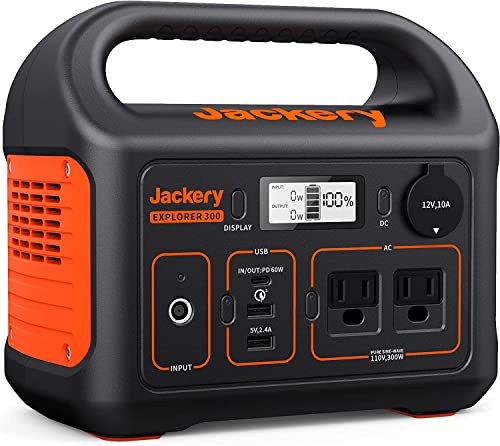
Jackery Explorer 300 Power Station
Best for: Lightweight backup for small electronics and camping
- Running Wattage
- 300W
- Capacity
- 293Wh
- Fuel Type
- Battery
- Battery Chemistry
- Lithium-ion
- Output Ports
- 2 AC, 1 USB-C, 1 QC 3.0, 1 USB-A, 1 DC
- Application
- Camping, RV, Power Outage
View on Amazon: Jackery Explorer 300 Power Station Affiliate link
The Jackery Explorer 300 is a compact 293Wh lithium-ion power station designed for light-duty backup and outdoor use. It delivers 300W of pure sine wave AC power, suitable for small electronics. The unit weighs just 7.1 pounds and measures 9.1 by 5.2 by 7.8 inches. It includes two AC outlets, a 60W USB-C port, and other charging options. This model suits campers or travelers needing portable energy for devices like drones or cameras.
Pros
- 293Wh lithium-ion battery capacity for portable backup
- Recharges 80% in 2 hours via wall outlet and USB-C
- Weighs only 7.1 pounds for easy transport
- Includes 2 pure sine wave AC outlets and 60W USB-C port
Cons
- 300W running wattage limits use to small appliances
- 293Wh capacity is lower than the 740Wh option on this list
- Solar panel is not included with the unit
Good fit if
- You need a lightweight power source for weekend camping trips
- You want to charge small electronics like cameras and laptops
- You require fast recharging via USB-C and wall outlet
Skip if
- You need to run high-wattage appliances like microwaves
- You require a larger battery capacity for extended off-grid stays
- You want a complete solar kit with panels included
Verdict: Jackery Explorer 300 293Wh Portable Power Station is a lightweight option for users who prioritize portability over raw capacity. It fits travelers who need to power small devices quickly without carrying heavy equipment.

Powkey 800W 740Wh Portable Power Station
Best for: Camping and RV trips with small appliances
- Running Wattage
- 800W
- Capacity
- 740Wh
- Fuel Type
- Battery
- Battery Chemistry
- Lithium-ion
- Output Ports
- 3 AC, 2 USB-A, 2 USB-C, 2 DC
- Voltage
- 110V, 120V
View on Amazon: Powkey 800W 740Wh Portable Power Station Affiliate link
The Powkey R1000 is a 740Wh lithium-ion battery pack with an 800W pure sine wave output. It features three AC outlets, two USB-C ports, two USB-A ports, and dual 10W wireless charging pads. Weighing 18.3 pounds, it offers flexible handling for camping or RV trips. This unit suits users needing moderate backup power for small appliances like mini fridges or projectors without the bulk of larger systems.
Pros
- 740Wh capacity supports devices under 800W
- Pure sine wave protects sensitive electronics
- Dual 10W wireless charging pads included
- Multiple output options including USB-C and DC
Cons
- 18.3 pounds is heavy for extended hiking
- Solar panels are not included in the box
- No LCD display listed for real-time monitoring
Good fit if
- You need to power a mini fridge or projector
- You want wireless charging for multiple phones
- You require pure sine wave for sensitive gear
Skip if
- You need to run high-wattage tools over 800W
- You prioritize lightweight portability under 10 pounds
- You want included solar panels for off-grid use
Verdict: Powkey R1000 740Wh 800W Portable Power Station fits campers who need reliable backup for small appliances and value wireless charging convenience. It is less suitable for those requiring high-power tools or ultra-lightweight transport.
Specifications side by side
| Spec | Jackery Explorer 300 Power Station | Powkey 800W 740Wh Portable Power Station |
|---|---|---|
| Running Wattage | 300W | 800W |
| Capacity | 293Wh | 740Wh |
| Fuel Type | Battery | Battery |
| Battery Chemistry | Lithium-ion | Lithium-ion |
| Output Ports | 2 AC, 1 USB-C, 1 QC 3.0, 1 USB-A, 1 DC | 3 AC, 2 USB-A, 2 USB-C, 2 DC |
| Voltage | not stated | 110V, 120V |
| Application | Camping, RV, Power Outage | Camping, Outdoor, Emergency |
| Features | not stated | AC Outlet |
| Dimensions | 9.1 × 5.2 × 7.8 inches | 12.6 × 9 × 7.7 inches |
| Weight | 7.1 pounds | 18.3 pounds |
| Color | Black, Orange | Black White |
| Model | SolarSaga 100 | R1000 |
| Size | not stated | 800W |
Frequently asked questions
Which portable power station is lighter for hiking?
The Jackery Explorer 300 is the lighter option. It weighs only 7.1 pounds and measures 9.1 by 5.2 by 7.8 inches. This makes it easy to carry on long trips. The Powkey R1000 is much heavier at 18.3 pounds. You should choose the Jackery if weight is your main concern.
Which unit has more battery capacity?
The Powkey R1000 has significantly more capacity. It features a 740Wh lithium-ion battery. The Jackery Explorer 300 holds only 293Wh. The Powkey unit can store nearly two and a half times more energy. This allows you to run devices for a longer duration on a single charge.
Can these stations power small camping appliances?
Both units are designed for camping use. The Powkey R1000 is best for small appliances due to its 800W output and 740Wh capacity. The Jackery Explorer 300 is better for small electronics. It provides 293Wh of power. You should match the device power needs to the correct unit size.
What are the physical dimensions of the Jackery?
The Jackery Explorer 300 measures 9.1 inches in length, 5.2 inches in width, and 7.8 inches in height. It comes in black and orange colors. These compact dimensions allow it to fit easily into backpacks or storage bins. It is a space-saving choice for travelers with limited gear space.
What is the output size of the Powkey model?
The Powkey R1000 is an 800W portable power station. It measures 12.6 inches in length, 9 inches in width, and 7.7 inches in height. It weighs 18.3 pounds and comes in black and white colors. This larger form factor supports higher power demands than smaller units.
Are these units suitable for RV use?
Yes, both units support RV applications. The Jackery Explorer 300 is listed for camping, RV, and power outage use. The Powkey R1000 is also suitable for camping. You can use them to power small electronics or appliances while parked. Choose based on whether you need more capacity or less weight.