Jackery or Westinghouse? Generators Compared in 2026
As an Amazon Associate we earn from qualifying purchases. Links on this page are affiliate links.
The jackery vs westinghouse generator comparison highlights two very different power solutions. One is a compact lithium-ion battery station, and the other is a heavy-duty tri-fuel generator. Both provide reliable electricity, but they serve distinct needs. The battery unit offers silent, portable power for small electronics and camping gear. The generator delivers massive wattage for home backup and high-draw appliances. You must choose based on whether you prioritize portability or raw power output.
Key differences
| Aspect | Jackery Explorer 300 Power Station | Westinghouse 13500W Tri-Fuel Portable Generator |
|---|---|---|
| Running Wattage | 300W | 10,500W (Gas) |
| Capacity | 293Wh | Not listed |
| Fuel Type | Battery | Tri-Fuel (Gas, Propane, Natural Gas) |
| Start Type | Not listed | Electric, Remote, Recoil |
| Weight | 7.1 pounds | 230 pounds |
| Application | Camping, RV | Home |
Which one should you choose?
Choose Jackery Explorer 300 Power Station if
- You need a lightweight, silent power source for camping or tailgating.
- You want to charge small electronics like phones, laptops, and cameras.
- You require a portable unit that fits in a car trunk.
Choose Westinghouse 13500W Tri-Fuel Portable Generator if
- You need to power large home appliances during an outage.
- You want the flexibility to switch between gasoline, propane, or natural gas.
- You prefer remote start convenience and high continuous wattage.
Verdict: Choose the Jackery Explorer 300 if you need quiet, portable power for outdoor adventures and small devices. Select the Westinghouse generator if you require substantial energy to run household essentials or heavy tools. The right choice depends entirely on whether you value mobility or high capacity.
Jackery vs Westinghouse: Key Differences
Power Output
The Westinghouse generator delivers significantly higher wattage than the Jackery power station. Westinghouse provides 10,500 running watts on gasoline, 9,500 on propane, and 8,500 on natural gas. Its peak surge reaches 13,500 watts on gas. In contrast, the Jackery Explorer 300 offers only 300 watts of continuous output. This makes the Westinghouse suitable for running large appliances like refrigerators or air conditioners. The Jackery is designed for low-power devices such as phones, cameras, and small fans. If you need to power a whole home or heavy tools, the Westinghouse is the clear choice. For small electronics, the Jackery is sufficient.
Energy Capacity
These products store energy differently. The Jackery Explorer 300 has a 293Wh lithium-ion battery. It holds enough charge to run small devices for a few hours or recharge them multiple times. It does not use fuel. The Westinghouse generator does not have a large internal battery for storage. Instead, it generates power continuously as long as it has fuel. It runs for up to 19 hours on a 9.5-gallon tank of gasoline. This means you can keep it running indefinitely with refills. The Jackery is better for short, silent bursts of power. The Westinghouse is better for long-duration needs where refueling is possible.
Portability
Size and weight matter greatly for transport. The Jackery Explorer 300 weighs just 7.1 pounds. Its dimensions are 9.1 inches long, 5.2 inches wide, and 7.8 inches high. You can carry it easily by hand or pack it in a car trunk. The Westinghouse generator is massive and heavy. It weighs 230 pounds and measures 27.2 inches long, 26.1 inches wide, and 26.5 inches high. It requires a wheeled cart or a vehicle for transport. You cannot carry the Westinghouse manually. If you need to hike to a campsite or move the unit frequently, the Jackery is far superior. The Westinghouse is stationary once placed.
Fuel and Recharging
Recharging methods differ between the two. The Jackery uses electricity. It can recharge from a wall outlet or a 60W USB-C port in about 2 hours to reach 80% capacity. It also supports solar input via compatible panels. The Westinghouse uses liquid or gaseous fuel. It is a tri-fuel unit, accepting gasoline, propane, or natural gas. You refill it with fuel rather than plugging it in. The Westinghouse also features a remote electric start with a key fob. The Jackery starts with a button. The Jackery is cleaner and quieter. The Westinghouse offers fuel flexibility and longer runtime without needing grid power.
Output Ports
Each unit offers different connection options. The Jackery includes two AC outlets, one USB-C port, one USB-A port, one QC 3.0 port, and one DC car port. This variety is good for charging multiple small devices simultaneously. The Westinghouse provides heavy-duty outlets. It has two 120V 20A household receptacles, one 120V 30A transfer switch ready outlet, and one 120/240V 50A RV ready outlet. These are designed for high-power cords and appliances. The Jackery lacks the high-amperage outlets needed for large equipment. The Westinghouse lacks the convenient USB ports for small gadgets. Choose based on what you need to plug in.
Which Portable Power Source Fits You
Camping enthusiasts needing quiet, portable power
The Jackery Explorer 300 weighs just 7.1 pounds and measures 9.1 by 5.2 by 7.8 inches. Its 293Wh lithium-ion battery provides 300W of pure sine wave power. You can recharge it in 2 hours via AC or USB-C. It operates silently, making it ideal for tent camping or overland journeys where noise and weight matter most.
Homeowners requiring backup power for appliances
The Westinghouse generator delivers 10,500 running watts on gasoline, enough for major home appliances. It features tri-fuel capability, allowing use with gas, propane, or natural gas. The 120/240V outlets include a transfer switch ready connection. With a 19-hour run time and remote start, it provides robust backup power during extended outages.
Users needing to charge multiple small devices
This power station offers five output ports, including a 60W USB-C PD port, a QC 3.0 port, and a DC car port. You can charge up to six devices simultaneously. The integrated MPPT controller supports solar charging via compatible panels. Its compact size and lightweight design make it easy to carry on road trips or to remote sites.
The products compared
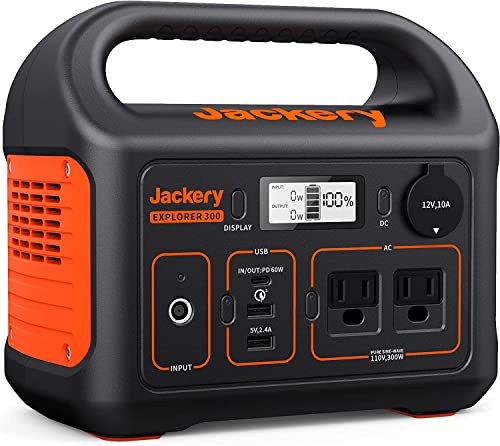
Jackery Explorer 300 Power Station
Best for: Lightweight camping and small device charging
- Running Wattage
- 300W
- Capacity
- 293Wh
- Fuel Type
- Battery
- Battery Chemistry
- Lithium-ion
- Output Ports
- 2 AC, 1 USB-C, 1 QC 3.0, 1 USB-A, 1 DC
- Application
- Camping, RV, Power Outage
View on Amazon: Jackery Explorer 300 Power Station Affiliate link
The Jackery Explorer 300 is a compact lithium-ion battery pack with 293Wh capacity. It delivers 300W of pure sine wave power through two AC outlets. Weighing just 7.1 pounds, it fits easily in your gear. You can recharge it via wall outlet, car port, or compatible solar panels. This unit suits light camping trips or emergency backups for small electronics rather than whole-home power needs.
Pros
- 293Wh lithium-ion battery capacity
- 300W running wattage with pure sine wave output
- Weighs only 7.1 pounds for easy portability
- Recharges 80% in 2 hours via AC or USB-C
- Includes 2 AC outlets, USB-C, USB-A, and DC port
Cons
- 300W output limits use to small electronics only
- 293Wh capacity is low for high-drain appliances
- Solar panel not included in the package
Good fit if
- You need a lightweight power source for tent camping
- You want to charge phones and cameras during road trips
- You need backup power for small devices during outages
Skip if
- You need to run heavy appliances like microwaves
- You require extended power for multi-day off-grid stays
- You need a fuel-based generator for high wattage
Verdict: Jackery Explorer 300 Portable Power Station is ideal for travelers who prioritize light weight and quick recharging for small devices. It does not replace high-wattage generators for home backup.

Westinghouse 13500W Tri-Fuel Portable Generator
Best for: Whole-home backup with tri-fuel flexibility
- Running Wattage
- 10,500 W
- Surge Wattage
- 13,500 W
- Fuel Type
- Gasoline, Propane, Natural Gas
- Output Ports
- 50A and 30A outlets
- Application
- Home
- Start Type
- Electric Start, Remote Start
View on Amazon: Westinghouse 13500W Tri-Fuel Portable Generator Affiliate link
This Westinghouse generator delivers up to 13,500 peak watts on gasoline. It runs on three fuel types: gasoline, propane, and natural gas. The unit features electric start with a remote key fob. It includes a transfer switch ready outlet for home backup. The heavy-duty engine provides up to 19 hours of runtime. You get 50-amp and 30-amp outlets for RVs and homes.
Pros
- Tri-fuel capability for gasoline, propane, and natural gas
- 13,500 peak watts on gasoline for high power needs
- Remote electric start with included key fob
- Transfer switch ready 120V L14-30R 30A outlet
- Up to 19 hours of runtime on gasoline
Cons
- Heavy at 230 pounds, making it difficult to move
- Large physical footprint measuring 27.2 by 26.1 inches
- Includes a 12V battery charger but requires battery purchase
Good fit if
- You need high wattage for whole-home backup
- You want flexible fuel options for long outages
- You require remote start convenience for safety
Skip if
- You need a portable unit under 100 pounds
- You only have access to propane or natural gas
- You require a compact generator for small spaces
Verdict: Westinghouse WGen10500TFc Tri-Fuel Generator is a powerful home backup solution for users who need high wattage and fuel flexibility. It fits homeowners who can manage its weight and size for reliable power.
Specifications side by side
| Spec | Jackery Explorer 300 Power Station | Westinghouse 13500W Tri-Fuel Portable Generator |
|---|---|---|
| Running Wattage | 300W | 10,500 W |
| Surge Wattage | not stated | 13,500 W |
| Capacity | 293Wh | not stated |
| Fuel Type | Battery | Gasoline, Propane, Natural Gas |
| Battery Chemistry | Lithium-ion | not stated |
| Output Ports | 2 AC, 1 USB-C, 1 QC 3.0, 1 USB-A, 1 DC | 50A and 30A outlets |
| Application | Camping, RV, Power Outage | Home |
| Start Type | not stated | Electric Start, Remote Start |
| Features | not stated | Transfer Switch Ready |
| Dimensions | 9.1 × 5.2 × 7.8 inches | 27.2 × 26.1 × 26.5 inches |
| Weight | 7.1 pounds | 230 pounds |
| Color | Black, Orange | Blue |
| Model | SolarSaga 100 | WGen10500TFc |
| Size | not stated | 13000W Tri-Fuel + CO Sensor |
Frequently asked questions
Can the Jackery Explorer 300 power a refrigerator?
No, it cannot. The Jackery Explorer 300 has a continuous output of 300W. Most refrigerators require more starting wattage than this unit provides. It is designed for small devices like phones and laptops. You should use a higher-wattage generator for major appliances.
Does the Westinghouse generator have a remote start?
Yes, it does. The Westinghouse WGen10500TFc includes remote start functionality. You can also start it using the electric start switch. This allows you to operate the generator from a distance. It is useful for whole-home backup setups where you may not be near the unit.
Is the Westinghouse generator transfer switch ready?
Yes, it is. The Westinghouse WGen10500TFc is transfer switch ready. This feature allows you to connect it to your home’s electrical panel. You can switch your home’s power source automatically during an outage. This makes it suitable for reliable whole-home backup power solutions.
How heavy is the Jackery Explorer 300?
It weighs 7.1 pounds. This makes it very lightweight and easy to carry. You can pack it into a car trunk or RV storage space without issue. Its compact size of 9.1 by 5.2 by 7.8 inches adds to its portability for camping trips.
What fuels does the Westinghouse generator use?
It uses three fuel types. The Westinghouse WGen10500TFc is a tri-fuel generator. You can run it on gasoline, propane, or natural gas. This flexibility lets you choose the most available fuel source. It provides 10,500 watts on gas, 9,500 on propane, and 8,500 on natural gas.
Does the Westinghouse generator have a carbon monoxide sensor?
Yes, it does. The Westinghouse WGen10500TFc includes a built-in CO sensor. This safety feature monitors air quality around the unit. It can shut down the generator if dangerous carbon monoxide levels are detected. This is important for safe operation near living spaces.
Can I use the Jackery Explorer 300 for RV camping?
Yes, you can. The Jackery Explorer 300 is listed for RV use. Its 293Wh battery powers small electronics and devices. It operates silently, which is ideal for quiet camping environments. However, it cannot run high-wattage RV appliances like air conditioners.
What is the difference between the Jackery and Westinghouse sizes?
They are vastly different in size. The Jackery Explorer 300 is compact, measuring 9.1 by 5.2 by 7.8 inches. The Westinghouse WGen10500TFc is much larger, at 27.2 by 26.1 by 26.5 inches. The Jackery fits in a car. The Westinghouse requires a dedicated space due to its size and weight.