Renogy 100W Flexible Solar Panel Review (2026): A Spec-Based Look
As an Amazon Associate we earn from qualifying purchases. Links on this page are affiliate links.
This renogy flexible solar panel 100 review looks at a lightweight power solution for mobile setups. The Renogy 100W Flexible Solar Panel delivers a rated power of 100 watts using monocrystalline half-cut PERC cells. It measures 43 inches by 22.9 inches with a slim 0.8-inch profile. The panel bends up to 240 degrees, allowing it to fit curved surfaces on boats or RVs. It weighs one-third as much as rigid panels while maintaining an all-black, glare-free finish. This design prioritizes portability and ease of installation for travelers who need reliable energy on the go.
What stands out
- Monocrystalline half-cut PERC cell technology for enhanced light capture
- Bends up to 240 degrees for curved surface mounting
- IP67 rated waterproof junction box and connectors
- Weighs only one-third of rigid panels for easy transport
- Pre-drilled mounting holes and 2.3-foot connector cables included
Who it fits
Good fit for
You should consider this panel if you need a lightweight power source for a boat, RV, or camper. The 100-watt output provides roughly 500 watt-hours daily, depending on sun availability. Its flexible design fits curved roofs where rigid panels cannot. The IP67 rating ensures durability against water and dust. If you value easy installation with pre-drilled holes and short cables, this unit suits your mobile energy needs without adding excessive weight to your vehicle.
Who should skip it
Skip this option if you require maximum power density or rigid durability. This panel offers only 100 watts, which may not suffice for high-drain appliances or off-grid cabins. The flexible construction is less robust than rigid frames under heavy snow loads, though it withstands up to 5400 Pa. If you prefer a larger surface area for higher output, consider the 200W variation. Also, avoid this if you need a rigid panel for flat, stationary installations where weight is not a concern.
Verdict: The Renogy 100W Flexible Solar Panel is a practical choice for mobile users needing lightweight, bendable power. Its IP67 rating and easy installation make it suitable for boats and RVs.
Key specs for this panel
Rated Power: 100W
This rating indicates the maximum electricity the panel produces under ideal laboratory conditions. In real-world use, you will likely generate less due to weather and angle. This output suits small devices or topping off a battery. It is not enough to run high-draw appliances directly. Compare this wattage to other panels to ensure it matches your daily energy needs and the input limits of your power station.
Cell Type: Monocrystalline half-cut PERC
Monocrystalline cells offer higher efficiency than polycrystalline alternatives. The half-cut design reduces resistance and improves performance in partial shade. PERC technology captures more light for better output. This combination helps you generate more power in limited space. It is a modern standard for portable solar gear. Look for this cell type when you need reliable performance in varying light conditions.
Panel Type: Flexible
A flexible panel bends to fit curved surfaces like boat decks or RV roofs. It weighs less than rigid frames, making it easier to transport and handle. This form factor allows for secure mounting without complex brackets. It is ideal for mobile setups where weight and shape matter. Rigid panels are sturdier but heavier. Choose flexible if you need to conform to non-flat surfaces.
IP Rating: IP67
This rating means the junction box and connectors are dust-tight and waterproof. The panel can withstand heavy rain and temporary submersion. This protection ensures durability in outdoor environments. It prevents water damage to electrical components. Check this rating if you plan to leave the panel exposed. Higher IP ratings offer better protection against moisture and debris for your investment.
Design and Build Quality
According to the listing, this unit features a flexible design that bends up to 240 degrees. The panel measures 43 inches in length and 22.9 inches in width, with a slim profile of 0.8 inches in height. It weighs approximately one-third as much as a rigid panel of similar power. This low weight and thin construction allow you to mount it on curved surfaces like boat decks or RV roofs where rigid panels would not fit. The all-black finish provides a glare-free appearance, which helps it blend into dark backgrounds without drawing unnecessary attention.
The construction uses monocrystalline half-cut PERC cells to enhance light capture and electrical performance. The junction box and solar connectors are rated IP67 for waterproofing. This rating means the electrical components are protected against dust and temporary immersion in water, making the panel suitable for outdoor exposure in rain or snow. The listing states it can withstand up to 5400 Pa of snow load and 2400 Pa of wind pressure. These figures suggest the build is sturdy enough for harsh weather conditions common in mobile setups.
Installation is supported by pre-drilled mounting holes and 2.3-foot-long solar connector cables. This layout simplifies the initial setup process, allowing you to secure the panel quickly without needing additional hardware or custom wiring. The included cable length is sufficient for most standard connections to a charge controller or power station. The combination of the flexible substrate and durable weather ratings makes this panel a practical choice for users who need a lightweight, adaptable power source that can endure movement and environmental stress.
Setup and Everyday Use
Installation begins with the pre-drilled mounting holes. These allow you to secure the panel to curved surfaces, which is its primary advantage. The listing notes it bends up to 240 degrees, making it suitable for boat decks or RV roofs. You attach it using the provided hardware. The unit includes 2.3 feet of solar connector cable. This length is short, so you may need an extension cable to reach your power station or battery bank. The all-black, glare-free appearance keeps the setup discreet.
Daily operation relies on sun availability. The panel features monocrystalline half-cut PERC cells. This technology enhances light capture and electrical performance. It claims to provide an average of 500 watt-hours per day. This figure depends heavily on direct sunlight and angle. You must position the panel to face the sun for best results. The flexible design means you can adjust its curve to follow the surface, but optimal angle still matters.
Durability specs suggest it handles outdoor conditions. The junction box and connectors carry an IP67 waterproof rating. This means they resist dust and temporary water immersion. The panel withstands up to 5400 Pa of snow load and 2400 Pa of wind. These ratings indicate it can stay mounted during moderate weather. You do not need to remove it for rain. However, heavy storms may require you to secure it further or remove it to prevent damage. The slim 0.8-inch profile helps it sit flush against surfaces, reducing wind resistance.
Before You Buy This Panel
You need a compatible charge controller to manage the 100W output effectively. Check that your controller supports the voltage range of monocrystalline half-cut PERC cells. The included 2.3-foot cables are short, so you may need extension cables to reach your battery bank or inverter. Ensure your power station accepts solar input within this wattage. This panel fits best in mobile setups where weight matters. It complements portable power stations by providing renewable energy on the go. Unlike rigid panels, its flexibility allows installation on curved surfaces like boat decks. However, you must secure it properly. The IP67 junction box offers water resistance, but regular cleaning is still necessary. Dust and debris reduce efficiency. Inspect the connectors for wear. This option suits users prioritizing portability over raw power. It is lighter than standard 100W rigid panels, making it easier to transport. Consider your available surface area and mounting options before purchasing.
Check before you buy
- Verify your charge controller supports 100W monocrystalline input.
- Check if you need longer connector cables.
- Confirm your power station accepts solar charging.
- Ensure your mounting surface can handle wind loads.
The product at a glance
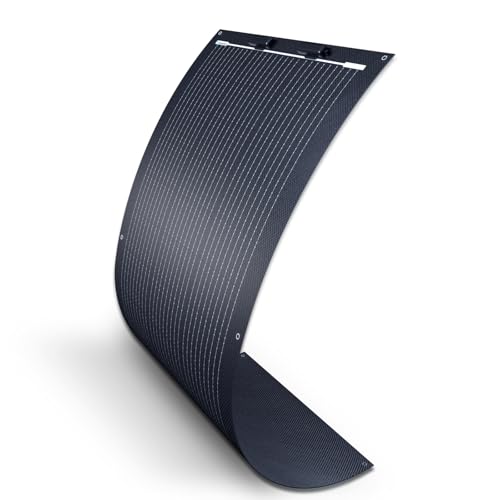
Renogy 100W Flexible Solar Panel
Best for: curved vehicle roofs and boats
- Rated Power
- 100W
- Panel Type
- Flexible
- Cell Type
- Monocrystalline PERC
- IP Rating
- IP67
- Application
- RV, Off-Grid, Marine
- Dimensions
- 43 × 22.9 × 0.8 inches
View on Amazon: Renogy 100W Flexible Solar Panel Affiliate link
This Renogy 100W flexible solar panel uses monocrystalline half-cut PERC cells to deliver an average of 500 watt-hours per day. It bends up to 240 degrees and weighs only one-third of rigid panels, making it ideal for curved surfaces. The unit measures 43 by 22.9 inches with a slim 0.8-inch profile. It features an IP67-rated waterproof junction box and withstands heavy snow and wind loads.
Pros
- Bends up to 240 degrees for curved surfaces
- IP67 waterproof junction box and connectors
- Monocrystalline half-cut PERC cell technology
- Pre-drilled mounting holes included
- Withstands 5400 Pa snow load
Cons
- 100W output limits charging speed for large batteries
- 0.8-inch thickness may not fit tight spaces
- No included charge controller
Good fit if
- You need a lightweight panel for a boat or RV
- You have a curved mounting surface
- You want a glare-free black appearance
Skip if
- You require high power output for rapid charging
- You need a rigid panel for flat roofs
- You want a complete kit with controller included
Verdict: Renogy 100W Flexible Solar Panel suits users needing adaptable power for curved vehicles. It offers reliable weather resistance and efficient cell technology for moderate daily energy needs.
Specifications side by side
| Spec | Renogy 100W Flexible Solar Panel |
|---|---|
| Rated Power | 100W |
| Panel Type | Flexible |
| Cell Type | Monocrystalline PERC |
| IP Rating | IP67 |
| Wattage | 100W |
| Application | RV, Off-Grid, Marine |
| Dimensions | 43 × 22.9 × 0.8 inches |
| Size | 100W Lightweight |
| Color | Black |
| Model | 100W Flexible Solar Panel |
Frequently asked questions
Is the Renogy 100W Flexible Solar Panel suitable for curved roofs?
Yes, this panel is designed for curved surfaces. It can bend up to 240 degrees, allowing it to conform to boat decks or RV roofs. The flexible construction ensures it fits where rigid panels cannot, making it ideal for mobile setups requiring adaptable power solutions.
What are the dimensions of this 100W flexible solar panel?
The panel measures 43 inches in length and 22.9 inches in width. Its height is only 0.8 inches, providing a low-profile design that sits close to the surface. These dimensions help it fit within standard mounting spaces on vehicles or boats without adding significant bulk.
How much does the Renogy 100W Flexible Solar Panel weigh?
The listing describes the unit as lightweight, weighing approximately one-third of comparable rigid panels. This reduced weight is crucial for mobile applications like boats or RVs, where adding heavy equipment can affect balance and fuel efficiency. It allows for easier handling during installation.
What type of solar cells does this panel use?
It uses monocrystalline half-cut PERC cells. This technology generally offers higher efficiency and better performance in low-light conditions compared to traditional cells. The half-cut design also reduces internal resistance, which can improve overall energy conversion and durability under varying weather conditions.
Can this flexible solar panel be mounted directly to a surface?
Yes, it features pre-drilled mounting holes for secure attachment. These holes allow you to fasten the panel directly to curved surfaces using appropriate hardware. This design eliminates the need for complex framing, making installation straightforward for users setting up power on boats or recreational vehicles.
What is the maximum wattage output of this panel?
The rated power is 100 watts. This rating indicates the maximum electricity produced under ideal laboratory conditions. In real-world use, actual output depends on sunlight intensity and angle. This capacity is sufficient for charging small devices or maintaining battery levels in moderate energy scenarios.