Best Generators Under $3000: 15 Spec-Based Picks
As an Amazon Associate we earn from qualifying purchases. Links on this page are affiliate links.
Finding the right generator under 3000 requires balancing your power demand with fuel availability and runtime needs. To help you decide, we compared 15 units using only the specifications published on their official product listings.
The Jackery HomePower 3600 Plus Solar Generator earns the top position because it delivers a 3584Wh battery capacity and a 3600W power output. This guide helps you evaluate essential specs like wattage, battery size, and fuel versatility so you can select the right backup power source for your home.
Quick picks
The best fit for you
- You need high-capacity home backup with fast recharging Jackery HomePower 3600 Plus Solar Generator It provides a 3584Wh capacity, a 3600W inverter, and durable 6,000-cycle cells.
- You want quiet multi-fuel power for campsite use GENMAX 12500W Tri-Fuel Inverter Generator It pairs tri-fuel operation with clean inverter power and a quiet 62 dBA sound rating.
- You need maximum battery capacity with rapid recharging BLUETTI Apex 300 5.5kWh Power Station Its 5,529.6Wh capacity pairs with 3,840W continuous output and rapid 45-minute AC recharging.
- You need heavy-duty wattage for transfer switch backup Westinghouse 18000W Dual-Fuel Generator It delivers dual-fuel operation with transfer-switch readiness and an integrated CO sensor.
Our 15 picks

Jackery HomePower 3600 Plus Solar Generator
Best for: whole-home emergency backup and fast recharging
- Running Wattage
- 3600W
- Capacity
- 3584Wh
- Battery Chemistry
- LFP
- Voltage
- 120V & 240V
- Solar Panel Wattage
- 2x200W
- Dimensions
- 15.2 × 12.2 × 19.3 inches
View on Amazon: Jackery HomePower 3600 Plus Solar Generator (paid link)
The Jackery HomePower 3600 Plus Solar Generator pairs a 3584Wh battery with a 3600W AC inverter and includes two 200W solar panels. You can recharge it completely in two hours using AC and DC hybrid charging. It handles heavy household appliances during outages and wheels into place using a built-in telescopic handle. This unit suits you if you need dependable, high-capacity home emergency backup without relying solely on fuel.
Pros
- 3584Wh capacity delivering 3600W continuous AC output
- 6,000-cycle battery lifespan using high-temperature ceramic cells
- Fast 2-hour recharge via hybrid AC and DC input
- Built-in wheels and telescopic handle for transporting its 77.16-pound frame
Cons
- Requires a second unit in parallel to provide 240V output
- Base unit weighs 77.16 pounds before adding accessories
Good fit if
- You need 3600W of clean continuous power for home appliances during an outage.
- You want rapid 2-hour hybrid recharging from combined AC and DC inputs.
- You plan to expand your home backup capacity up to 21kWh or 43kWh.
Skip if
- You need 240V output straight out of the box from a single standalone unit.
- You want a lightweight power station that you can carry without using wheels.
Verdict: Jackery HomePower 3600 Plus Solar Generator delivers a massive 3584Wh capacity and 3600W inverter paired with rapid hybrid recharging. It stands out among 15 picks as a durable home backup solution with 6,000-cycle cells.

DuroMax 15,000-Watt Tri-Fuel Generator
Best for: high-demand whole-home backup on multiple fuels
- Fuel Type
- Tri Fuel (gas, propane, natural gas)
- Voltage
- 120V, 120V/240V
- Application
- Home
- Dimensions
- 1 × 1 × 1 inches
- Weight
- 362 pounds
View on Amazon: DuroMax 15,000-Watt Tri-Fuel Generator (paid link)
This DuroMax machine is a heavy-duty portable generator built for whole-home backup power. It delivers up to 15,000 watts using a 500cc engine and runs on three distinct fuel options: gasoline, propane, or natural gas. You can connect it directly to your home panel through a transfer switch-ready 50-amp outlet. It suits you if you need massive electrical output and fuel flexibility.
Pros
- Runs on gasoline, propane, or natural gas with quick fuel switching
- Delivers up to 15,000 watts of output via a 500cc OHV engine
- Equipped with a transfer switch-ready 120V/240V 50A outlet
- Offers push-button start along with remote distance starting
- Features CO Alert automatic shutdown for carbon monoxide safety
Cons
- Weighs 362 pounds, requiring substantial effort to move
- Lacks direct DC or USB ports on the power panel
Good fit if
- You need up to 15,000 watts to power extensive home circuits during an outage
- You want the choice to run off natural gas lines, propane, or gasoline
- You plan to connect your generator to a 50A transfer switch
Skip if
- You want an indoor-safe, emission-free battery storage unit
- You need a lightweight machine that one person can lift
Verdict: DuroMax 15,000-Watt Tri-Fuel Generator supplies high-capacity backup power with versatile three-way fuel support and a 50-amp outlet. Its 362-pound weight limits mobility, but the unit excels for heavy residential demands.

EF EcoFlow DELTA Pro 3.6kWh with 2x400W Solar
Best for: high-capacity solar backup with diverse output ports
- Capacity
- 3.6kWh
- Output Ports
- 5 AC, 4 USB-A, 2 USB-C, 2 DC, 1 car
- Solar Panel Wattage
- 2 x 400W
- Features
- Solar Charging
- Dimensions
- 16.4 × 25 × 11.2 inches
- Weight
- 99 pounds
View on Amazon: EF EcoFlow DELTA Pro 3.6kWh with 2x400W Solar (paid link)
This solar generator pairs a 3.6kWh battery capacity with two 400W foldable solar panels. You get 15 output ports, including 5 AC outlets, 4 USB-A ports, 2 USB-C ports, and an Anderson port. The EcoFlow app enables monitoring via Wi-Fi or Bluetooth. It suits you if you need a high-capacity solar setup with versatile ports for home backup or off-grid power.
Pros
- 3.6kWh storage capacity with 15 output ports
- Includes two foldable 400W solar panels with IP68 waterproof rating
- App monitoring and custom controls via Wi-Fi or Bluetooth
- Includes dedicated Anderson port and 5 AC outlets
Cons
- Power station unit weighs 99 pounds
- Solar panel weighs 35.3 pounds
- Power station and solar panels ship in separate packages
Good fit if
- You need 15 output ports across AC, USB, DC, car, and Anderson connections.
- You want foldable solar panels rated IP68 for water and dust resistance.
- You prefer monitoring battery and charge levels remotely through an app.
Skip if
- You cannot lift or transport a 99-pound power unit.
- You want all components delivered in a single package.
Verdict: EF EcoFlow DELTA Pro 3.6kWh with 2x400W Solar pairs a 3.6kWh capacity with 15 output ports and dual high-efficiency panels. It offers complete off-grid power capability with Wi-Fi and Bluetooth controls.

AIVOLT 11500W Tri-Fuel Inverter Generator
Best for: flexible tri-fuel whole home emergency backup
- Running Wattage
- 9,200W Gas, 8,500W LPG, 6,800W NG
- Surge Wattage
- 11,500W Gas, 10,600W LPG, 8,500W NG
- Fuel Type
- Tri-Fuel (Gasoline, LPG, Natural Gas)
- Output Ports
- Dual 30A, 50A, 20A GFCI duplex, 12V DC
- Voltage
- 120V/240V
- Application
- Home
View on Amazon: AIVOLT 11500W Tri-Fuel Inverter Generator (paid link)
This tri-fuel inverter generator delivers up to 11,500 starting watts and 9,200 running watts on gasoline, with options to run on propane or natural gas. You get dual 120-volt and 240-volt power via a 50A receptacle and dual 30A outlets. A 7.1-gallon tank provides up to 16 hours of power at quarter load. It fits your needs if you want versatile home backup power with push-button and remote starting.
Pros
- Runs on gasoline, LPG, or natural gas with included connection hoses
- Equipped with a 50A receptacle and dual 30A outlets for 120V/240V loads
- Provides electric push-button, remote fob, and recoil starting methods
- Achieves up to 16 hours of runtime at 25% load on a 7.1-gallon tank
Cons
- Engine oil is not included in the package
- Running output drops to 6,800 watts when fueled by natural gas
- Heavy frame weighing up to 260 pounds
Good fit if
- You need fuel flexibility across gasoline, propane, and home natural gas lines.
- You want direct 50A or dual 30A connections for a transfer switch or RV.
- You prefer the convenience of starting your generator with a remote key fob.
Skip if
- You need a lightweight machine that one person can lift without wheels.
- You require maximum 9,200-watt running capacity exclusively on natural gas.
Verdict: AIVOLT 11500W Tri-Fuel Inverter Generator provides versatile multi-fuel power with robust 50A and 30A connections for whole-home backup. Its remote start and enclosed design make managing extended utility outages straightforward.

EcoFlow DELTA Pro 3 4096Wh Power Station
Best for: Clean indoor whole-home and 240V backup
- Running Wattage
- 4000W
- Capacity
- 4096Wh
- Battery Chemistry
- LFP
- Voltage
- 120V/240V
- Dimensions
- 16.2 × 13.4 × 27.4 inches
- Weight
- 115 pounds
View on Amazon: EcoFlow DELTA Pro 3 4096Wh Power Station (paid link)
The EcoFlow DELTA Pro 3 is a heavy-duty portable power station designed for home backup. It delivers 4000W of continuous AC output at both 120V and 240V, paired with a 4096Wh LFP battery pack. With a 10 ms switch-over time, it functions as an instant backup system for household appliances and electronics. It suits you if you need split-phase 240V power and large battery capacity without running a gas engine indoors.
Pros
- 4000W continuous output supporting both 120V and 240V appliances
- 4096Wh LFP battery capacity expandable up to 48kWh
- Fast 10 ms switch-over time for sensitive electronics
- Whisper-quiet operation as low as 30 dB
Cons
- Heavy build weighing 115 pounds
- Tall vertical profile measuring over 27 inches high
Good fit if
- You need dual-voltage 120V and 240V output to run heavy household appliances.
- You require fast 10 ms switch-over protection to keep computers and servers powered.
- You plan to scale your energy storage capacity over time up to 48kWh.
Skip if
- You need a lightweight power source that you can easily carry alone without managing 115 pounds.
- You have tight storage spaces that cannot accommodate a 27.38-inch tall chassis.
Verdict: EcoFlow DELTA Pro 3 4096Wh Power Station provides robust 120V/240V output and fast switch-over for clean indoor power backup. Its 4000W output and expandable 4096Wh capacity handle demanding appliances reliably despite the 115-pound total weight.

GENMAX 12500W Tri-Fuel Inverter Generator
Best for: Heavy-duty RV and campsite power needs
- Running Wattage
- 10500W Gas, 9500W LPG, 8500W NG
- Surge Wattage
- 12500W Gas, 11500W LPG, 10000W NG
- Fuel Type
- Gasoline, Propane, Natural Gas
- Voltage
- 120V/240V
- Application
- Camping, Home, RV
- Dimensions
- 30.9 × 22.6 × 29.3 inches
View on Amazon: GENMAX 12500W Tri-Fuel Inverter Generator (paid link)
The GENMAX 12500W Tri-Fuel Inverter Generator provides clean, stable power using gasoline, propane, or natural gas. Running at 62 dBA at a 25% load, it delivers up to 10,500 running watts on gasoline with under 3% total harmonic distortion. It suits you if you need a high-output unit with four starting methods, a 50-amp outlet, and quiet operation for basecamp setups, RV trips, or home backup.
Pros
- Tri-fuel capability running on gasoline, propane, or natural gas
- Clean power with 3% or less total harmonic distortion
- Four start options: electric, recoil, Bluetooth app, and 2-wire auto start
- Equipped with 120V/240V 50A, 30A, 20A, 12V DC, and USB ports
- Eco-Mode operation down to 62 dBA at a 25% load
Cons
- Heavy weight at 251.92 pounds
- Reduced output of 8,500 running watts when using natural gas
- Large footprint measuring 30.9 inches long by 29.33 inches high
Good fit if
- You need versatile fueling across gasoline, propane, and natural gas supplies.
- You require quiet 62 dBA sound levels alongside sensitive-electronics-safe inverter output.
- You run heavy loads that require a dedicated 50-amp NEMA 14-50R outlet.
Skip if
- You need a compact power unit that one person can lift without wheels.
- You plan to run exclusively on natural gas and need more than 8,500 continuous watts.
- You have limited storage space that cannot accommodate a 250-plus-pound frame.
Verdict: GENMAX 12500W Tri-Fuel Inverter Generator pairs flexible tri-fuel operation with clean inverter power and quiet 62 dBA sound output. It delivers dependable, high-capacity electricity for demanding campsites, RV excursions, and emergency home backup.

Anker SOLIX F3800 3840Wh Power Station
Best for: 240V home backup and direct EV charging
- Running Wattage
- 6000W
- Capacity
- 3840Wh
- Battery Chemistry
- LFP
- Output Ports
- NEMA 14-50, L14-30
- Voltage
- 120V/240V
- Weight
- 132 pounds
View on Amazon: Anker SOLIX F3800 3840Wh Power Station (paid link)
The Anker SOLIX F3800 is a heavy-duty portable power station designed for home backup and high-draw equipment. You get a 3,840Wh LFP battery capacity and a continuous 6,000W AC output with split-phase 120V and 240V power. It includes dedicated NEMA 14-50 and L14-30 ports to power RVs and charge electric vehicles directly. This unit suits you if you need substantial emergency output and expandable capacity.
Pros
- Dual 120V/240V output delivering up to 6,000W AC power
- Dedicated NEMA 14-50 port charges EVs directly at 6,000W
- Expandable storage capacity from 3.84kWh up to 26.9kWh
- EV-class LFP battery cells backed by a 5-year warranty
- Ships with the Smart Generator 5500 included in the box
Cons
- Heavy base weight of 132 pounds makes transport difficult
- Expanding to maximum capacity requires purchasing six extra battery packs
Good fit if
- You need 240V split-phase power for heavy household appliances or EV charging.
- You plan to run an RV using integrated NEMA 14-50 or L14-30 outlets.
- You want an expandable battery setup that integrates with an auto-starting generator.
Skip if
- You need a lightweight power source that one person can easily carry.
- You only need 120V output for standard small electronic devices.
Verdict: Anker SOLIX F3800 3840Wh Power Station provides robust 120V/240V output and high continuous wattage for demanding household loads and EV charging. Its massive expansion potential makes it a versatile central hub for home backup.

BLUETTI Apex 300 5.5kWh Power Station
Best for: Dual-voltage home backup and off-grid power
- Running Wattage
- 3840W
- Surge Wattage
- 7680W
- Capacity
- 5529.6Wh
- Battery Chemistry
- LiFePO4
- Output Ports
- 6 AC outputs
- Voltage
- 120V/240V
View on Amazon: BLUETTI Apex 300 5.5kWh Power Station (paid link)
This setup pairs the BLUETTI Apex 300 with a B300K expansion battery to deliver 5,529.6Wh of LiFePO4 storage. You get 3,840W of continuous output with a 7,680W surge rating, alongside simultaneous 120V and 240V power across six AC outlets. It charges to 80 percent in 45 minutes on AC power. It suits you if you need split-phase home backup or off-grid power for heavy appliances without running a gas engine.
Pros
- 3,840W continuous output with 7,680W surge capacity
- Simultaneous 120V and 240V dual-voltage output
- Fast AC charging to 80% in 45 minutes
- LiFePO4 battery rated for 6,000+ cycles to 80% capacity
- 2,400W built-in solar input capacity
Cons
- Base unit weighs 83.78 pounds before adding the expansion battery
- Expansion battery ships in a separate package
Good fit if
- You need simultaneous 120V and 240V power for heavy home appliances or RV systems.
- You want fast AC recharge times to reach 80% capacity in 45 minutes.
- You require long-life LiFePO4 chemistry rated for over 6,000 cycles.
Skip if
- You need an ultra-lightweight power source that one person can transport effortlessly.
- You prefer a single, self-contained unit rather than a station with an external expansion battery.
Verdict: BLUETTI Apex 300 5.5kWh Power Station delivers dual-voltage backup capability with 3,840W continuous output and rapid 45-minute AC recharging. Its 5,529.6Wh capacity and long-cycle LiFePO4 cells make it a dependable foundation for off-grid living or home emergencies.

Pecron 5120Wh Solar Generator with 500W Panel
Best for: high-draw 240V home emergency backup
- Running Wattage
- 7200W
- Capacity
- 5120Wh
- Battery Chemistry
- LiFePO4
- Output Ports
- 12 ports (6 AC, 6 DC)
- Voltage
- 120V/240V
- Solar Panel Wattage
- 500W
View on Amazon: Pecron 5120Wh Solar Generator with 500W Panel (paid link)
This Pecron solar generator bundle pairs a 5,120Wh LiFePO4 power station with a 500W solar panel. It delivers up to 7,200W of 120V/240V dual-voltage power across six AC outlets, handling heavy-duty household loads like water pumps and dryers. With zero-millisecond online UPS switching and up to 6,400W of supported solar input, it gives you a substantial emergency power reserve for home backup.
Pros
- 7,200W continuous output with 120V and 240V dual-voltage support
- 5,120Wh LiFePO4 base capacity expandable up to 35.8kWh
- Supports up to 6,400W solar input across two ports
- 0ms online UPS switching across three dedicated outlets
Cons
- Base unit weighs 123.9 pounds
- Single 100W USB-C port among twelve total outputs
- Slow recharge times when relying solely on the included 500W panel
Good fit if
- You need 240V capability to power heavy-duty appliances like dryers or water pumps.
- You plan to expand your battery backup system up to 35.8kWh over time.
- You require 0ms UPS transfer to keep sensitive electronics running without interruption.
Skip if
- You need a lightweight, portable power source you can lift without wheels.
- You expect to recharge a 5,120Wh battery quickly with only one 500W solar panel.
Verdict: Pecron 5120Wh Solar Generator with 500W Panel delivers massive 7,200W split-phase power and 0ms UPS transfer for high-draw home circuits. It serves as an expandable emergency backup hub if you can accommodate its 123.9-pound weight.
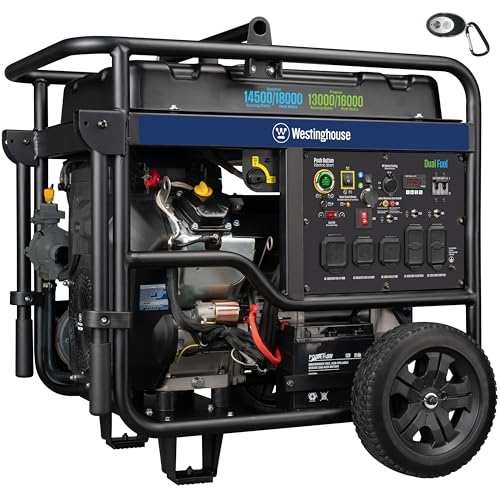
Westinghouse 18000W Dual-Fuel Generator
Best for: High-wattage dual-fuel whole-home emergency backup
- Running Wattage
- 14,500 W (Gas) / 13,000 W (Propane)
- Surge Wattage
- 18,000 W (Gas) / 16,000 W (Propane)
- Fuel Type
- Dual Fuel
- Output Ports
- 14-50R, L14-30R, L5-30R, 5-20R, USB
- Voltage
- 120V, 120/240V
- Application
- Home
View on Amazon: Westinghouse 18000W Dual-Fuel Generator (paid link)
This heavy-duty dual-fuel generator delivers 14,500 running watts and 18,000 peak watts on gasoline, or 13,000 running watts on propane. It features a 713cc V-Twin engine, electric remote start, and less than 5% total harmonic distortion. Outlets include a 50-amp 14-50R and a 30-amp twist-lock for transfer switches. If you need substantial backup capacity to run heavy household loads or whole-home circuits, this machine offers high output with dual-fuel flexibility.
Pros
- 14,500 running watts and 18,000 peak watts on gasoline
- Total harmonic distortion rated under 5% for sensitive devices
- Equipped with both 50A 14-50R and 30A L14-30R outlets
- Electric push-button and remote key fob start included
Cons
- Heavy unit weighing 352 pounds
- Produces up to 74 dBA of operating sound
- Runs on gas and propane only without natural gas support
Good fit if
- You need over 14,000 continuous watts to power heavy domestic appliances.
- You want to alternate between gasoline and liquid propane tanks.
- You plan to connect your backup power via a 50A or 30A transfer switch.
Skip if
- You need a portable unit that one person can easily lift.
- You require natural gas hookup capability for continuous supply.
- You want an ultra-quiet power source below 74 dBA.
Verdict: Westinghouse 18000W Dual-Fuel Generator provides massive running output and transfer-switch connectivity for demanding backup jobs. Its 352-pound weight and 74 dBA operating volume trade portability and silence for raw power.
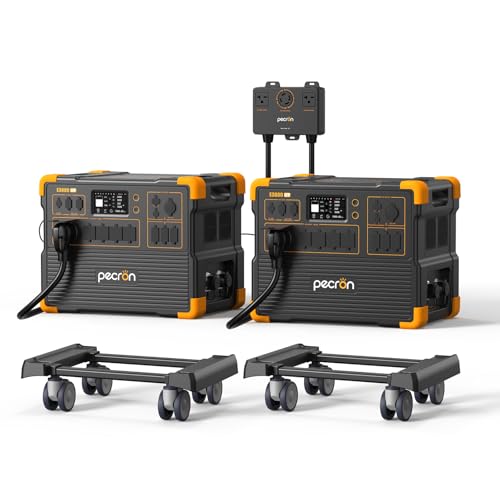
Pecron 3840Wh Power Station with 240V Hub
Best for: high-demand home backup and RV power
- Running Wattage
- 4200W
- Capacity
- 3840Wh
- Battery Chemistry
- LiFePO4
- Output Ports
- 14
- Voltage
- 100V~120V, 240V
- Dimensions
- 17.5 × 12.1 × 14.7 inches
View on Amazon: Pecron 3840Wh Power Station with 240V Hub (paid link)
This Pecron power station pairs a 3840Wh LiFePO4 battery pack with a 4200W pure sine wave inverter and a 240V voltage hub. You get 14 output ports, including a TT-30R RV outlet, and fast 3200W AC charging that refills the unit in 1.4 hours. With up to 3000W of solar input and an 8 to 20 millisecond UPS transfer time, it suits you if you need heavy-duty home backup or RV off-grid power.
Pros
- 4200W continuous pure sine wave AC output with a TT-30R RV receptacle
- 3840Wh LiFePO4 battery rated for more than 3500 cycles to 80% capacity
- Fast 3200W AC recharging reaches 100% capacity in 1.4 hours
- Accepts up to 3000W of solar charging input
- Built-in UPS function provides an 8 to 20ms automatic switchover
Cons
- Heavy base weight of 87.3 pounds limits portable handling
- Power station and 240V double voltage hub ship in separate packages
- Achieving maximum 3200W AC charging requires a 30A cable
Good fit if
- You require a high 4200W continuous AC output for high-draw appliances or RV gear.
- You want fast solar recharging capability up to 3000W for off-grid use.
- You need an automatic 8 to 20ms UPS backup for sensitive electronics during outages.
Skip if
- You need a lightweight power station that one person can carry easily under 50 pounds.
- You lack a 30A supply line to utilize the fastest 1.4-hour AC charging speed.
Verdict: Pecron 3840Wh Power Station with 240V Hub delivers high 4200W continuous output and expansive 3840Wh capacity for emergency home backup and RV setups. Its fast 3200W AC charging and quick UPS switchover make it a dependable heavy-duty power solution.
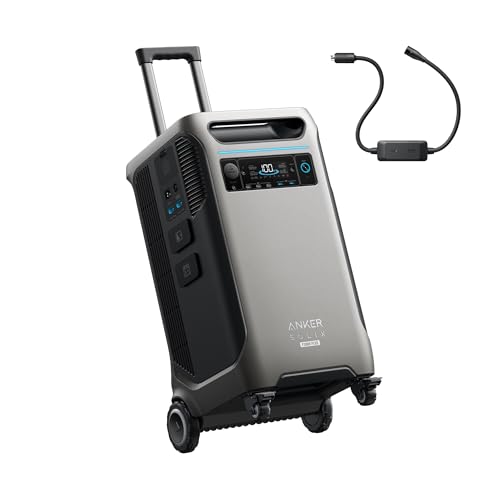
Anker SOLIX F3800 Plus 6000W Power Station
Best for: high-demand 240V home appliance backup
- Running Wattage
- 6,000W
- Capacity
- 3.84kWh
- Battery Chemistry
- LFP
- Voltage
- 120V / 240V
- Dimensions
- 27.6 × 15.6 × 15.3 inches
- Weight
- 136 pounds
View on Amazon: Anker SOLIX F3800 Plus 6000W Power Station (paid link)
The Anker SOLIX F3800 Plus is a high-output LFP power station built for home backup. You get 3,840Wh of base battery capacity alongside a 6,000W AC inverter. Its native 120V and 240V dual-voltage capability powers heavy appliances like electric dryers without extra converters. With 3,200W solar input and generator bypass charging, it suits you if you need high-wattage emergency backup that can scale over time.
Pros
- 6,000W AC output with native 120V/240V dual-voltage support
- 3,840Wh base LFP capacity expandable up to 53.8kWh
- 3,200W solar input and 6,000W generator bypass capability
- Recharges in 63 minutes using combined solar and generator power
Cons
- Heavy base weight of 135.6 pounds
- Power station and generator adapter ship in separate packages
- Included solar charging cables measure only 1.6 feet
Good fit if
- You need to run 240V home appliances like dryers during an outage.
- You require 6,000W of continuous output from a single base unit.
- You plan to expand system storage with extra batteries over time.
Skip if
- You need a lightweight unit that is easy to transport without lifting 135.6 pounds.
- You prefer all components delivered together in a single package.
Verdict: Anker SOLIX F3800 Plus 6000W Power Station delivers true 120V/240V high-wattage output and rapid recharging for demanding home appliances. It provides substantial inverter capacity and battery expandability if you can accommodate its 135.6-pound frame.
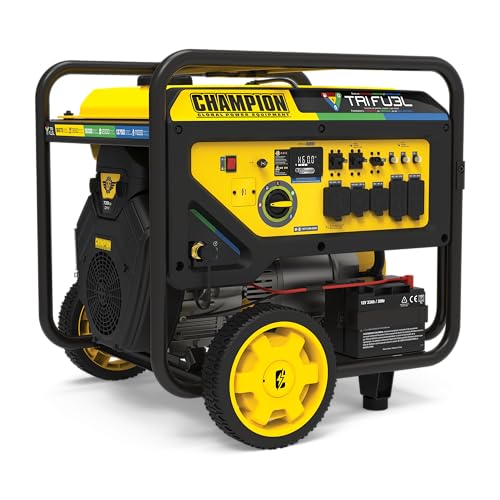
Champion 16,875W Tri-Fuel Portable Generator
Best for: high-capacity whole-home backup using multiple fuels
- Running Wattage
- 13,500 W
- Surge Wattage
- 16,875 W
- Fuel Type
- Natural gas, propane, gasoline
- Application
- Home
- Start Type
- Electric Start
- Dimensions
- 32.7 × 33.7 × 33 inches
View on Amazon: Champion 16,875W Tri-Fuel Portable Generator (paid link)
This tri-fuel generator runs on gasoline, propane, or natural gas with included hookup hoses. It delivers 16,875 starting watts and 13,500 running watts powered by a 739cc V-Twin engine. An electric start battery and CO Shield shutoff come standard. You get up to 8 hours of runtime on gasoline. This setup suits you if you need substantial emergency output and flexible fuel options for whole-house backup.
Pros
- 16,875 starting watts and 13,500 running watts
- Runs on natural gas, propane, or gasoline with hoses included
- 739cc V-Twin engine with electric start and included battery
- CO Shield carbon monoxide automatic shutoff sensor
Cons
- Heavy frame weighing 361 pounds
- Sound level reaches 79 dBA from 23 feet
Good fit if
- You want to connect directly to home natural gas lines or propane tanks.
- You need 13,500 running watts to run multiple heavy home circuits.
- You prefer push-button electric start with an included battery.
Skip if
- You need a lightweight unit that one person can lift easily.
- You require quiet operation well below 79 dBA for close quarters.
Verdict: Champion 16,875W Tri-Fuel Portable Generator delivers high-capacity emergency backup electricity across three fuel sources right out of the box. Its 739cc engine handles large electrical loads, though its 361-pound weight demands dedicated stationary positioning.

Champion 16875W Gas Generator
Best for: high-wattage home backup using gasoline
- Running Wattage
- 13,500 W
- Surge Wattage
- 16,875 W
- Fuel Type
- Gasoline
- Start Type
- Electric Start
- Dimensions
- 32.7 × 33.7 × 33 inches
- Weight
- 338 pounds
View on Amazon: Champion 16875W Gas Generator (paid link)
This Champion gas-only generator delivers 13,500 running watts and 16,875 starting watts from a 739cc V-twin engine. You get push-button electric start, up to 8 hours of run time on a full tank of gasoline, and an operating noise level of 79 dBA at 23 feet. It suits you if you need high-wattage electrical output and want built-in transport hardware including a lift hook and 12-inch tires.
Pros
- 16,875 starting watts and 13,500 running watts
- 739cc V-twin engine with battery-included electric start
- CO Shield carbon monoxide automatic shutoff system
- Intelligauge tracks voltage, hertz, run time, and power output
- Equipped with built-in lift hook, foldaway handle, and 12-inch tires
Cons
- Heavy unit weight of 338 pounds
- Operates exclusively on gasoline with no alternative fuel support
- Rated sound level reaches 79 dBA at 23 feet
Good fit if
- You require 13,500 running watts to support high-draw electrical loads
- You want push-button starting combined with carbon monoxide safety monitoring
- You have mechanical equipment capable of using the integrated lift hook
Skip if
- You need fuel flexibility such as propane or natural gas capability
- You want a generator that one person can lift without machinery
- You require a noise output lower than 79 dBA
Verdict: Champion 16875W Gas Generator delivers 13,500 running watts and push-button starting, but its 338-pound weight requires substantial handling effort. It serves demanding power setups that rely solely on gasoline.
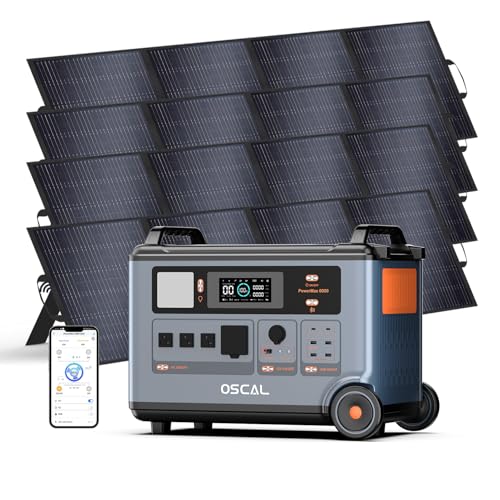
ECOGREAT PowerMax 6000 Solar Generator
Best for: Dual-voltage home backup with solar recharging
- Running Wattage
- 6000W
- Surge Wattage
- 9000W
- Capacity
- 3600Wh
- Battery Chemistry
- LiFePO4
- Output Ports
- 14 outlet sockets
- Voltage
- 120V/240V
View on Amazon: ECOGREAT PowerMax 6000 Solar Generator (paid link)
This setup pairs a 3,600Wh LiFePO4 power station with four 200W portable solar panels to deliver 6,000W of continuous output. Its dual 120V and 240V voltage support lets you run high-demand appliances during home outages, while the 5 to 8 millisecond EPS switchover keeps sensitive electronics online. It suits you if you need heavy-duty emergency backup power without sacrificing solar recharging capability or appliance compatibility.
Pros
- 6,000W continuous output with 9,000W surge and 120V/240V dual-voltage support
- 3,600Wh LiFePO4 battery rated for up to 3,500 charge cycles
- Includes four 200W solar panels and accepts up to 2,400W solar input
- Fast 5 to 8 ms EPS automatic power switchover
Cons
- Heavy base unit weighs 100.3 pounds
- Included manufacturer warranty is limited to two years
Good fit if
- You need 240V split-phase output for high-draw home appliances or tools.
- You want an included 800W solar panel array bundled with the power station.
- You require fast transfer times under 10 ms to keep computers and networks running.
Skip if
- You need a lightweight system that one person can easily lift and transport.
- You want a longer standard warranty period beyond two years.
Verdict: ECOGREAT PowerMax 6000 Solar Generator delivers high 6,000W dual-voltage output and comes bundled with four solar panels for off-grid resilience. Its 100-pound weight limits mobility, but the 3,600Wh capacity and fast EPS transfer make it a capable home backup option.
Specifications side by side
| Spec | Jackery HomePower 3600 Plus Solar Generator | DuroMax 15,000-Watt Tri-Fuel Generator | EF EcoFlow DELTA Pro 3.6kWh with 2x400W Solar | AIVOLT 11500W Tri-Fuel Inverter Generator | EcoFlow DELTA Pro 3 4096Wh Power Station | GENMAX 12500W Tri-Fuel Inverter Generator | Anker SOLIX F3800 3840Wh Power Station | BLUETTI Apex 300 5.5kWh Power Station | Pecron 5120Wh Solar Generator with 500W Panel | Westinghouse 18000W Dual-Fuel Generator | Pecron 3840Wh Power Station with 240V Hub | Anker SOLIX F3800 Plus 6000W Power Station | Champion 16,875W Tri-Fuel Portable Generator | Champion 16875W Gas Generator | ECOGREAT PowerMax 6000 Solar Generator |
|---|---|---|---|---|---|---|---|---|---|---|---|---|---|---|---|
| Running Wattage | 3600W | not specified | not specified | 9,200W Gas, 8,500W LPG, 6,800W NG | 4000W | 10500W Gas, 9500W LPG, 8500W NG | 6000W | 3840W | 7200W | 14,500 W (Gas) / 13,000 W (Propane) | 4200W | 6,000W | 13,500 W | 13,500 W | 6000W |
| Surge Wattage | not specified | not specified | not specified | 11,500W Gas, 10,600W LPG, 8,500W NG | not specified | 12500W Gas, 11500W LPG, 10000W NG | not specified | 7680W | not specified | 18,000 W (Gas) / 16,000 W (Propane) | not specified | not specified | 16,875 W | 16,875 W | 9000W |
| Capacity | 3584Wh | not specified | 3.6kWh | not specified | 4096Wh | not specified | 3840Wh | 5529.6Wh | 5120Wh | not specified | 3840Wh | 3.84kWh | not specified | not specified | 3600Wh |
| Fuel Type | not specified | Tri Fuel (gas, propane, natural gas) | not specified | Tri-Fuel (Gasoline, LPG, Natural Gas) | not specified | Gasoline, Propane, Natural Gas | not specified | not specified | not specified | Dual Fuel | not specified | not specified | Natural gas, propane, gasoline | Gasoline | not specified |
| Battery Chemistry | LFP | not specified | not specified | not specified | LFP | not specified | LFP | LiFePO4 | LiFePO4 | not specified | LiFePO4 | LFP | not specified | not specified | LiFePO4 |
| Output Ports | not specified | not specified | 5 AC, 4 USB-A, 2 USB-C, 2 DC, 1 car | Dual 30A, 50A, 20A GFCI duplex, 12V DC | not specified | not specified | NEMA 14-50, L14-30 | 6 AC outputs | 12 ports (6 AC, 6 DC) | 14-50R, L14-30R, L5-30R, 5-20R, USB | 14 | not specified | not specified | not specified | 14 outlet sockets |
| Voltage | 120V & 240V | 120V, 120V/240V | not specified | 120V/240V | 120V/240V | 120V/240V | 120V/240V | 120V/240V | 120V/240V | 120V, 120/240V | 100V~120V, 240V | 120V / 240V | not specified | not specified | 120V/240V |
| Solar Panel Wattage | 2x200W | not specified | 2 x 400W | not specified | not specified | not specified | not specified | not specified | 500W | not specified | not specified | not specified | not specified | not specified | 4 x 200W |
| Wattage | 3600W | not specified | 400W | not specified | not specified | not specified | not specified | not specified | 500W | not specified | not specified | not specified | not specified | not specified | not specified |
| Application | not specified | Home | not specified | Home | not specified | Camping, Home, RV | not specified | not specified | Home, Emergency | Home | not specified | not specified | Home | not specified | not specified |
| Start Type | not specified | not specified | not specified | not specified | not specified | not specified | not specified | not specified | not specified | Electric Start, Remote Start | not specified | not specified | Electric Start | Electric Start | not specified |
| Features | not specified | not specified | Solar Charging | not specified | not specified | not specified | not specified | not specified | not specified | CO Sensor, Transfer Switch Ready | not specified | not specified | not specified | not specified | not specified |
| Dimensions | 15.2 × 12.2 × 19.3 inches | 1 × 1 × 1 inches | 16.4 × 25 × 11.2 inches | 28.4 × 26.4 × 29.7 inches | 16.2 × 13.4 × 27.4 inches | 30.9 × 22.6 × 29.3 inches | not specified | 20.7 × 12.9 × 12.6 inches | 21.7 × 15 × 13.1 inches | 34 × 31 × 35 inches | 17.5 × 12.1 × 14.7 inches | 27.6 × 15.6 × 15.3 inches | 32.7 × 33.7 × 33 inches | 32.7 × 33.7 × 33 inches | 23.2 × 13.8 × 17.5 inches |
| Weight | 77.2 pounds | 362 pounds | 99 pounds | 260 pounds | 115 pounds | 252 pounds | 132 pounds | 83.8 pounds | 124 pounds | 352 pounds | 87.3 pounds | 136 pounds | 361 pounds | 338 pounds | 100 pounds |
| Color | not specified | Blue | DELTA Pro with 400W Foldable Panel | Orange+Black | Black | not specified | Black | 5.5kWh | not specified | Blue | not specified | Black | not specified | not specified | Grey |
| Model | not specified | XP15000HXT | EFD500 | VS12000511 | EFD521 | GM12500iET | A1790 | Apex 300 | F5000LFP | WGen14500DFc | E3800LFP | A1790P | 201241 | 201414 | PowerMax 6000 |
| Size | not specified | not specified | 2x400W | not specified | not specified | not specified | not specified | not specified | not specified | 18000 Watts - Dual Fuel - CO Sensor | not specified | not specified | not specified | not specified | not specified |
If you calculate wattage needs for a workstation, examine power delivery specifications for a motherboard under 1500 to verify overall draw.
How to Choose the Right Generator
-
Check Voltage Output Requirements
You must determine whether your home equipment requires standard 120V power or dual-voltage 120V/240V power. Heavy appliances such as central air units, well pumps, and electric dryers demand 240V connections to run. Standard household outlets and smaller electronics operate exclusively on 120V lines. Units like the Anker SOLIX F3800 Plus provide native 120V/240V split-phase electricity directly from the chassis. If you only plan to run standard kitchen appliances and power tools, a standard single-voltage setup fulfills your daily needs.
-
Evaluate Battery Cell Chemistry
When selecting an electric power station, inspect the internal cell chemistry to understand overall operational longevity. Most modern stations incorporate LiFePO4 cells, which maintain chemical stability under frequent charging cycles. For example, the Jackery HomePower 3600 Plus uses cells rated for 6,000 cycles before significant degradation occurs. High cycle ratings suit buyers who intend to discharge and recharge their unit frequently during off-grid operations. Lower cycle ratings remain suitable for occasional power outages where the battery sits in standby mode for months at a time.
-
Compare Operating Sound Levels
You should review decibel ratings if you plan to operate your generator near living areas or campgrounds. Combustion generators produce sound ranging from conversational tones to loud engine noise. The GENMAX 12500W Tri-Fuel Inverter Generator lists an operating sound level of 62 dBA, making it suitable for campsite or residential settings. Louder machines create substantial disturbance during nighttime power emergencies. Enclosed inverter designs isolate internal engine vibrations, which keeps output noise lower when powering continuous electrical loads at your home.
-
Assess Automatic Transfer Speed
Review switchover times if you intend to power sensitive electronics during unexpected utility interruptions. Standard backup generators require manual starting and transfer, causing devices to lose power immediately. Battery-based systems often integrate uninterrupted power supply functionality to keep critical loads running without interruption. The Pecron 5120Wh Solar Generator provides a 0ms UPS transfer speed, preventing desktop computers and medical gear from resetting during outages. If your primary goal is running non-sensitive loads like space heaters or well pumps, fast switchover times become less essential to your daily setup.
-
Verify Starting Mechanism Options
Examine the ignition options available on fuel-powered generators before making a purchase. Basic models rely on manual recoil pull cords, which demand physical exertion in cold weather or emergency conditions. Upgraded models provide electric push-button ignition or wireless key fobs for easier activation. The Westinghouse 18000W Dual-Fuel Generator includes both electric start and remote start capabilities alongside a built-in carbon monoxide sensor. Remote start allows you to activate the machine from inside your home during storms. Choose units with remote activation if convenience and fast cold-weather starting are important.
-
Review AC Recharging Speed
If you choose an electric power station, verify its maximum alternating current input rate. Rapid recharging allows a battery station to replenish capacity quickly between rolling blackouts or during short grid recoveries. The BLUETTI Apex 300 5.5kWh Power Station achieves a 45-minute AC recharging rate, minimizing downtime when connected to grid power. Units with lower AC input ratings may take several hours to achieve a full charge, leaving you vulnerable to consecutive outages. Match your charging speed expectations to the frequency and duration of typical power outages in your area.
Frequently asked questions
What is the difference between a solar generator and a fuel generator?
Solar generators rely on battery storage charged by solar panels or grid power, whereas fuel generators burn gasoline, propane, or natural gas to produce electricity. Solar options like the EF EcoFlow DELTA Pro 3.6kWh run silently without emissions, making them suitable for indoor use. Fuel models like the Westinghouse 18000W deliver higher continuous running wattage but produce exhaust fumes and noise, requiring outdoor operation away from living spaces.
Can a portable generator run sensitive electronics safely?
Inverter generators and battery power stations can run sensitive electronics safely because they supply clean power with low total harmonic distortion. Units such as the GENMAX 12500W use inverter technology to deliver stable electricity for computers, televisions, and mobile devices. Battery models like the Jackery HomePower 3600 Plus convert stored direct current into steady alternating current, protecting delicate appliance circuitry from damaging voltage spikes during home power interruptions.
How long do LiFePO4 power station batteries last?
LiFePO4 batteries typically last between 3,000 and 6,000 charge cycles before their maximum capacity drops to around eighty percent. For example, the Jackery HomePower 3600 Plus features cells rated for 6,000 cycles. If you discharge and recharge the unit once every day, that rating represents over fifteen years of regular operation. These lithium iron phosphate cells also offer better thermal stability than older lithium chemistries.
What fuel types do tri-fuel generators run on?
Tri-fuel generators run on gasoline, liquid propane, and natural gas. Models like the DuroMax XP15000HXT, Champion 201241, and AIVOLT 11500W allow you to switch among all three sources. Gasoline provides maximum peak output, propane stores indefinitely without going stale, and a residential natural gas line offers continuous fuel without manual refilling during prolonged power outages.
Can you connect these generators directly to a home transfer switch?
Yes, generators with dedicated 30-amp or 50-amp outlets connect directly to a home transfer switch. Units like the Westinghouse 18000W feature transfer switch ready connections and built-in carbon monoxide sensors for safe house integration. Fuel models like the DuroMax 15,000-Watt also include 50-amp outlets, allowing you to power hardwired household circuits including lighting, refrigerators, and water pumps through a manual transfer panel.
How fast can a battery power station recharge from AC wall power?
AC recharge speeds vary widely by model, ranging from 45 minutes up to several hours. For instance, the BLUETTI Apex 300 supports rapid 45-minute AC recharging, while the Pecron 3840Wh accepts up to 3200W of AC power input for quick replenishment. Fast recharging ensures your battery bank reaches full capacity quickly between scheduled rolling blackouts or brief utility restorations.
What does split-phase power mean for a power station?
Split-phase power means the power station can supply both 120V and 240V electricity simultaneously from a single system. High-output units such as the Anker SOLIX F3800 Plus and Pecron 5120Wh deliver 240V capability to run heavy equipment like well pumps, electric dryers, and central air systems. Without split-phase output, you are limited strictly to standard 120V household outlets and smaller appliances.