How to Choose Solar Panels: A Complete Buying Guide for 2026
As an Amazon Associate we earn from qualifying purchases. Links on this page are affiliate links.
This solar panel buying guide helps you match panel specifications to your power needs. You will learn how to evaluate wattage, cell type, and physical dimensions to find the right fit. The recommendations below were selected strictly from published product specifications, ensuring objective comparisons based on measurable data rather than marketing claims.
You will decide between fixed rooftop installations and portable foldable units based on your usage pattern. The guide walks through key choices such as bifacial versus monocrystalline cells and MPPT controller integration. With 8 options analyzed, you can confidently select a panel that balances efficiency, weight, and durability for your specific setup.
Our top pick: Voltset 20W 12V MPPT Solar Maintainer.
How to Choose Solar Panels
Wattage and Power Output
Wattage determines how much energy the panel generates under ideal conditions. Higher wattage panels charge batteries faster or run more appliances simultaneously. You must match this output to your daily energy consumption. For small trickle-charging tasks, a low-wattage unit like the Voltset 20W is sufficient. For larger RV or off-grid systems, you need higher outputs such as the Callsun 200W panels. Consider your peak load requirements to avoid undersizing. If you plan to run multiple devices, choose a panel that exceeds your minimum daily usage. This ensures reliable power even during less-than-perfect sunlight conditions.
- Daily energy usage in watt-hours
- Peak sun hours in your area
- Total panel wattage capacity
Cell Technology and Efficiency
Cell type affects how well a panel converts sunlight into electricity. Monocrystalline and N-Type cells generally offer higher efficiency than older polycrystalline designs. This means you get more power from the same surface area. The Renogy 50W and 120W ShadowFlux models use N-Type cells for better performance. Higher efficiency is crucial when space is limited, such as on an RV roof. It also helps maintain output in partial shade. If you have ample roof space, standard panels may suffice. However, for compact setups, prioritizing advanced cell technology ensures you maximize every square inch of available surface for energy generation.
- Monocrystalline or N-Type cell type
- Efficiency percentage rating
- Shade tolerance capabilities
Panel Type and Configuration
The physical configuration dictates how you install and use the panel. Bifacial panels capture light from both sides, boosting output in reflective environments. The Callsun 200W bifacial panels excel in fixed RV installations. Foldable panels offer portability for camping but may be less durable. The Renogy 200W foldable model is lightweight for travel. Rigid panels are better for permanent mounting on boats or homes. Choose based on your mobility needs. Fixed installations benefit from durability, while campers prioritize weight and pack size. Your usage pattern should drive this decision to ensure the panel fits your lifestyle.
- Bifacial, foldable, or rigid design
- Mounting hardware included
- Durability for intended use
Voltage Compatibility
Voltage must match your battery system to ensure safe charging. Most panels are designed for 12V or 24V systems. The Voltset 20W and SOLPERK 30W kits are optimized for 12V maintenance. Using the wrong voltage can damage batteries or result in poor charging. Check your battery bank specifications before purchasing. Some panels support multiple voltages, offering flexibility. Always verify the open-circuit voltage and operating voltage align with your charge controller. Mismatched voltages reduce efficiency or prevent charging entirely. Correct compatibility ensures your power station or battery receives the right current for optimal performance and longevity.
- Battery system voltage (12V/24V)
- Charge controller compatibility
- Open-circuit voltage rating
Size and Weight
Dimensions and weight impact portability and installation space. Compact panels like the SOLPERK 30W fit small boats or tight RV spaces. Larger panels like the Callsun 200W require more roof area. Weight matters for portable setups; the Renogy 200W foldable panel is lighter for carrying. Measure your available mounting area before buying. Ensure the panel fits within your space constraints. For portable use, lighter weight reduces fatigue during setup. For fixed installations, weight is less critical but still affects mounting hardware requirements. Balance your need for power with the physical constraints of your vehicle or campsite.
- Panel dimensions in inches
- Total weight in pounds
- Available mounting space
Weather Resistance and IP Rating
Outdoor exposure demands robust weather protection. An IP65 rating, like on the TWELSEAVAN 120W panel, ensures protection against dust and water jets. This durability is essential for marine or outdoor use. Panels must withstand rain, snow, and UV exposure. Check the IP rating for water resistance. Look for tempered glass and durable frames. Without proper weather sealing, moisture can damage internal cells. This factor is critical for long-term reliability. Choose panels rated for your specific environmental conditions to prevent premature failure and maintain performance over years of use.
- IP rating for water resistance
- Tempered glass construction
- UV resistance specifications
Types of Solar Panels
Slim Trickle Chargers
These units, like the Voltset 20W or SOLPERK 30W, focus on maintaining 12V batteries rather than generating high power. They feature MPPT controllers and compact dimensions, often under 15 inches. You should choose this type for marine or RV applications where space is tight and you need to keep batteries topped off. The trade-off is low wattage output, which limits you to small loads.
Fixed Roof Panels
Models such as the Callsun 200W Bifacial or Renogy 120W ShadowFlux are designed for permanent installation on RVs or vans. They offer higher efficiency and better heat tolerance, often using N-Type cells. Bifacial designs capture light from both sides, boosting yield in specific setups. These panels are heavier and less portable. You should select them if you prioritize power density and durability over easy removal.
Foldable Portable Panels
The Renogy 200W Lightweight and TWELSEAVAN 120W Foldable panels cater to campers and van lifers who move frequently. They balance portability with decent output, often including direct USB ports for charging small devices. While lighter than fixed panels, they are still bulky when unfolded. You should pick this type if you need to transport power to remote locations and value direct device charging over permanent mounting solutions.
Solar Panel Buying Mistakes
Ignoring temperature coefficient ratings
Panel output drops significantly in heat. A high wattage rating only applies to standard test conditions. Check the temperature coefficient to see how much power you lose per degree above 25°C. This ensures you get realistic performance during hot summer days.
Mismatching voltage with input limits
Your power station has a maximum solar input voltage. Exceeding this can damage the internal charge controller. Always compare the panel’s open-circuit voltage against your device’s specifications. Staying within safe limits protects your investment and ensures reliable charging cycles.
Overlooking connector compatibility
Solar panels use specific connectors like MC4 or XT60. Your power station may require a different type or an adapter. Verify connector types before purchasing. Using the wrong connector prevents connection or requires extra adapters that add resistance and potential failure points.
Assuming all panels work in shade
Standard panels lose significant power if even one cell is shaded. Bypass diodes help, but performance still suffers. Consider panels with half-cut cell technology or built-in microinverters if you expect partial shade. This maintains higher output in less-than-ideal lighting conditions.
Quick picks
Our 8 picks
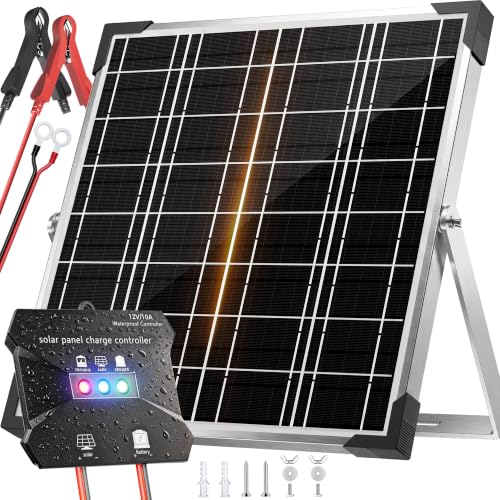
Voltset 20W 12V MPPT Solar Maintainer
Best for: Trickle charging 12V marine and RV batteries
- Rated Power
- 20W
- Cell Type
- Monocrystalline
- System Voltage
- 12V
- IP Rating
- IP67
- Weight
- 4 pounds
- Dimensions
- 15 × 13.6 × 1.69 inches
This Voltset kit delivers 20W of power from A+ monocrystalline cells to maintain 12V batteries. It includes an MPPT controller that tracks efficiency for faster charging. The IP67 waterproof rating ensures durability in harsh weather. You get a compact 13.6 by 15 inch panel that weighs only 4 pounds. It suits you if you need a reliable trickle charger for boats, RVs, or trailers without complex installation.
Pros
- MPPT controller provides 20-30% faster charging than standard controllers
- IP67 waterproof rating withstands rain and extreme temperatures
- Compatible with LiFePO4, AGM, Gel, and flooded batteries
- Pre-drilled holes allow tool-free setup in seconds
Cons
- Low 20W output limits use to battery maintenance only
- Fixed 12V system voltage prevents 24V applications
- Single panel size may not cover large battery banks
Good fit if
- You need a simple trickle charger for a boat or trailer
- You want a weather-resistant panel for outdoor marine use
- You require compatibility with multiple 12V battery chemistries
Skip if
- You need high power for running appliances or devices
- You are using a 24V or 48V electrical system
- You require a flexible or semi-flexible panel design
Verdict: Voltset 20W 12V Solar Panel Kit offers a compact, weatherproof solution for keeping 12V batteries topped off. It fits you if you prioritize easy installation and broad battery compatibility over raw power output.

Callsun 400W Bifacial Solar Panel 2-Pack
Best for: High-efficiency RV and van rooftop mounting
- Rated Power
- 400W
- Conversion Efficiency
- 25.6%
- Panel Type
- Bifacial
- Cell Type
- N-type monocrystalline
- System Voltage
- 12V/24V
- Busbar Count
- 16BB
This Callsun 200W panel uses N-type monocrystalline cells to reach 25.6% conversion efficiency. It features bifacial technology to capture light from both sides and a TwinCell design to mitigate shading losses. You can pair two panels in series for 400W output at 47.48V Vmp. The rigid frame weighs 23.8 lbs and measures 51.3 by 30.3 inches. It suits RVs, vans, and off-grid systems where high efficiency and heat tolerance matter.
Pros
- 25.6% conversion efficiency with N-type monocrystalline cells
- Bifacial design captures reflected and diffuse light
- TwinCell anti-shading design maintains power in partial shade
- Low temperature coefficient of -0.30%/K for hot climates
Cons
- Rigid frame weighs 23.8 lbs per panel
- Requires mounting hardware for installation
- Not a portable foldable design
Good fit if
- You need high efficiency for limited roof space
- You operate in hot climates with high temperatures
- You want bifacial gain from reflected light
Skip if
- You need a lightweight foldable panel for camping
- You require a single panel under 100W
- You want a plug-and-play portable kit
Verdict: Callsun 200W N-Type Bifacial Solar Panel delivers high efficiency and heat tolerance for fixed RV or van installations. It fits buyers who prioritize power density and shading resilience over portability.

Renogy 50W Monocrystalline Solar Panel
Best for: small battery maintenance and RVs
- Rated Power
- 50 W
- Conversion Efficiency
- 25%
- Cell Type
- N-Type Monocrystalline
- IP Rating
- IP65
- Weight
- 5.07 pounds
- Wattage
- 50W
This Renogy panel delivers 50 watts of power using N-type monocrystalline cells with 25% conversion efficiency. It measures 22.9 by 20 inches and weighs 5.07 pounds. The unit features an IP65 junction box and a corrosion-resistant aluminum frame. You can use it for small battery maintenance or as an auxiliary source for larger power stations. Its compact size makes it easy to store when not in use.
Pros
- 25% high conversion efficiency
- IP65 rated junction box
- Corrosion-resistant aluminum frame
- Lightweight at 5.07 pounds
Cons
- Only 50 watts output
- Fixed rigid panel design
- No included mounting hardware
Good fit if
- You need a lightweight panel for RVs
- You want to trickle charge a 12V battery
- You have limited storage space
Skip if
- You need high wattage for off-grid homes
- You require a portable folding design
- You want a complete kit with brackets
Verdict: Renogy 50W N-Type Solar Panel is a compact, efficient option for small power needs. It suits users who prioritize portability and cell efficiency over raw output capacity.

SOLPERK 30W 12V MPPT Solar Panel Kit
Best for: 12V battery maintenance and trickle charging
- Rated Power
- 30 W
- Conversion Efficiency
- 30%
- Cell Type
- Monocrystalline
- System Voltage
- 12 V
- Weight
- 4.5 pounds
- Wattage
- 30W
The SOLPERK 30W 12V Solar Panel Kit charges and maintains 12V batteries using A+ monocrystalline silicon cells with 30% efficiency. It includes an MPPT controller with LED status indicators. The panel features a durable aluminum frame and tempered glass. You get a 360-degree adjustable bracket for flexible mounting on walls or roofs. This setup suits users needing reliable trickle charging for AGM, SLA, or LiFePO4 batteries.
Pros
- 30% cell efficiency from A+ monocrystalline silicon
- Includes MPPT controller with blue, red, and green LED indicators
- 360-degree adjustable bracket for optimal sun exposure
- Waterproof and rustproof design with 25-year lifespan
Cons
- Only 30W output limits charging speed for larger batteries
- Fixed 12V system restricts use with 24V or 48V setups
- Requires manual angle adjustment without remote or app control
Good fit if
- You need a dedicated trickle charger for 12V batteries
- You want high efficiency in a compact 30W package
- You prefer a durable panel with a sturdy mounting bracket
Skip if
- You require high wattage for rapid power station charging
- You need smart monitoring via a mobile application
- You are installing on a surface that cannot support the bracket
Verdict: SOLPERK 30W 12V Solar Panel Kit delivers high efficiency and durable construction for 12V battery maintenance. It is ideal for users who need a reliable, long-lasting trickle charger for marine or RV applications.
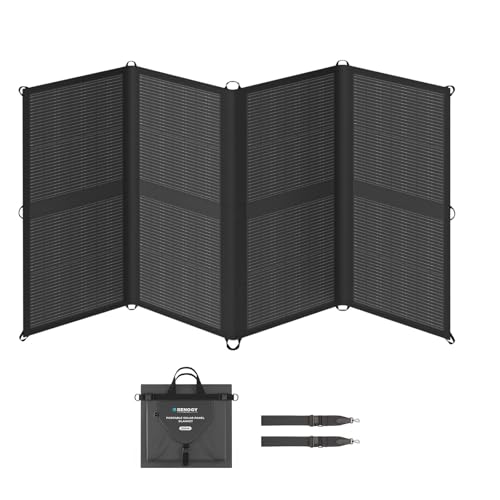
Renogy 200W Lightweight Foldable Solar Panel
Best for: campers needing high-efficiency portable power
- Rated Power
- 200W
- Conversion Efficiency
- Up to 25%
- Panel Type
- Foldable, flexible
- Cell Type
- N-Type
- Busbar Count
- 16BB
- IP Rating
- IP65
View on Amazon: Renogy 200W Lightweight Foldable Solar Panel
This Renogy 200W panel uses N-Type cells and 16BB busbars to reach 25% efficiency. It weighs 8.82 pounds and folds to a compact size for storage in tight spaces like SUVs or RVs. The IP65 rating and ETFE lamination ensure durability in various weather conditions. You can charge power stations via MC4 cables or devices using the built-in USB ports. It suits users who need high output in a lightweight, portable form factor.
Pros
- 25% conversion efficiency with N-Type cells
- Weighs only 8.82 pounds
- IP65 weather resistance
- Built-in USB-C and USB-A ports
Cons
- MC4 output requires a separate adapter for most power stations
- Solar charge controller not included for 12V battery charging
- 2-year warranty is shorter than industry standards
Good fit if
- You need a lightweight panel for vehicle camping
- You want high efficiency in limited space
- You are charging portable power stations directly
Skip if
- You need direct 12V battery charging without extra parts
- You require a longer warranty period
- You prefer a rigid panel for permanent installation
Verdict: Renogy 200W Portable Solar Panel delivers high efficiency in a lightweight package, making it ideal for van lifers and campers who prioritize portability and output over permanent installation features.

TWELSEAVAN 120W Foldable Solar Panel
Best for: lightweight portable power and direct USB charging
- Rated Power
- 120W
- Conversion Efficiency
- Up to 25.8%
- Panel Type
- Foldable
- Cell Type
- HPBC
- IP Rating
- IP65
- Weight
- 7.05 lbs
This 120W portable solar panel features HPBC cells with up to 25.8% conversion efficiency. It weighs 7.05 lbs and folds to 16.6 by 15.7 inches. The ETFE layer offers high light transmittance and durability. It includes USB-C and QC3.0 ports for direct device charging. The MC4 connector ensures compatibility with most power stations. This unit suits users needing a lightweight, efficient charging source for outdoor activities.
Pros
- High 25.8% conversion efficiency with HPBC cells
- Lightweight 7.05 lbs design for portability
- Built-in 60W USB-C and 18W QC3.0 charging ports
- IP65 waterproof rating for outdoor resilience
Cons
- Lower 120W output compared to 200W or 400W alternatives
- Only IP65 water resistance, not fully submersible
- No mention of an integrated MPPT controller
Good fit if
- You need a lightweight panel under 10 lbs
- You want to charge phones directly via USB
- You use power stations with MC4 inputs
Skip if
- You require maximum power output above 150W
- You need a rigid panel for permanent installation
- You want a panel with built-in battery storage
Verdict: Twelseavan 120W Foldable Solar Panel delivers high efficiency in a compact package for campers and RV travelers. It is ideal for those prioritizing portability and direct device charging over raw wattage.
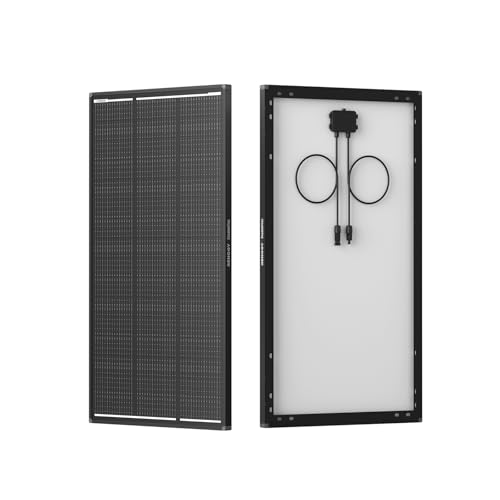
Renogy ShadowFlux 120W N-Type Solar Panel
Best for: Shaded areas and compact setups
- Rated Power
- 120W
- Conversion Efficiency
- 25%
- Cell Type
- N-Type
- Busbar Count
- 16BB
- IP Rating
- ≥ IP67
- Weight
- 19.1 pounds
This Renogy panel uses N-Type cells with 16BB technology to reach 25% conversion efficiency. Its ShadowFlux anti-shading tech reduces hot-spot risks, making it reliable for partially shaded spots. The unit measures 41.4 by 22.8 inches and weighs 19.1 pounds. It carries an IP67 rating for weather resistance. You should choose this if you need a compact, high-efficiency option for portable power stations.
Pros
- 25% high conversion efficiency
- N-Type cells with 16BB technology
- ShadowFlux anti-shading technology
- IP67 weather resistance rating
Cons
- 120W output is lower than the 200W options on this list
- 19.1 pounds is heavier than lighter 20W kits
- Fixed mounting rather than fully portable foldable design
Good fit if
- You need high efficiency in a compact footprint
- You plan to use the panel in partially shaded areas
- You want strong weather resistance for outdoor use
Skip if
- You require maximum wattage for fast charging
- You need a lightweight panel for backpacking
- You prefer a foldable design for easy transport
Verdict: Renogy ShadowFlux 120W Solar Panel fits users who prioritize efficiency and shade tolerance over raw power output. It is a solid choice for powering stations where space and weather durability matter more than maximum wattage.

Renogy 200W Foldable Solar Panel
Best for: campers needing high efficiency and USB charging
- Rated Power
- 200W
- Conversion Efficiency
- 25%
- Cell Type
- N-Type
- Busbar Count
- 16BB
- Weight
- 13.89 lb
- Dimensions
- 23.7 × 1.97 × 23 inches
The Renogy 200W Portable Solar Panel uses N-Type cells and 16BB busbars to reach 25% conversion efficiency. It weighs 13.89 lb and folds to 23.72 x 22.99 x 1.97 in. You get USB-C PD 45W and dual USB-A ports for direct device charging. It includes four kickstands for adjustable angles. This panel suits RV trips and camping where you need reliable power in limited sunlight.
Pros
- 25% high conversion efficiency with N-Type cells
- Lightweight 13.89 lb build with magnetic closure
- Includes USB-C PD 45W and dual USB-A ports
- Four kickstands allow 40, 50, and 60 degree angles
Cons
- MC4 output requires a separate 4-in-1 adapter for most power stations
- No built-in battery for energy storage
- USB ports lack power station input capability
Good fit if
- You need a lightweight panel for SUV or RV mounting
- You want to charge phones and tablets directly via USB
- You require high efficiency for cloudy or limited sun conditions
Skip if
- You need a panel that connects directly without extra adapters
- You prefer a rigid panel over a foldable design
- You want a larger 400W or higher wattage output
Verdict: Renogy 200W Portable Solar Panel offers high efficiency and direct USB charging for campers. It fits users who value portability and need to charge small devices without a power station.
Specifications side by side
| Spec | Voltset 20W 12V MPPT Solar Maintainer | Callsun 400W Bifacial Solar Panel 2-Pack | Renogy 50W Monocrystalline Solar Panel | SOLPERK 30W 12V MPPT Solar Panel Kit | Renogy 200W Lightweight Foldable Solar Panel | TWELSEAVAN 120W Foldable Solar Panel | Renogy ShadowFlux 120W N-Type Solar Panel | Renogy 200W Foldable Solar Panel |
|---|---|---|---|---|---|---|---|---|
| Rated Power | 20W | 400W | 50 W | 30 W | 200W | 120W | 120W | 200W |
| Conversion Efficiency | not specified | 25.6% | 25% | 30% | Up to 25% | Up to 25.8% | 25% | 25% |
| Panel Type | not specified | Bifacial | not specified | not specified | Foldable, flexible | Foldable | not specified | not specified |
| Cell Type | Monocrystalline | N-type monocrystalline | N-Type Monocrystalline | Monocrystalline | N-Type | HPBC | N-Type | N-Type |
| System Voltage | 12V | 12V/24V | not specified | 12 V | not specified | not specified | not specified | not specified |
| Busbar Count | not specified | 16BB | not specified | not specified | 16BB | not specified | 16BB | 16BB |
| IP Rating | IP67 | IP68 | IP65 | not specified | IP65 | IP65 | ≥ IP67 | not specified |
| Weight | 4 pounds | 23.8 pounds | 5.07 pounds | 4.5 pounds | 8.82 pounds | 7.05 lbs | 19.1 pounds | 13.89 lb |
| Wattage | 20W | 200W | 50W | 30W | 200W | 120W | 120W | 200W |
| Application | not specified | Home, RV, Off-Grid, Marine | not specified | not specified | not specified | Camping, Outdoor, Emergency, RV | not specified | not specified |
| Features | not specified | not specified | Solar Charging | not specified | not specified | not specified | not specified | not specified |
| Voltage | 12V | 12V, 24V | not specified | not specified | not specified | not specified | not specified | not specified |
| Output Ports | not specified | not specified | not specified | not specified | not specified | USB-C, MC4 | not specified | not specified |
| Water Resistance | not specified | not specified | not specified | not specified | not specified | Waterproof | not specified | not specified |
| Dimensions | 15 × 13.6 × 1.69 inches | 51.3 × 30.3 × 1.38 inches | 22.9 × 20 × 1.18 inches | 12 × 8 × 1 inches | 16.1 × 3.07 × 15.4 inches | 20.5 × 14.4 × 1.6 inches | 41.4 × 22.8 × 1.2 inches | 23.7 × 1.97 × 23 inches |
| Size | 20W Smart MPPT | 200W 2-Pack Black | 50 W Monocrystalline Solar Panel | 30W MPPT Kit | 200W | 120W | 120W | 200W |
| Color | Silver | Black | 50W Solar Panel | Black | Black | 120 Orange | Black | Black |
| Model | VS-20W | CN200W | Solar Panel 50 Watt | SOLPERK | RPP200SB-SE | solar panel | 120W ShadowFlux N-Type Panel | RPP200EF-SE |
Frequently asked questions
How do I choose the right size solar panel for my RV?
Measure your available rooftop space to determine the maximum length and width your installation can accommodate. Fixed panels like the Callsun 200W model measure 51.3 inches long and 30.3 inches wide. For tighter spaces, consider compact options like the Renogy 50W panel, which spans just 22.9 inches in length. Always verify your physical constraints before selecting a wattage rating to ensure the unit fits securely.
What is the difference between N-Type and standard solar cells?
N-Type cells generally offer higher efficiency and better performance in low-light or high-temperature conditions compared to traditional alternatives. Several top picks, including the Callsun, Renogy 50W, and Renogy ShadowFlux models, utilize N-Type technology. This cell type helps maintain power output when partial shading occurs or during hot summer days. You should prioritize N-Type panels if you need reliable energy generation in variable weather.
Are foldable solar panels durable enough for regular camping trips?
Yes, foldable panels are designed for portability and repeated use in outdoor environments. The TWELSEAVAN 120W panel features an IP65 waterproof rating, protecting internal components from rain and dust. The Renogy 200W and 120W lightweight models also fold into compact packages for easy transport. While they are less rigid than fixed glass panels, their durable construction supports regular deployment for van life and camping adventures.
Can I use a solar panel to charge my power station directly?
Yes, many panels provide direct output options suitable for portable power stations. The TWELSEAVAN 120W panel includes USB-C and MC4 ports, allowing flexible connection methods. Other models like the Voltset 20W and SOLPERK 30W are optimized for 12V battery maintenance, which aligns with many power station input requirements. Ensure the panel’s voltage output matches your device’s input specifications for safe and efficient charging.
How much weight can my RV roof support for solar panels?
Check your vehicle’s manufacturer guidelines for maximum roof load capacity before installation. Fixed panels like the Callsun 200W 2-Pack weigh 23.8 pounds combined, while individual units like the Renogy 200W weigh 13.9 pounds. Portable options such as the Renogy 200W Lightweight model weigh only 8.82 pounds. Distributing weight evenly and using appropriate mounting hardware ensures your roof remains structurally sound during travel.
Do I need a charge controller with every solar panel?
Most modern panels include built-in charge controllers to regulate voltage and protect your batteries. The Voltset 20W and SOLPERK 30W kits feature integrated MPPT controllers for efficient trickle charging. Higher wattage panels like the Renogy 200W may require external MPPT or PWM controllers depending on your system setup. Always verify if the panel includes internal regulation or if you must purchase a separate controller for your specific battery type.